



Elon Musk has never been one for modest pronouncements. His latest claim, however, sets a new benchmark for ambition: that SpaceX could one day be worth 'orders of magnitude more' than the entire global economy. But what does that even mean?
The Quadrillion-Dollar Claim
In early October
2026, Elon Musk posted on X that he sees a 'path to SpaceX being worth orders of magnitude more than the current Earth economy'. To put that in perspective, the International Monetary Fund projects the world’s total economic output for 2026 will be around $126 trillion. 'Orders of magnitude' implies a factor of at least 100, suggesting a potential valuation in the quadrillions of dollars. It’s a figure so vast it borders on the surreal, dwarfing the value of all other companies and even nations. Musk later clarified that seeing a path is not a statement of 'extreme confidence', but that the probability is 'not zero'. This wasn’t a one-off comment; it’s an escalation of a recurring theme where he argues that the company controlling the infrastructure for a space-based economy could eclipse Earth's terrestrial industries.
The Engine of Ambition: Starship
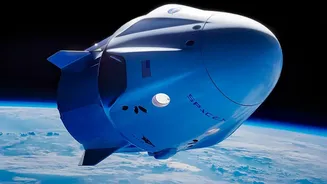
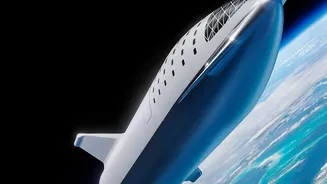
The entire premise of this astronomical valuation rests on one piece of hardware: Starship. This fully reusable launch system is designed to be the most powerful rocket ever built, capable of lifting over 100 metric tons to orbit in a single flight. Musk's vision isn't just about launching more satellites; it's about fundamentally changing the economics of accessing space. Where previous rockets were expensive, expendable, and limited in capacity, SpaceX aims to operate Starship more like an airline, with rapid, repeated flights. Projections suggest a single Starship could fly multiple times a day. If SpaceX can achieve this, the company could single-handedly launch more mass into orbit annually than all other rockets combined, potentially capturing over 99% of the global payload market. This logistical dominance is the foundation for everything else.
Redefining 'Global Output'
To understand Musk's claim, one must distinguish between economic value (GDP) and physical output. Comparing SpaceX's current $2.2 trillion market cap to the $126 trillion global economy shows the company is currently just over 1.7% of the world's annual output. However, Musk's argument is about a future where entirely new industries exist off-planet. He’s not just talking about launching things for other people; he’s talking about creating new economies in orbit and beyond. This includes in-orbit manufacturing, asteroid mining, and building the compute and energy infrastructure for a multi-planetary civilization. The thesis is that resources and energy in space are vastly more abundant than on Earth. By controlling the transport system to access those resources, SpaceX wouldn't just be a participant in the global economy; it would be the enabler of a much larger solar system economy.
The AI-Powered Next Step
A crucial part of this vision is artificial intelligence. SpaceX is no longer just a rocket company; it's heavily investing in becoming an AI powerhouse. The company is developing massive ground-based supercomputers like Colossus and plans to launch a vast constellation of up to one million 'Starmind' AI satellites. These satellites would create a space-based data processing network, free from the physical and energy constraints of Earth. Musk predicts that within five years, AI could represent 99% of SpaceX's value. Revenue from selling this off-world compute power is projected to generate hundreds of billions of dollars annually within a few years, providing the cash flow to fund the even grander ambitions on the Moon and Mars.
A Vision vs. Reality
Of course, there's a vast gulf between this grand vision and current reality. Starship is still in its operational infancy. Achieving the kind of flight cadence Musk envisions requires solving immense technical and regulatory challenges, from rapid reusability to managing a fleet of potentially hundreds or thousands of rockets. The markets for asteroid mining and large-scale orbital manufacturing do not yet exist and would require staggering upfront investment to create. While Wall Street analysts are bullish on SpaceX, their most optimistic price targets value the company at around $11 trillion—a huge number, but still less than a tenth of today's annual global output. For now, Musk's claim remains a thought experiment, a strategic narrative designed to frame SpaceX not as a mere company, but as a civilization-altering project whose potential can't be measured by today's standards.