

A Cosmic Lion's Roar
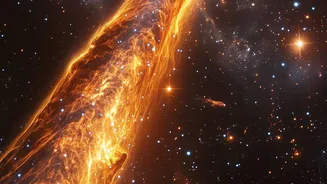
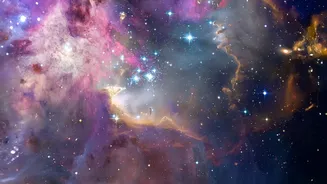
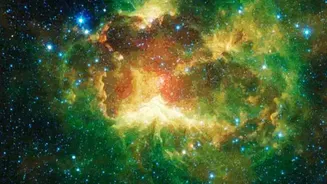
Located roughly 10,000 light-years away in the constellation Cepheus, the Lion Nebula, formally known as Sh2-132, is a vast stellar nursery. It’s an enormous cloud of hydrogen gas and dust spanning hundreds of light-years, where new stars are born. Within
this cosmic cloud, some of the most massive and violent stars in our galaxy have ignited. These celestial titans, known as O-type, B-type, and Wolf-Rayet stars, are dozens of times more massive than our Sun and burn millions of times brighter. Their intense energy and radiation are what cause the surrounding gas to glow, creating the beautiful structure we see. But they are also powerful and destructive engines of change.
The Stellar Sculptors
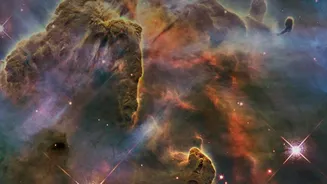
The central question for astronomers studying nebulae like this one is how they get their incredible shapes—the cavities, pillars, and glowing filaments. The answer lies in a process called 'stellar feedback'. The most massive young stars in a nebula unleash ferocious stellar winds and flood their surroundings with powerful ultraviolet radiation. This onslaught carves out huge bubbles in the gas and dust, acting like a cosmic snowplough. The process is a delicate and violent balancing act. On one hand, this feedback can blow away the raw materials needed for star formation, effectively shutting down the nursery. On the other hand, the pressure from these expanding bubbles can compress nearby gas, triggering a fresh wave of star birth. Understanding which of these outcomes dominates, and how, is crucial to understanding the life cycle of stars.
Webb's Infrared Advantage
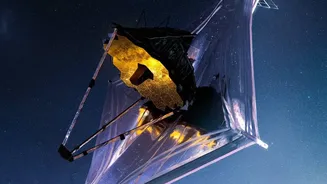
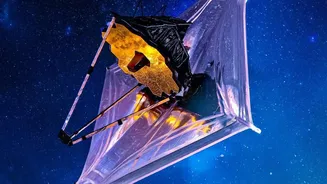
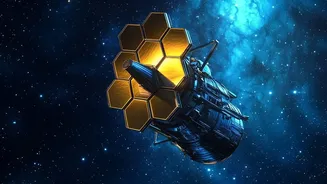
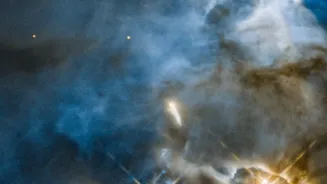
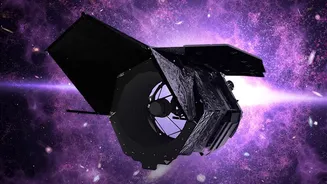
Previous telescopes like Hubble have given us beautiful views of these regions in visible light. However, nebulae are full of obscuring dust that acts like a thick fog. The James Webb Space Telescope is revolutionary because it sees in infrared light, which can penetrate this dust. This allows scientists to peer deep into the heart of the nebula and see the processes of sculpting in unprecedented detail. In its new portrait of the Lion Nebula, Webb can clearly distinguish the boundary where the intense radiation from the massive central stars is eating away at the dense wall of surrounding cold gas. It reveals intricate details in the filaments and clumps of gas that are either being destroyed or compressed into the next generation of stars.
From Gas Clouds to Galaxies
Studying the Lion Nebula isn't just about understanding one object in the sky; it provides a vital snapshot of a fundamental cosmic process. This constant battle between the creative and destructive forces of massive stars governs how star clusters form and evolve. It determines how quickly a galaxy enriches itself with heavier elements forged inside stars—the very elements needed to form rocky planets and, eventually, life. By precisely measuring the temperature, density, and chemistry of the gas at these sculpted interfaces, astronomers can refine their computer models of how galaxies are built. The Lion Nebula, as seen by Webb, offers a perfect laboratory for testing these theories. It helps us connect the dots from a giant cloud of gas to the birth of stars, the formation of planets, and the evolution of the galaxy we call home.