


What Exactly Is El Niño?
El Niño, which means 'The Little Boy' in Spanish, is a naturally occurring climate phenomenon. It’s defined by the unusual warming of sea surface temperatures in the central and eastern equatorial Pacific Ocean. This warming, which happens every two to seven
years, might seem distant, but it triggers a cascade of atmospheric changes that affect weather patterns worldwide. For India, the primary concern is its influence on the vital southwest monsoon, which delivers about 70-75% of the country's annual rainfall. By altering global wind and pressure systems, El Niño can weaken the monsoon winds that bring essential rain to the subcontinent.
The Historical Link to Drought
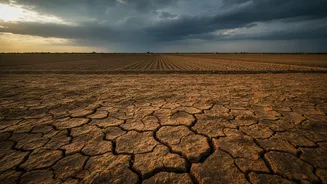
The fear surrounding El Niño is not unfounded. Historically, there is a strong correlation between El Niño years and deficient rainfall in India. Data shows that a significant majority of drought years in India have coincided with an El Niño event. For instance, the severe droughts of 1987 and 2002 occurred during El Niño years. Statistics indicate that around 60-70% of El Niño years since the mid-20th century have resulted in below-normal monsoon rainfall. This historical connection is why forecasters and policymakers pay such close attention whenever an El Niño event is forecast to develop. The agricultural sector, which depends heavily on monsoon rains for nearly half of its sown area, is particularly vulnerable.
Not a Foregone Conclusion
Despite the strong historical link, an El Niño year does not automatically spell drought for India. There have been several notable exceptions where the monsoon performed normally, or even above-average, despite a powerful El Niño. The most frequently cited example is 1997, which saw one of the strongest El Niño events of the 20th century, yet India received normal to above-average rainfall, avoiding a major drought. Conversely, some weaker El Niño events have been associated with severe droughts, proving that the strength of the Pacific warming doesn't always correlate directly with the severity of the monsoon's failure. This variability shows that El Niño is a major influencer, but not the sole determinant, of the monsoon's fate.
The Indian Ocean's Crucial Role
So, if El Niño isn't the only factor, what else is at play? The most significant moderating force is a phenomenon in our own backyard: the Indian Ocean Dipole (IOD). The IOD refers to the difference in sea surface temperatures between the western Indian Ocean (near the Arabian Sea) and the eastern Indian Ocean (south of Indonesia). A 'positive' IOD, with warmer waters in the west, can help strengthen the monsoon winds and bring more moisture to India. A strong positive IOD has the power to counteract the negative effects of an El Niño, as was the case in 1997. On the other hand, a 'negative' IOD can worsen the impact of an El Niño, leading to more severe rainfall deficits. Therefore, the interplay between the Pacific's El Niño and the Indian Ocean's IOD is often the deciding factor.
Location and Other Factors Matter
Beyond the IOD, other nuances can alter El Niño's impact. The precise location of the warming in the Pacific Ocean is critical. Some research suggests that when the warming is concentrated in the central Pacific, it is more likely to cause sinking air over India, suppressing rainfall. If the warming is farther east, its effect may be less pronounced. Furthermore, regional variations exist across India itself. The relationship between El Niño and rainfall has been observed to be stronger in some parts of the country, like North India, and weaker in others. For regions like Tamil Nadu, which receive most of their rain from the later northeast monsoon, a strong El Niño can sometimes even be associated with above-normal rainfall. These complexities make forecasting a challenging task that requires monitoring multiple variables.