

A New Window on the Universe
NASA is backing a small but ambitious mission named Aspera, designed to tackle one of the biggest questions in astrophysics: how do galaxies get the material they need to form stars? Slated for launch before the end of the decade, Aspera is part of the agency's
'Pioneers' program, which focuses on small, cost-effective satellites that can deliver big scientific returns. Led by the University of Arizona, this mission will not be looking at bright stars or distant galaxies in the conventional sense. Instead, its target is something far more elusive: the faint, almost invisible gas that surrounds galaxies.
The Galaxy's Invisible Halo
Every galaxy, including our own Milky Way, is enveloped in a massive, diffuse halo of gas known as the circumgalactic medium, or CGM. This CGM acts like a galaxy's reservoir and recycling plant. It contains the raw fuel—mostly hydrogen and helium—that flows into a galaxy to create new stars. It also catches the material violently expelled from the galaxy by supernova explosions. For decades, scientists have theorised that a huge portion of a galaxy's normal matter (or 'baryons') should be in the CGM, but it has been incredibly difficult to detect. A specific portion of this gas exists in a 'warm-hot' state that doesn't shine brightly in visible light, making it a frustratingly invisible piece of the cosmic puzzle.
Seeing the Unseen with Ultraviolet Light
This is where Aspera's clever design comes in. The mission will carry a specialised instrument called an extreme-ultraviolet (UV) spectrograph. While the warm-hot gas in the CGM is invisible to most telescopes, it does emit a very faint glow in the far-ultraviolet spectrum. Specifically, Aspera is tuned to look for the light signature of oxygen that has been heated to extreme temperatures, a key tracer of this elusive gas. By capturing this faint UV light, Aspera will be the first mission to directly map the distribution of this warm-hot gas. Think of it like using a special blacklight in a dark room to see things that were previously hidden. The mission's name, Aspera, is inspired by a Latin phrase meaning 'to the stars through hardship', a nod to the immense challenge of seeing this faint material for the first time.
Mapping the 'Lungs' of a Galaxy
The data from Aspera will help scientists understand what they call the 'baryon cycle'—the continuous flow of matter into, through, and out of a galaxy. This cycle is fundamental to a galaxy's evolution. If a galaxy can't pull in fresh gas from its CGM, star formation will eventually shut down. If it can't expel enriched material from supernovae, it can't build the next generation of stars and planets with heavier elements. By creating the first-ever 3D maps of the CGM around nearby galaxies, Aspera will show scientists where this gas is, how much of it there is, and how it's moving. This is crucial for testing computer simulations of galaxy evolution and refining our understanding of how structures like our own Milky Way were assembled over billions of years.
A Small Satellite with Big Ambitions
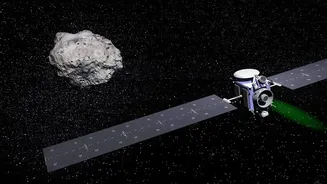
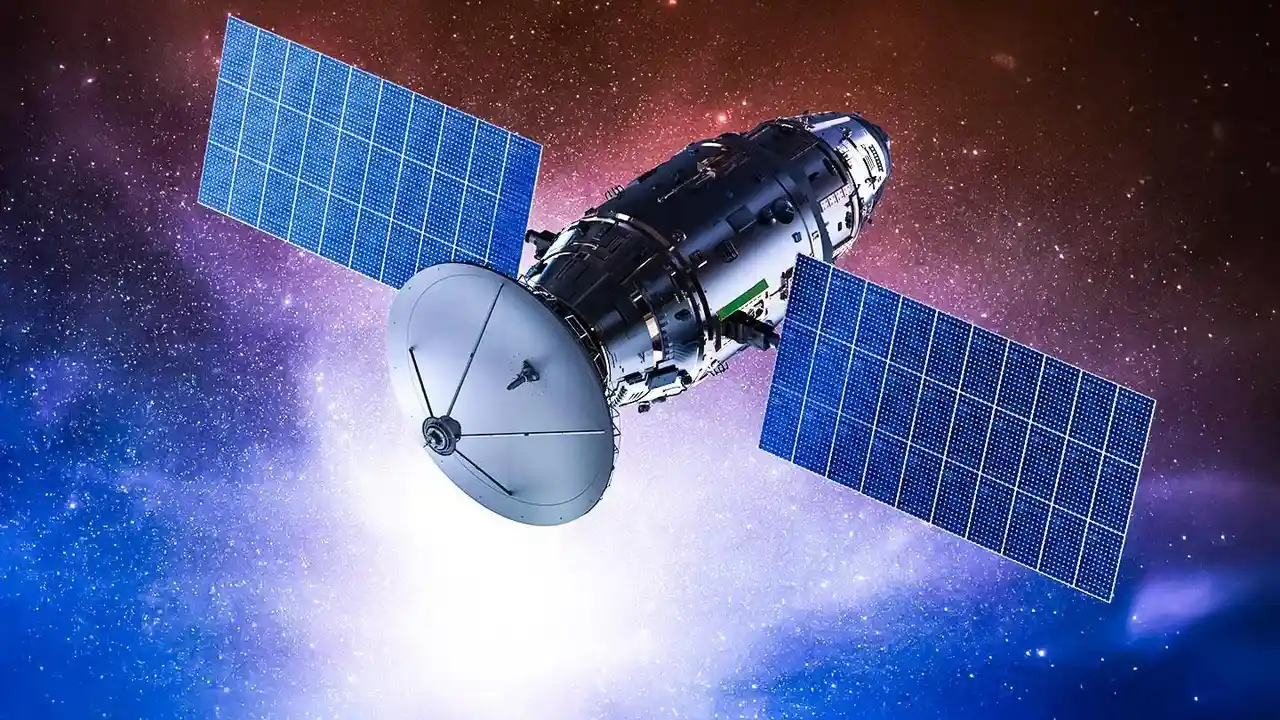
What makes Aspera particularly exciting is its efficiency. As a NASA 'Pioneer' mission, it operates with a cost cap of just $20 million—a fraction of the cost of larger flagship missions. The satellite itself is roughly the size of a mini-fridge, demonstrating a modern approach to space science where smaller, targeted missions can answer very specific and important questions. By focusing on a single, well-defined goal, Aspera promises to fill a major gap in our knowledge that has persisted for years. Its findings will not only reveal the hidden structure of galaxies but will also pave the way for future, more powerful observatories designed to study the cosmic web in even greater detail.