




Your Instructor Is Your Lifeline
The single most important decision you will make as a new diver is choosing your instructor. A great instructor does more than teach you how to breathe underwater; they build your confidence, ensure your safety, and inspire a lifelong passion for the ocean.
Look for an instructor affiliated with a globally recognised agency like PADI or SSI. You can verify an instructor's status online through platforms like PADI Pro Chek to ensure they are active and in good standing. A good teacher will be patient, a clear communicator, and genuinely responsive to your fears or concerns. Don't be afraid to ask them questions before signing up: Why do they love teaching? Where is their favourite local dive spot? Their enthusiasm and professionalism are the foundation of your entire experience.
The Right 'Classroom': A Beginner-Friendly Dive Site
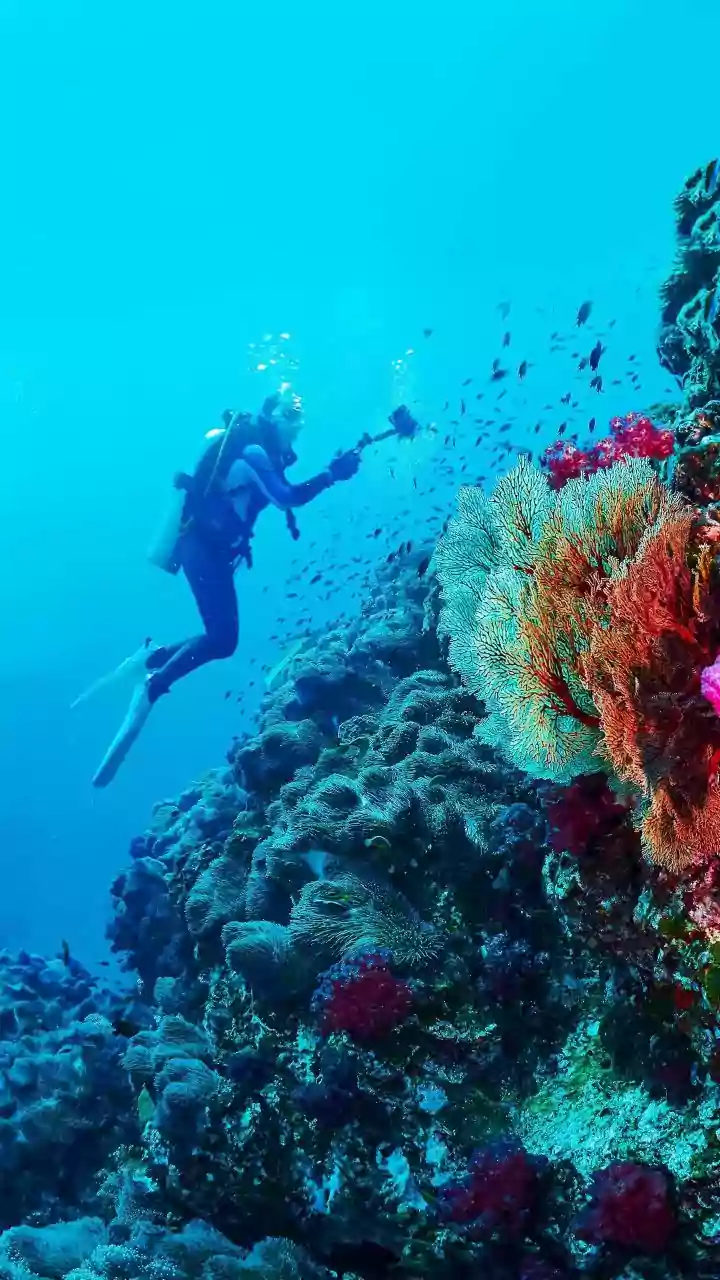
Your first open-water dives should be in a calm, controlled environment. A beginner-friendly site has clear and shallow water, minimal currents, and interesting marine life to see without needing to go deep. This allows you to focus on mastering fundamental skills without battling challenging conditions. India offers excellent options for new divers. The Andaman and Nicobar Islands, particularly Havelock and Neil Island, are famous for their clear visibility and vibrant, shallow reefs perfect for training. Goa is another popular choice, known for discovery dives and beginner-friendly packages with calm waters. Further afield, Lakshadweep also offers pristine lagoons ideal for learning. Choosing a location designed for novices helps ensure your first breaths underwater are full of wonder, not worry.
The Myth of 'Owning It All'
Walking into a dive shop can be overwhelming, with walls of gear suggesting you need one of everything. The reality is, you don't. For your certification course, the dive school will provide all the critical life-support equipment: the tank, the regulator (the breathing apparatus), and the Buoyancy Control Device (BCD), which is the vest that helps you float or descend. This gear is regularly serviced and is more than adequate for your training. If you want to buy anything, focus on personal items. A well-fitting mask that doesn't leak can make a huge difference in your comfort. A snorkel and fins are also good first purchases, but even these are often available to rent. There is no need to invest in expensive regulators or a dive computer until you are a certified diver and know you will be diving regularly.
Focus on Skills, Not Gadgets
The most advanced dive computer in the world won't help you if you can't control your position in the water. The core of your initial training revolves around a few crucial skills. Chief among them is buoyancy control—the ability to hover weightlessly without sinking or rising. Mastering this reduces your air consumption, protects the fragile marine environment from accidental kicks, and is fundamental to your safety. You'll also learn vital safety drills like how to clear a flooded mask, recover your regulator, and communicate using hand signals. These skills are the true tools of a good diver. They are what keep you calm and in control, turning you from a nervous visitor into a confident explorer of the underwater realm.