

The Calorie Question: A Close Call
For those keeping an eye on their weight, the calorie count is often the first point of comparison. Here, both vegetables are excellent low-calorie options. A 100-gram serving of raw carrot contains about 41 calories, while the same amount of cooked pumpkin
has around 34 calories. This slight difference means both are fantastic choices for adding volume and nutrients to your meals without adding significant calories. Whether you're making a light 'kaddu ki sabzi' or adding shredded carrots to a salad, you can be confident you're making a diet-friendly choice. Ultimately, the preparation method will have a much bigger impact on the final calorie count than the vegetable itself.
Fibre: The Key to Fullness and Digestion
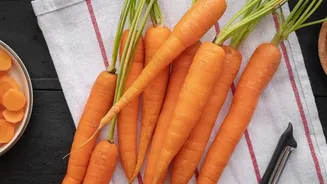
Fibre is a crucial nutrient for digestive health, blood sugar regulation, and feeling full after a meal. When comparing these two orange powerhouses, they are quite evenly matched, though some data suggests carrots have a slight edge. Per 100 grams, both carrots and pumpkin provide nearly 3 grams of dietary fibre. A single cup of carrots can offer about four grams of fibre, while the same serving of pumpkin provides around three grams. This fibre content helps promote regular bowel movements and can aid in weight management by keeping you satiated for longer. So, whether you prefer the crunch of a carrot or the softness of a pumpkin, you are getting a good dose of beneficial fibre.
Vitamin A: The Vision and Immunity Champion
Both carrots and pumpkins are famous for their rich orange hue, which comes from beta-carotene, a compound your body converts into Vitamin A. This vitamin is essential for good vision, a strong immune system, and healthy skin. While both are excellent sources, carrots are often cited as having a higher concentration of Vitamin A. Pumpkin is no slouch, however, with a single cup providing a significant portion of your daily recommended intake. Vitamin A also acts as a powerful antioxidant, helping to protect your body against damage from free radicals.
A Look at Other Essential Nutrients
Beyond the big three, these vegetables offer a host of other important vitamins and minerals. Carrots are particularly rich in Vitamin K, which is vital for bone health, and also provide B vitamins that help with energy production. Pumpkin, on the other hand, stands out for its mineral content. It is a good source of potassium, which is important for regulating blood pressure, and also contains more iron and copper than carrots. Both vegetables contain Vitamin C, which further supports the immune system.
Glycemic Index and Blood Sugar
For individuals managing blood sugar levels, the glycemic index (GI) is an important consideration. Raw carrots have a very low GI of 16, and even boiled carrots remain in the low category at 39. Pumpkin has a medium GI of around 64. However, the Glycemic Load (GL), which accounts for the carbohydrate amount in a typical serving, is very low for both. This means that in normal portion sizes, neither vegetable is likely to cause a significant spike in blood sugar levels, making them suitable for a diabetic-friendly diet.
The Verdict: Which Should You Choose?
Declaring one vegetable an outright winner is difficult because both are incredibly nutritious. The best choice truly depends on your specific health goals. If you are looking to maximize your Vitamin A and Vitamin K intake, carrots are a slightly better pick. If you want to boost your intake of minerals like iron, potassium and copper, pumpkin has the advantage. For weight management and fibre, they are nearly tied. Instead of picking one over the other, the smartest approach is to include both in your diet. Variety is key to obtaining a wide range of nutrients. Enjoy carrots in your salads, juices, and 'sabzis', and use pumpkin in soups, curries, and even traditional sweets like 'halwa'. By embracing both, you get the combined benefits of these two fantastic vegetables.