







An Age of Abundance
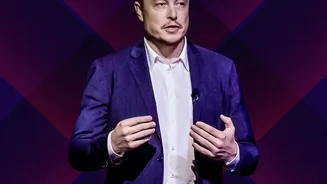
In a series of recent statements, Elon Musk has articulated a vision where advanced AI and robotics create an “age of amazing abundance”. Speaking at events and in interviews, he suggests that within a decade or two, machines will be able to produce any
goods and services we desire. In this scenario, the fundamental reason most people work—to earn money for necessities—would disappear. Musk has repeatedly stated that in this future, work would become a choice, akin to a hobby, pursued for personal satisfaction rather than economic necessity. He even predicted that by 2036, money itself might become largely irrelevant because goods and services will be so plentiful.
Universal High Income
To manage this transition, Musk distinguishes between Universal Basic Income (UBI) and what he calls “Universal High Income.” While UBI proposes a regular, unconditional payment to all citizens to cover basic needs, Musk's concept implies a much higher standard of living, funded by the immense productivity of AI. The idea is that with robots doing the work, the wealth generated would be so vast that it could provide everyone with a high level of income, ensuring there is “no shortage of goods or services.” This, he argues, would effectively eliminate poverty. The main challenge for humanity, in his view, would shift from survival to a more philosophical question: finding meaning and purpose in a world where machines can do everything better.
The Sceptic's Viewpoint
However, not everyone is convinced by this utopian vision. Many economists and technology experts argue that fears of mass unemployment have accompanied every major technological wave, yet new jobs have always emerged to replace old ones. The argument is that AI will augment human capabilities rather than replace them entirely, automating specific tasks within jobs, not the jobs themselves. Research from institutions like Goldman Sachs suggests that while there will be a transitional period of job displacement, the long-term impact on overall employment will be mild. Furthermore, some who have studied UBI, including AI leaders like Sam Altman, have found it to be an incomplete solution that doesn't address deeper systemic issues like healthcare or job stability, even when it alleviates immediate financial stress.
India's AI Crossroads
For a nation like India, with a vast and young workforce, the implications are particularly complex. The country's economy has been significantly powered by knowledge workers in sectors like IT and business process outsourcing—precisely the jobs most exposed to cognitive automation from AI. Projections indicate that AI could displace a significant percentage of white-collar jobs in the near future. At the same time, AI is also creating a massive demand for new, highly-skilled roles in areas like data analytics, AI engineering, and cybersecurity. The challenge for India will be managing this transition. A recent NASSCOM report highlighted a significant skills gap, noting that a large majority of companies struggle to hire talent with the necessary AI skills. Successfully navigating the AI revolution will depend on a massive push for upskilling and education to prepare the workforce for the jobs of the future, not the past.