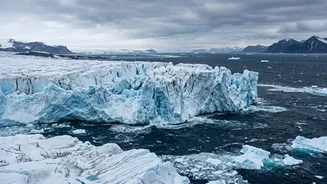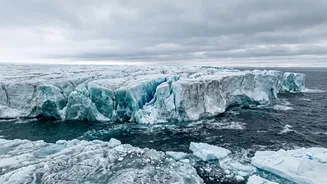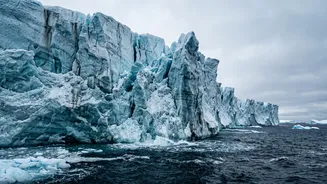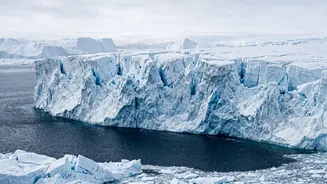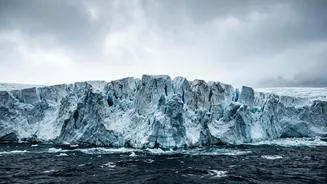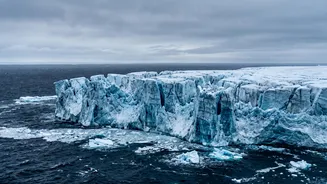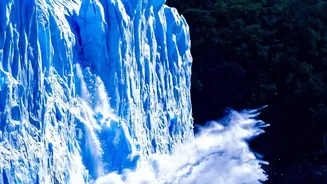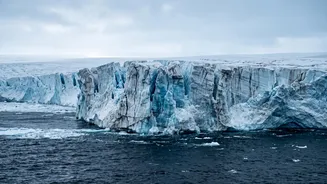



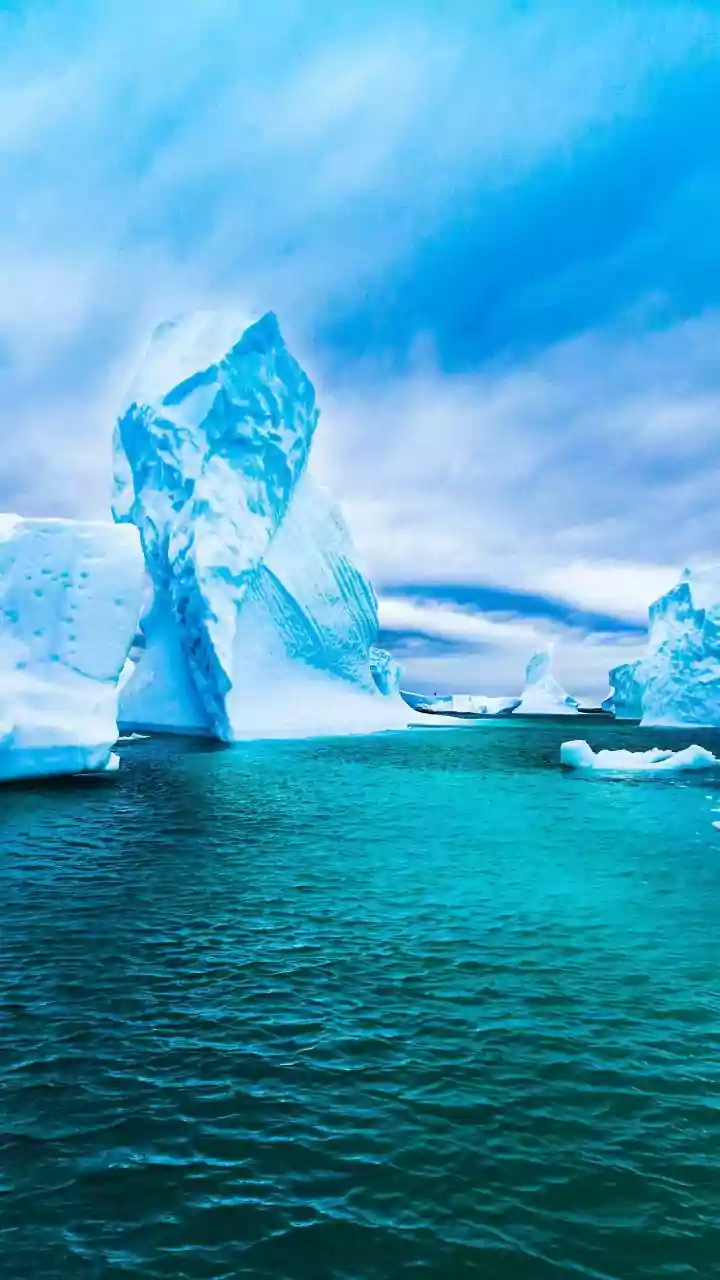
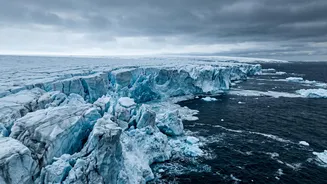
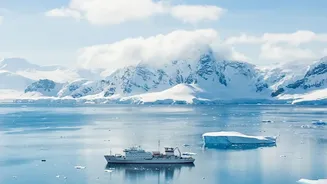
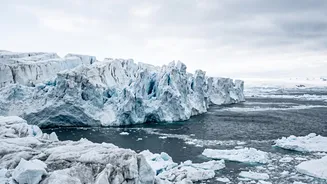
Antarctica’s Thwaites Glacier, often called the 'Doomsday Glacier', holds the potential for catastrophic sea-level rise. Now, a revised outlook is forcing scientists to re-evaluate the risk it poses to global coastlines by the end of the century.
The 'Doomsday Glacier' Explained
Thwaites
is a colossal glacier in West Antarctica, roughly the size of Great Britain. Its ominous nickname comes from its alarming potential: if it were to collapse entirely, it holds enough ice to raise global sea levels by an estimated 65 centimetres, or over two feet. More critically, it acts as a natural cork, holding back the rest of the West Antarctic Ice Sheet. The total collapse of this wider region could eventually lead to sea levels rising by as much as 10 feet, a scenario that would redraw coastlines and inundate cities worldwide. For decades, scientists have watched as Thwaites has thinned, retreated, and lost ice at an accelerating rate, currently contributing to about 4% of annual sea-level rise.
What the New Research Reveals
The 'revised outlook' stems from new modelling studies that change our understanding of how the glacier is melting. A study published in late 2026 in Nature Communications found that earlier models may have significantly underestimated the rate of melt. The key discovery is the existence of a 'grounding zone'—a wide area where warm ocean water penetrates several kilometres under the glacier's base, which was previously thought to be a more stable, narrow line. This 'tidal pumping' mechanism, where tides push warm, salty water deep beneath the ice, is causing vigorous melting from below. As a result, new projections suggest Thwaites could contribute up to 30 millimetres (1.2 inches) to global sea level by 2100, which is double the previous estimates, even without any further increase in global warming.
A Point of No Return?
Disturbingly, some research suggests the glacier's ice loss may now be unavoidable. A study by the British Antarctic Survey ran simulations where they completely turned off the effects of ocean melting. While a neighbouring glacier began to recover in the model, Thwaites continued to lose ice for the entire 150-year simulation period. The findings suggest that past ocean warming has already committed the glacier to a state of irreversible retreat. This is compounded by the fact that the glacier's forward motion is held back by an underwater mountain called the Mouginot Ridge. New models predict there is a 60% probability that the glacier will detach from this stabilising ridge before 2100, which would trigger a much more rapid retreat.
A Direct Threat to India’s Coastline
While Antarctica may seem a world away, the fate of Thwaites has direct and severe implications for India. A sea level rise of even a few centimetres will have a compounding effect along India's 7,500nd kilometre coastline. Major coastal cities like Mumbai, Chennai, Kolkata, and Visakhapatnam are already highly vulnerable to flooding. The increased sea level would worsen storm surges during cyclones, accelerate coastal erosion, and lead to saltwater intrusion into freshwater sources and agricultural land. Lowlyng regions, such as the Sundarbans delta in West Bengal and the Kuttanad region in Kerala, face an existential threat. These revised projections underscore the urgent need for India to bolster its coastal defences, enhance early warning systems, and implement long term adaptation strategies.