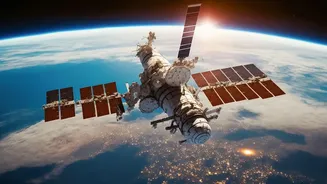



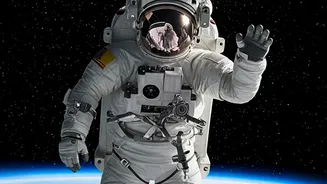
NASA has finished a major power upgrade for the International Space Station, a marvel of engineering orbiting 400 kilometres above Earth. But with the station set to retire around 2030, why invest in a multi-year overhaul now?
A Five-Year Power Boost Is Complete
In a series of complex spacewalks
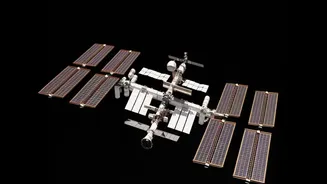
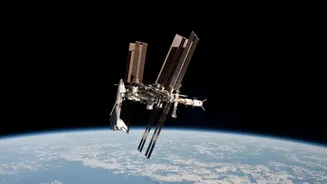
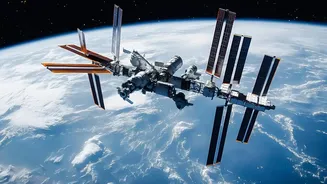
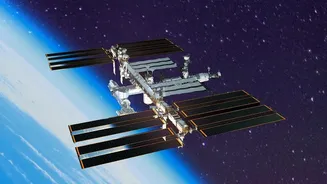
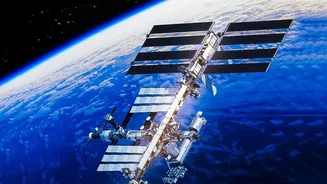
culminating in early November 2026, astronauts have installed the eighth and final new solar array on the International Space Station (ISS). This completes a massive upgrade project that began back in 2021. The new additions, known as ISS Roll-Out Solar Arrays (iROSAs), are designed to augment the station's original, aging solar wings. Over two decades in the harsh environment of space had caused the original panels' efficiency to decline. The final installation was carried out by NASA astronaut Anil Menon and Canadian Space Agency astronaut Joshua Kutryk during a nearly seven-hour spacewalk. This marks the end of a multi-year, multi-mission effort to secure the station's power supply for its final operational years.
How the New Arrays Work
The iROSA technology is a significant leap forward. Unlike the old, rigid panels that were folded up for launch, the iROSAs are made of a flexible material that allows them to be rolled into a compact cylinder. During installation, they unfurl like a giant measuring tape, using the stored strain energy in their composite booms to deploy without the need for motors. These new arrays are smaller and more efficient than their predecessors. They have been placed in front of six of the eight original, larger arrays, partially shadowing them but providing a substantial net gain in power. The total power generating capacity of the station has been boosted from about 160 kilowatts to approximately 215 kilowatts, an increase of up to 30 percent.
Powering a Final Decade of Science
The central question is: why pour resources into an outpost slated for retirement? The answer lies in maximizing its scientific return. The ISS is a unique microgravity laboratory, and this power boost ensures it can operate at full capacity, supporting more complex and power-intensive experiments right until the end. This includes research in materials science, advanced life support systems, and plant biology aimed at learning how to grow food for future deep-space missions to the Moon and Mars. More power means more science, allowing researchers to run more equipment simultaneously and support the advanced technologies needed for future exploration. It ensures the station's third and 'most productive decade' lives up to its name.
A Bridge to the Future of Space
This upgrade isn't just about the ISS; it's a critical investment in the future of human spaceflight. NASA plans to deorbit the station in a controlled maneuver around 2030 or early 2031, crashing it into a remote area of the Pacific Ocean. Before that happens, the agency needs to ensure there is no gap in low-Earth orbit research capabilities. The extra power from the iROSAs helps bridge this transition. The technology itself is a testbed for future missions. Versions of these roll-out arrays will power the Lunar Gateway, an outpost planned for orbit around the Moon as part of the Artemis program, and were used on the DART asteroid-redirect mission. Experience gained from installing and operating them on the ISS directly informs the design of future spacecraft.
Paving the Way for Commercial Space
The end of the ISS will mark a new chapter : era of commercial space stations . NASA is actively funding private companies like Blue Origin , Nanoracks , and Axiom Space to develop their own orbital outposts . Axiom Space plans to first attach its modules to the ISS starting in 2026 , before detaching to become a free - flying commercial station prior to the ISS ' s deorbit . NASA ' s goal is to become just one of many customers in a vibrant commercial marketplace in low - Earth orbit . By ensuring the ISS remains a productive hub for research and technology demonstration until 2030 , NASA is providing a stable platform for this transition , allowing commercial partners to mature their technologies and business models .