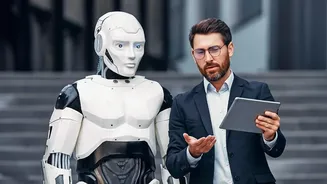






The conversation about AI and jobs often spirals into a simple fear of replacement. But this misses the point. The real, more nuanced story isn't about a labour forecast; it's about how AI is fundamentally changing the value of experience.
Beyond Automation: AI as an Amplifier
For years, the
dominant narrative surrounding artificial intelligence in the workplace has been one of automation and substitution. The central question was, 'Which jobs will AI take?' While understandable, this view is becoming outdated. The discussion is evolving from replacement to augmentation. Today's generative AI tools are less like autonomous robots and more like powerful collaborators. They can process vast datasets, handle repetitive tasks, and generate content at a scale humans cannot match. This shift is profound. Instead of making experienced staff redundant, AI is poised to free them from mundane work, allowing them to focus on tasks that require a distinctly human touch.
The Enduring Value of Lived Experience
AI models learn from data; humans learn from living. This is a critical distinction. An AI does not have genuine awareness, moral accountability, or the emotional intelligence to navigate complex workplace dynamics. It can identify patterns but lacks the wisdom that comes from years of navigating successes, failures, and difficult conversations. These are the areas where seasoned professionals become more valuable, not less. Skills like ethical judgment, mentorship, intuitive decision-making, and building trust are not algorithmic. As AI handles the 'what', the demand for senior staff who understand the 'why' and the 'how' will only intensify. They provide context, appreciate nuance, and ask the right questions—capabilities that data alone cannot replicate.
From Execution to Judgment: A New Definition of 'Senior'
In the past, seniority was often demonstrated through mastery of execution—the ability to perform complex tasks independently. AI is rapidly commoditising pure execution. It can generate code, write reports, and analyse spreadsheets, compressing learning curves for junior employees. This doesn't eliminate senior roles; it redefines them. True seniority is shifting from 'doing' to 'deciding'. The most valuable professionals will be those who can expertly prompt AI, critically evaluate its outputs, identify its weaknesses, and integrate its strengths into a broader strategic vision. It's no longer about knowing the tools inside-out, but about possessing the judgment to use them wisely and the foresight to know when their outputs should be challenged or overridden.
What This Means for Hiring and Careers
This evolving landscape has significant implications for how companies hire and how professionals should approach their careers. Research shows that while 94% of executives see their roles changing due to AI, many companies still default to hiring 'like-for-like' candidates, creating a gap between current needs and future realities. Going forward, the most sought after experienced candidates will demonstrate 'AI fluency'—not as a technical skill, but as a leadership competency. They must show an ability to guide human-AI collaboration and redesign workflows to leverage both human and machine strengths. For experienced workers, the imperative is to move beyond domain expertise and cultivate these 'superskills': strategic thinking, adaptability, and deep critical reasoning. It’s about proving you can steer the ship, not just row the boat.