


What Is E20 and Why the Switch?
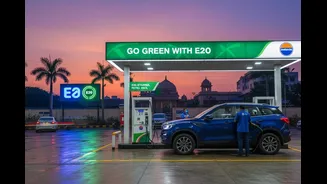
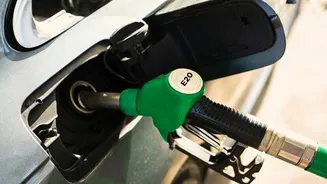
E20 is a blend of 20% ethanol and 80% petrol. India's government is promoting its use for several key reasons: to reduce the country's heavy reliance on imported crude oil, which could save billions in foreign exchange; to lower vehicle emissions; and to boost
the rural economy by creating a massive market for ethanol produced from sources like sugarcane and maize. The transition is part of an ambitious roadmap to achieve 20% ethanol blending nationwide, a target that has been fast-tracked to 2025. This policy aims to enhance India's energy security while also providing environmental benefits.
The Automakers' Seal of Approval
The Society of Indian Automobile Manufacturers (SIAM), which represents major players like Maruti Suzuki, Tata Motors, and Toyota, has publicly backed the E20 programme, stating it is an important step for India's energy security. The government and leading automakers have said that the fuel was introduced only after rigorous and extensive testing. Studies were conducted by bodies like the Automotive Research Association of India (ARAI) and the Indian Institute of Petroleum (IIP), which reportedly found no significant negative impacts on performance, drivability, or component wear, even in legacy vehicles. Major companies like Maruti Suzuki have analyzed service data from crores of vehicles, including many older models not originally certified for E20, and reported no abnormal corrosion or component failure linked to the fuel.
A Recent Controversy and Clarification
Recently, the conversation around E20 became more complicated. In late July 2026, SIAM sent a letter to the government raising concerns about a potential increase in vehicle component failures, linking them to possible high chloride and moisture contamination in the fuel supply. This communication caused a stir, as it seemed to contradict previous assurances. However, within days, SIAM withdrew the letter. The industry body clarified that the figures cited were preliminary and required further nationwide authentication before any conclusions could be drawn. It reaffirmed its full support for the E20 initiative, stating that technical discussions between automakers and oil companies are routine and that there was "no cause for concern".
Is Your Car E20 Compatible?
This is the most critical question for vehicle owners. Generally, most petrol vehicles manufactured since 2023 are E20-compatible, meaning their engines and fuel systems were specifically designed to handle the blend. For older vehicles, particularly those made before 2016, there are lingering concerns. While the government and automakers state that extensive testing showed no major issues, some experts warn that prolonged use of E20 in non-compliant cars could potentially degrade rubber components, seals, and gaskets over time. Anecdotal reports from some drivers and mechanics mention issues like reduced fuel efficiency and engine misfires, though these are not officially verified as being caused by E20. The government maintains that if E20 caused widespread issues, millions of breakdowns would have occurred, which has not happened.
Mileage, Maintenance, and Fuel Quality
One of the most debated aspects of E20 is its impact on mileage. Because ethanol has a lower energy density than petrol, a slight drop in fuel efficiency is expected. Estimates from manufacturers and the government suggest a reduction of about 3-5% for older vehicles. Automakers argue that factors like tyre pressure, driving habits, and vehicle maintenance have a much larger impact on overall mileage. Beyond vehicle compatibility, a growing concern is the quality of the fuel itself. Experts and fuel retailers have pointed out that ethanol is hygroscopic, meaning it absorbs moisture from the air. If water contaminates the fuel in storage tanks, it can lead to phase separation and cause engine problems, regardless of whether a car is E20-compliant or not.