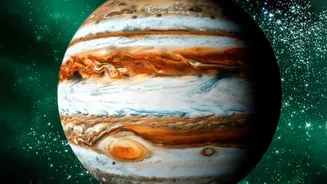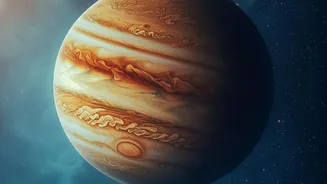



For centuries, a colossal, crimson eye has stared back at us from the depths of space. Jupiter's Great Red Spot, a storm larger than our entire planet, is a solar system icon. But what is this swirling vortex, and why is it changing?
A Storm Unlike Any Other
Imagine a hurricane
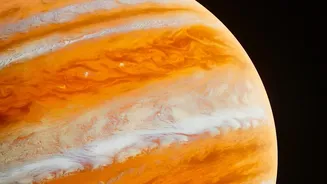
so vast it could swallow the Earth whole. That is Jupiter's Great Red Spot. It's not a hurricane in the earthly sense, but an anticyclone—a massive high-pressure system rotating counterclockwise in Jupiter's southern hemisphere. Unlike storms on Earth that lose energy over land, the Great Red Spot has raged for centuries on a planet with no solid surface to slow it down. It is the largest and longest-lasting storm ever observed in our solar system, a majestic and violent spectacle of planetary weather. Its winds whip around its edges at speeds exceeding 400 kilometres per hour, creating a vortex of unimaginable power.
Centuries of Stargazing
The history of the Great Red Spot is a story of scientific discovery itself. While some early accounts from the 17th century by astronomers like Giovanni Cassini mention a 'permanent spot', continuous and well-documented observation began in the early 1830s. For nearly 200 years, astronomers have tracked its movement and changes. In the late 1800s, it was estimated to be a colossal 40,000 kilometres wide, large enough to fit three Earths side-by-side. Early observers were baffled, with some even speculating it could be a giant raft floating in Jupiter's atmosphere. It wasn't until the space age, with missions like Voyager in 1979, that we got our first detailed images, confirming it was a dynamic storm of incredible complexity.
The Anatomy of a Monster
So, what makes this storm tick? Jupiter's rapid 10-hour rotation creates powerful jet streams that flow in opposite directions, and the Great Red Spot is essentially trapped between two of these. This stable position allows it to persist. The storm itself is colder at the top and warmer at its base, which drives its powerful winds. The iconic reddish colour is still a topic of research, but the leading theory suggests it's a kind of 'sunburn'. Chemicals like ammonia and acetylene, which are known to exist on Jupiter, are churned up to high altitudes by the storm. There, they are blasted by the Sun's ultraviolet radiation, creating reddish compounds called tholins. This explains why the colour is most intense in the Great Red Spot, as it towers above the surrounding clouds.
The Incredible Shrinking Spot
One of the most dramatic discoveries of recent decades is that the Great Red Spot is shrinking. Since observations began, it has been getting progressively smaller and more circular. When the Voyager probes flew past in 1979, the storm was about 23,000 kilometres across. By 2017, it had shrunk to just over 16,000 kilometres in diameter—still massive, but a significant reduction. The rate of shrinkage has even appeared to accelerate in recent years. Scientists are still working to understand why this is happening. Some theories suggest that smaller eddies and storms are feeding into it, altering its internal dynamics and causing it to lose momentum. This has led to speculation that the iconic storm could become the 'Great Red Circle' and perhaps disappear entirely within a few decades.
Probing the Depths with Juno
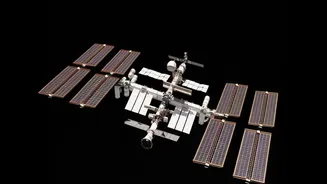
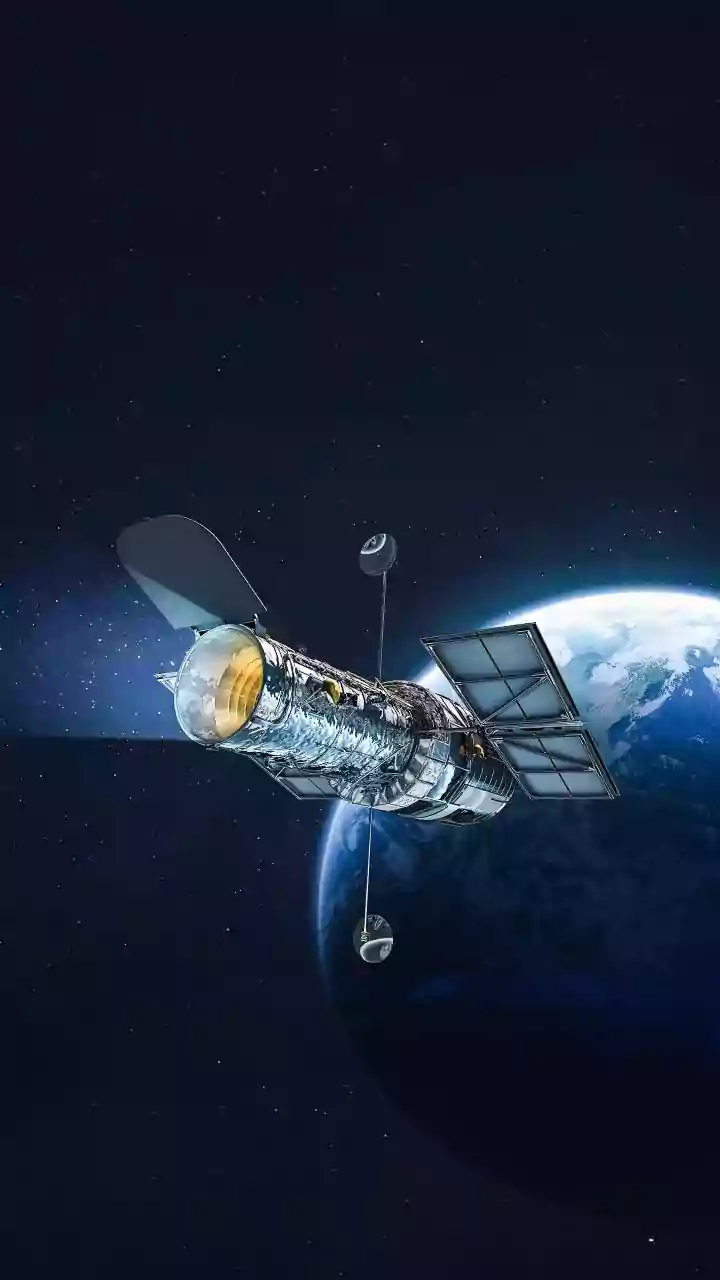
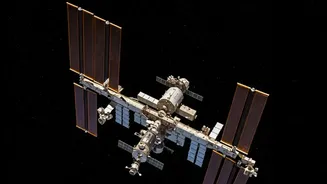
Our understanding of the Great Red Spot has taken another leap forward with NASA's Juno mission, which has been orbiting Jupiter since 2016. Using microwave and gravity instruments, Juno has been able to peer deep beneath the cloud tops for the first time. The data revealed something astonishing: the storm is not a shallow feature. It has roots that extend as deep as 500 kilometres into the planet's atmosphere. To put that in perspective, that's more than 50 times deeper than Earth's deepest ocean and deep enough to stretch from our sea level to the orbit of the International Space Station. These findings from Juno are helping scientists create a 3D picture of how the storm works, confirming it as a truly deep and powerful atmospheric structure, not just a surface-level event.