




The Ghost in the Machine
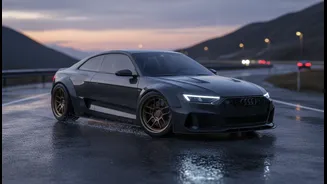
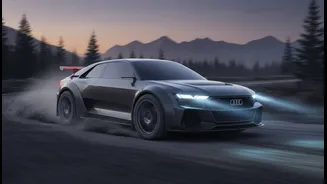
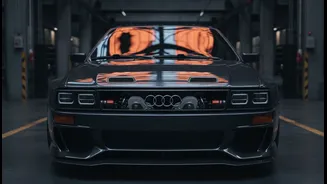
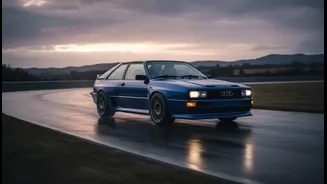
The 'comeback' of the Audi Sport Quattro isn't happening on an Audi assembly line. Instead, its spirit is being resurrected by small, dedicated workshops creating multi-million dollar 'restomods' for discerning collectors. Companies like E-Legend and
HSR Manufaktur are building modern interpretations, capturing the iconic, box-arched silhouette of the original. The E-Legend EL1, for example, is an all-electric supercar that pays direct homage to the Quattro, aiming to replicate its brutal performance with a futuristic twist. Similarly, the HSR Type 859 takes a period-correct Audi chassis and wraps it in new carbon fiber bodywork, powered by a modern Audi five-cylinder engine tuned to over 500 horsepower. These are not replicas; they are ultra-exclusive tributes, selling for prices that dwarf most modern supercars, proving a powerful market exists for this specific flavour of nostalgia.
A Brutal, Golden Age
To understand the appeal, you have to understand Group B. Active from 1982 to 1986, it was a period in the World Rally Championship with famously lenient rules that fostered rapid innovation. Manufacturers were required to build just 200 road-going versions to homologate their race cars, leading to the creation of some of the most powerful and sophisticated rally cars ever seen. Vehicles like the Audi Sport Quattro S1, Lancia Delta S4, and Peugeot 205 T16 were lightweight monsters, some pushing over 600 horsepower and accelerating on gravel faster than a modern sports car can on tarmac. This era is often called the 'golden era of rallying,' defined by incredible speed, technological freedom, and immense danger. The same lack of restrictions that made the cars legendary also made them deadly, and a series of tragic accidents led to the category's abrupt ban in 1986, cementing its mythical status.
The Currency of Memory
Why would someone pay over half a million dollars for a car that looks like it's from the 1980s? Because for a certain generation, these cars are more than just metal, carbon fiber, and rubber. They represent a pinnacle of analogue performance and high-stakes drama that has been sanitised out of modern motorsport. The children and teenagers who had posters of these fire-spitting machines on their walls now have the disposable income to own a piece of that legend. Audi itself understands this power. While not building a new road-going Quattro, it commissioned the all-electric S1 Hoonitron for the late Ken Block, a car explicitly designed to look like the iconic Pikes Peak-winning S1. It was a marketing masterstroke, leveraging decades of motorsport history to add soul to its new electric vehicle technology.
More Than a Throwback
These new cars are not simply cashing in on a name; they are addressing a genuine desire in the market for vehicles with character and a compelling story. The success of these Quattro-inspired projects mirrors that of others, like the Kimera Automobili EVO37, which resurrects the Lancia 037, another Group B hero. These new machines use modern technology—whether electric motors or advanced turbocharged engines—to deliver the extreme performance of the Group B era without the notorious difficulty and danger of the originals. They offer the aesthetic and the soul of the 80s icon, but with reliability and usability that the original race cars could never provide. It’s a compelling proposition: the thrill of the legend, engineered for the real world.