





A Confluence of Ideas in Bengaluru
The second edition of the International Conference on Spacecraft Mission Operations (SMOPS), held recently in Bengaluru, brought together the sharpest minds from ISRO and global space agencies. While the agenda was packed with topics from cybersecurity
to interplanetary exploration, a central theme emerged: the critical need for automation and Artificial Intelligence (AI) in managing India's increasingly complex space missions. ISRO Chairman Dr. V. Narayanan highlighted that AI and machine learning are no longer theoretical concepts but a present-day necessity for the organization. The conference served as a platform to chart a roadmap for a future where mission operations are smarter, safer, and more sustainable.
What is Automated Mission Control?
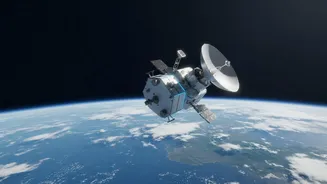
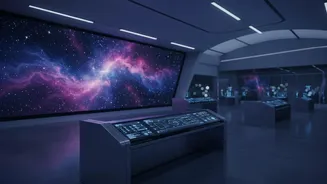
Traditionally, mission control conjures images of large rooms filled with engineers, each glued to a screen monitoring a specific data stream from a spacecraft. This human-centric model has served ISRO magnificently, from its earliest satellites to the historic Chandrayaan-3 lunar landing. However, automated mission control represents a paradigm shift. It involves using AI and sophisticated software to monitor, fly, and even troubleshoot spacecraft with minimal human intervention. Think of it as upgrading from a manually operated system to one with an advanced autopilot that can not only maintain its course but also detect potential problems and suggest solutions, often faster than a human could. This doesn't remove humans from the loop, but elevates their role from constant monitors to strategic decision-makers.
The Driving Force: Ambition and Complexity
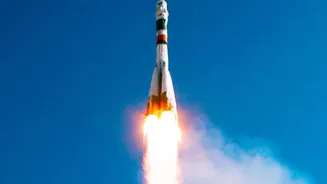
ISRO's shift towards automation is driven by its own success. The agency is no longer launching just one or two major missions a year. Its future includes the Gaganyaan human spaceflight program, a potential space station (the Bharatiya Antariksha Station), and follow-up missions to the Moon and Mars. Managing this sheer volume and complexity is becoming a challenge for a purely human-led mission control. For the Gaganyaan program, where astronaut lives are at stake, the need for speed and precision is paramount. An automated system can respond to an in-flight anomaly in milliseconds, a potentially life-saving advantage. Furthermore, for deep-space missions with significant communication delays, the spacecraft needs the intelligence to handle situations on its own.
Smarter, Safer, and More Efficient Missions
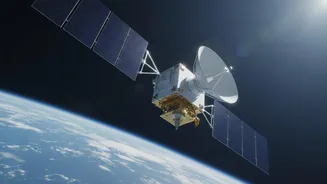
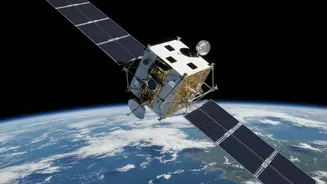
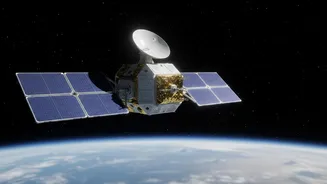
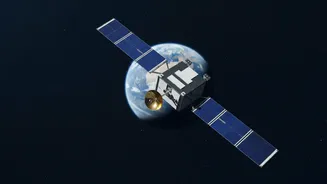
The benefits of integrating AI are immense. Automated systems can analyze vast amounts of telemetry data to predict component failures before they happen, making missions more reliable. They can optimize fuel consumption, extending the operational life of a satellite. For large satellite constellations, automation is the only feasible way to manage hundreds of spacecraft simultaneously. During the SMOPS conference, experts noted that AI and machine learning played a key role in the success of Chandrayaan-3, particularly in aiding the lander's autonomous decision-making during its final descent. This success provides a strong foundation and a clear justification for expanding the use of this technology across all of ISRO's future endeavours.
The Path Forward for ISRO
The road to a fully automated mission control is an incremental one. It involves developing and validating highly reliable software, creating new operational protocols, and ensuring robust cybersecurity to protect these critical assets. ISRO's plan will likely involve a phased rollout, introducing automated systems to assist flight controllers on less critical missions first, building confidence and experience. New facilities, like the dedicated Gaganyaan Control Centre, have already been established to support the unique requirements of human spaceflight. The knowledge shared at conferences like SMOPS, involving partners from NASA, ESA, and JAXA, will be crucial in adopting global best practices and ensuring India remains at the forefront of space technology.