




Why Swirl? The Magic of Contrast
Fully mixing jamun puree into yoghurt creates a homogenous, uniformly purple mixture. While still tasty, this method misses a key opportunity. When you swirl the puree instead, you create ribbons of intense, fruity flavour alongside the plain, cool tang
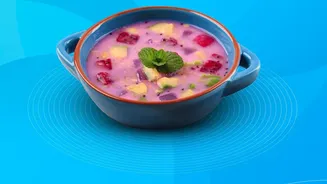
of the yoghurt. Each spoonful offers a different experience: one bite might be mostly creamy yoghurt, the next a burst of sweet-and-tart jamun, and the third a perfect marriage of both. This contrast in taste makes the dish far more dynamic and interesting. Beyond flavour, the visual appeal is undeniable. The deep purple of the jamun cutting through the pristine white of the yoghurt creates a beautiful, marbled effect that looks like a professionally plated dessert. It’s an effortless way to make your food look as good as it tastes.
Crafting the Perfect Jamun Puree
The key to a good swirl is a puree with the right consistency—not too thin that it bleeds into the yoghurt, and not too thick that it clumps. Start with fresh, ripe jamuns. After washing, you can either try to remove the flesh from the pits while raw or cook them briefly to soften them up. For an easy method, place about 250 grams of jamun in a saucepan with a couple of tablespoons of sugar (or jaggery) and a splash of water. Cook over low heat for about 10-15 minutes until the fruits burst and become mushy. Let the mixture cool, then press it through a sieve to separate the pulp from the seeds and skins. This will give you a smooth, vibrant puree. For a thicker consistency, you can continue to simmer the puree gently until it reduces to your liking. Allow it to cool completely before using.
The Art of the Swirl: A Step-by-Step Guide
Once you have your chilled yoghurt and cooled jamun puree, the final step is the most satisfying. For best results, use a thick yoghurt like Greek yoghurt or hung curd, as it provides a sturdier canvas. Spoon your yoghurt into a bowl, creating a smooth, even surface. Now, take a spoonful of your jamun puree and dollop it in a few spots across the yoghurt. Don't overdo it; three or four small dollops are usually enough. Take the tip of a knife, a skewer, or the handle of a spoon and gently drag it through the dollops and the yoghurt. You can create figure-eight patterns, gentle curves, or simple lines to create a marbled effect. The goal is to create distinct ribbons of colour, so be careful not to over-mix. Just a few gentle passes are all it takes to achieve that beautiful swirl.
A Note on the Goodness of Jamun
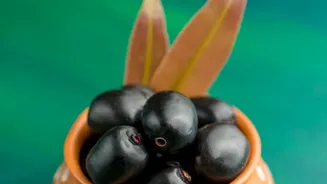
Beyond its delightful taste and colour, jamun (also known as Java plum or Indian blackberry) is a nutritional powerhouse. Native to the Indian subcontinent, this fruit is celebrated in traditional medicine. It is packed with antioxidants, particularly anthocyanins, which give it its deep purple colour and help combat oxidative stress in the body. Jamun is also a rich source of Vitamin C, which helps in boosting the immune system. Additionally, it contains nutrients like iron and potassium, which support heart health and help in blood purification. Incorporating jamun into your diet, especially when it's in season, is a delicious way to enjoy its numerous health benefits.
Beyond the Bowl: Other Ways to Use Your Swirl
This swirling technique isn't just for a simple bowl of yoghurt. You can apply the same principle to elevate several other dishes. Swirl the jamun puree into a lassi for a beautiful and flavourful drink. You can also use it to create stunning jamun yoghurt popsicles; simply pour layers or swirl the puree into the yoghurt base before freezing. It makes a fantastic topping for cheesecakes, panna cotta, or even vanilla ice cream, adding a burst of colour and a tangy counterpoint to the sweetness. This simple technique is a versatile tool in the kitchen, allowing you to add a touch of elegance to many of your favourite desserts and snacks.