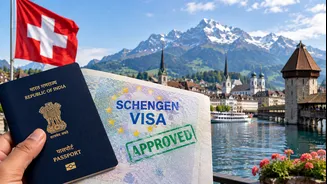








A European holiday is a dream for many Indians, but navigating the Schengen visa process can be daunting. The embassy you apply to can make a huge difference, with new data showing rejection rates for Indians vary dramatically from one country to the next.
Understanding the Big Picture
According to official European Commission statistics for 2025, Indian citizens lodged over 1.15 million applications for a short-stay Schengen visa, making India the third-largest applicant market in the world. Of those, over 181,000 were refused, resulting in an overall rejection rate of 15.8% for Indian applicants. This is slightly higher than the global average rejection rate, which stood at 14.6%. This means that roughly one in every six Indian applications was unsuccessful. While that number may seem high, the data reveals a more nuanced story: your chances of approval can change significantly depending on which country's consulate reviews your file.
The Easiest Doors to Knock On
For travellers with flexible itineraries, applying to a country with a historically lower rejection rate can be a strategic move. Based on the 2025 data, some of the most welcoming Schengen countries for Indian applicants included Denmark, which had the lowest refusal rate at just 6.9%. Belgium was also a strong option, with an overall rejection rate of 7.7%. Germany, despite handling a massive volume of over 153,000 applications from India, maintained a relatively low rejection rate of 10.5%. Sweden (11.4%) and Italy (12.7%) also had refusal rates well below the average for Indian applicants. It's also worth noting that outcomes can vary between different consulates of the same country within India; for example, in 2025, Belgium's Mumbai consulate refused only 4.5% of applications, compared to 14.0% in New Delhi.
The Toughest Consulates for Indian Applicants
On the other end of the spectrum, some countries have proven to be significantly harder to get a visa from. In 2025, Slovenia had the highest rejection rate for Indian applicants, turning down a staggering 46.1% of applications. Other countries with high refusal rates included Bulgaria (37%), Greece (33%), Malta (31.7%), and Estonia (30.1%). The high rate for Greece is particularly noteworthy, as it's a popular tourist destination that processed over 41,000 applications from India, yet still rejected one in every three. The Netherlands (20.6%) and Austria (21.6%) also had rejection rates considerably higher than the average.
Why Do Applications Get Rejected?
The reasons for rejection are often less about the country and more about the application itself. Consular officers are trained to spot inconsistencies and potential risks. The most common reason for refusal is a failure to justify the purpose and conditions of the intended stay. This can be anything from a vague travel itinerary that doesn't make sense to hotel and flight bookings that don't align. Another major red flag is doubt about the applicant's intention to return to India. Officers look for strong 'ties to the home country', such as a stable job, property ownership, or family commitments. Financial issues are also a frequent problem, but it's not just about having a low balance. Sudden large deposits into a bank account just before applying can look suspicious and are often interpreted as borrowed funds.
How to Build a Stronger Application
Regardless of which country you apply to, a well-prepared, honest, and consistent application is your best asset. The most crucial rule is to apply to the correct consulate: either the country that is your main destination (where you will spend the most nights) or your first port of entry if you are spending an equal number of days in multiple countries. Applying to an 'easy' country when your main destination is elsewhere is known as 'visa shopping' and is a frequent cause for rejection. Ensure your documentation is flawless. This includes providing a detailed day-by-day itinerary, obtaining travel insurance with the required €30,000 minimum coverage, and submitting bank statements showing a consistent and credible financial history. A clear cover letter explaining your travel purpose can also help create a compelling case for approval.