






A Digital Tsunami Fueling Growth
India's digital economy is expanding at a breakneck pace. The rollout of 5G, a billion-plus telecom subscribers, and the rapid adoption of AI, IoT, and cloud services are generating astronomical amounts of data. To store, process, and manage this information,
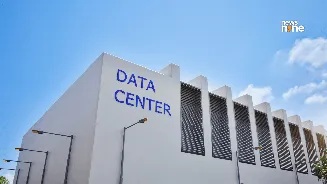
the country is building data centres on a massive scale. Projections show capacity could grow from around 1.5 GW in 2024 to as much as 10 GW by 2030, attracting billions in investment. This infrastructure is the backbone of Digital India, powering everything from digital payments to e-governance and AI-driven innovations.
The Billion-Dollar Power Problem
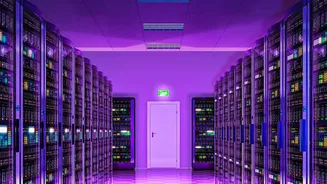
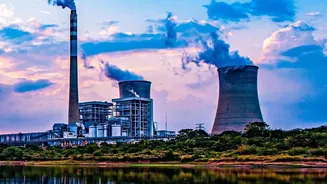
A data centre is essentially a factory for data, and like any factory, it requires a tremendous amount of power to operate 24/7. The primary consumers of this energy are the thousands of servers that perform the actual computing. As these facilities multiply and become more powerful to handle complex AI workloads, their electricity demand is set to skyrocket. By 2030, India's data centres could consume up to 3% of the nation's total electricity, a significant jump from less than 1% today. This puts immense pressure on local power grids, which are often already strained, and raises concerns about reliance on fossil fuels to meet the demand.
The Heat Is On: Cooling's Critical Role
Every watt of electricity used by a server is converted into heat. Without constant and effective cooling, the sensitive electronic components would quickly overheat and fail. Cooling systems are therefore non-negotiable, but they are also a major energy drain, accounting for nearly 40% of a data centre's total power consumption. In a warm country like India, this challenge is even more acute. Furthermore, many traditional cooling methods are water-intensive. A single 100 MW facility can use up to 2 million litres of water daily, creating a significant strain on resources in water-stressed cities like Mumbai, Chennai, and Hyderabad where many data centres are clustered.
Smarter Servers: The First Line of Defence
The most direct way to reduce a data centre's energy footprint is to use more efficient servers. Modern server architecture is designed to maximise computational power while minimising energy draw. Innovations like virtualization allow a single physical server to run multiple 'virtual' machines, consolidating workloads and reducing the number of active devices. Advances in processors (CPUs and GPUs) also deliver more performance per watt. Choosing energy-efficient hardware and employing power management features, which scale down energy use during low-utilization periods, are crucial first steps in building a sustainable data centre. This strategy not only cuts electricity bills but also reduces the amount of heat that needs to be removed.
The Cool Revolution: Beyond Air Conditioning
As server racks become more densely packed with powerful AI-focused hardware, traditional air cooling is hitting its limits. The industry is rapidly shifting towards advanced solutions, particularly liquid cooling. Direct-to-chip liquid cooling, for instance, uses fluids to capture heat directly from processors, a far more efficient method than cooling the entire room. Other innovative techniques include using outside air for 'free cooling' during cooler months and deploying AI-driven systems to dynamically manage thermal loads. In water-scarce regions, closed-loop systems that recycle water and air-cooled chillers are becoming essential to ensure sustainability.