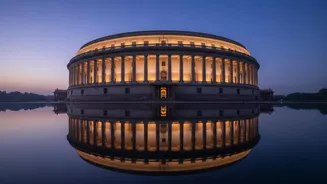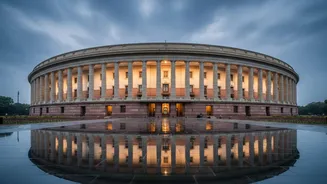





The Direct Financial Cost
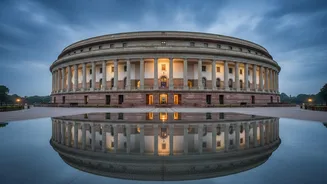
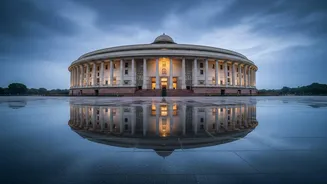
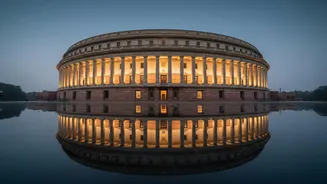
The most straightforward answer to who foots the bill is the Indian taxpayer. Estimates for the cost of running Parliament vary, but a widely cited figure from 2012, mentioned by former Parliamentary Affairs Minister Pawan Kumar Bansal, puts the cost at approximately
₹2.5 lakh per minute. This translates to about ₹1.5 crore per hour and around ₹9 crore for a typical six-hour working day. These figures, while over a decade old, are the most commonly used reference points in the absence of updated official estimates. This cost covers a wide range of expenses, including the salaries and allowances of Members of Parliament (MPs), the wages of parliamentary staff, and the operational costs of the Parliament building, such as security, utilities, and maintenance. When the House is adjourned due to disruptions, these expenses continue to accrue even though no legislative work is being done.
What Are Taxpayers Paying For?
An Indian MP's compensation package is substantial. As of early 2025, an MP's basic salary was increased to ₹1.24 lakh per month. In addition to this, they receive a constituency allowance of ₹70,000 per month and an office expense allowance of ₹60,000 per month. During parliamentary sessions, they are also entitled to a daily allowance, which was increased to ₹2,500. These figures do not include other perks like free medical facilities, rent-free housing, and travel allowances. A single wasted day means this entire apparatus, funded by public money, is paid for without producing the intended outcome: debate and legislation. One analysis estimated that between 2014 and 2024, disruptions in Parliament cost the Indian taxpayer over ₹3,300 crore.
The Unseen Costs of Disruption
Beyond the direct financial drain, parliamentary adjournments have significant indirect costs. When Parliament is unable to function, the legislative process grinds to a halt. Bills that address critical national issues, from economic reforms to social welfare, are delayed. This can have far-reaching consequences for the country's governance and development. For example, crucial debates on matters of urgent public importance, such as the ethnic violence in Manipur in 2023, were repeatedly stalled due to disruptions, preventing timely and necessary discussions. This legislative paralysis not only hinders progress but also weakens the executive's accountability, as Parliament is the primary body responsible for scrutinising the government's actions.
Why Do Adjournments Happen?
Parliamentary disruptions are often a tool used by the opposition to protest against government policies or to demand discussions on specific issues. An 'adjournment motion' is a formal parliamentary procedure that allows for a discussion on a matter of urgent public importance by setting aside the normal business of the House. It requires the support of 50 members to be admitted and is considered an extraordinary measure. However, frequent and often chaotic disruptions, sloganeering, and walkouts have become a common feature of parliamentary proceedings. These tactics are employed by all political parties, depending on whether they are in government or opposition, leading to a cycle of reciprocal disruption that ultimately undermines the institution's effectiveness.
The Democratic Deficit
The most profound cost of parliamentary adjournments is the erosion of democratic principles. The Parliament is meant to be a forum for debate, deliberation, and decision-making, representing the will of the people. When it is reduced to a stage for political theatrics and gridlock, it loses its credibility and effectiveness. The declining number of sitting days in Parliament further exacerbates this problem. While the Parliament in the 1950s and 1960s met for over 120 days a year, recent Lok Sabhas have averaged around 55 sitting days annually. This reduction in working days, combined with frequent disruptions, means that there is less time for scrutiny of legislation and holding the government to account, leading to a growing democratic deficit.