





From Ski Training to a Global Trend
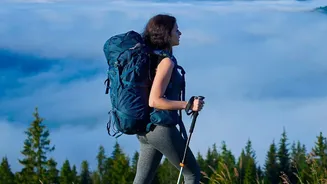
Originating in Finland as an off-season training method for cross-country skiers, Nordic walking has since become a popular activity worldwide for people of all fitness levels. The concept is simple: by using specially designed poles, you apply force
with each stride, actively involving your arms, shoulders, chest, and back muscles. Unlike regular walking, which primarily works the lower body, this technique transforms the movement into a low-impact, high-reward exercise that engages the core and upper torso, much like swimming or cross-country skiing.
The Powerful Health Benefits
The benefits of incorporating poles into your walk are significant. Studies show that Nordic walking can burn up to 46% more calories than regular walking, with most estimates citing a consistent 20% increase. This is because you are activating a much larger percentage of your muscles—around 80-90% compared to about 50% with normal walking. This increased engagement also helps improve cardiovascular fitness, can reduce 'bad' LDL cholesterol and chronic pain, and aids in building strength and endurance. For those with joint issues, the poles provide added stability and can help absorb some of the impact, particularly on downhills, making it an an accessible option for many.
Getting the Technique Right
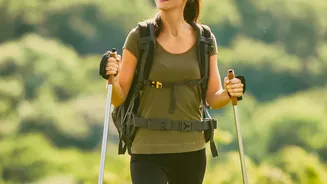
Mastering the basic technique is key to unlocking the full benefits. It's built on the natural rhythm of walking. As your left leg moves forward, your right arm swings forward to plant its pole, and vice versa. The key is to keep your posture upright with a slight forward lean from the ankles, not the waist. Plant the pole at an angle between your front and back foot, not out in front of you. As your arm swings back, you push off through the pole, opening your hand at the end of the movement while the strap keeps the pole attached to your wrist. This push-off is what propels you forward and engages your upper body muscles.
Choosing the Right Poles
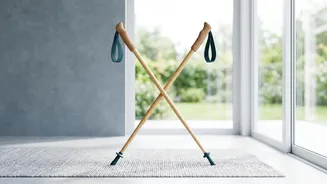
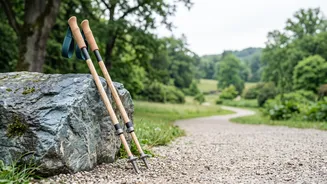
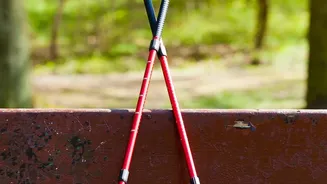
Not all poles are created equal, and using hiking or trekking poles isn't ideal. Nordic walking poles are specifically designed for the activity. They are lighter and feature a unique strap or glove system that allows you to perform the push-off and hand-release technique correctly. The material is also important; carbon poles are lightweight and better at absorbing vibrations, which reduces stress on your wrist and elbow joints, whereas pure aluminum can be too rigid. To find the right length, a common formula is to multiply your height in centimetres by 0.68. When you hold the pole, your elbow should be at roughly a 90-degree angle.
Common Mistakes to Avoid
Beginners often make a few common errors. One is simply carrying the poles instead of actively using them to push off. Another is planting the pole too far in front of the body, which acts as a brake rather than a propeller. Poor posture, such as slouching or hunching over, is also frequent and negates the postural benefits. It's also common for newcomers to fall into a 'pacing' rhythm, moving the arm and leg on the same side together. A good way to correct this is to simply drag the poles by the straps and walk normally, allowing your natural opposite-arm-and-leg swing to return before gripping the poles again.