







Two New High-Tech Facilities
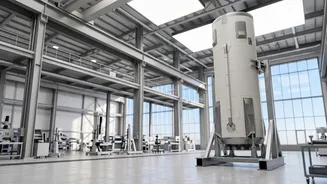
On September 9, 2026, Agnikul inaugurated two specialised centres at its Chennai Assembly & Testing Facility: the Stage Testing & Inspection Facility (STIF) and the Pressurant Tank Realisation, Over-wrapping and Outfitting Facility (PROOF). These aren't
just generic workshops. STIF is purpose-built to test entire reusable rocket stages under the same intense conditions they would experience during a real flight. Meanwhile, PROOF allows Agnikul to manufacture crucial high-pressure composite vessels in-house, reducing reliance on outside suppliers and speeding up production. This vertical integration—controlling everything from design to manufacturing and testing—is a massive strategic advantage.
The Quest for Reusability
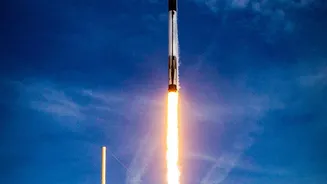
So, why is reusability such a big deal? Traditionally, rockets are single-use vehicles. The most expensive parts, the stages containing the engines and fuel tanks, are discarded after lifting a payload towards orbit, burning up in the atmosphere or falling into the sea. This is like flying a plane from Delhi to Mumbai and throwing it away after one trip. Reusable rockets, pioneered globally by companies like SpaceX, are designed to have their first stages fly back to Earth, land, and be refurbished for another launch. This dramatically cuts the cost of accessing space. Agnikul's new STIF facility is designed specifically for this 'fly-recover-inspect-requalify-and-fly-again' cycle, making it the only private Indian company with this in-house capability.
Building on Recent Success
This expansion comes on the heels of a major triumph. On May 30, 2024, Agnikul successfully launched its Agnibaan SOrTeD (Sub-Orbital Technology Demonstrator). This test flight was historic for several reasons. It was the first launch from a private launchpad in India, the first flight of a semi-cryogenic engine in the country, and it showcased the world's first single-piece 3D-printed rocket engine, the Agnilet. The flight, though brief, proved that Agnikul's core technologies work. The new facilities are the logical next step: scaling that proven technology into a commercially viable, reusable launch system.
Understanding the Agnibaan Rocket
The rocket at the heart of this mission is Agnibaan, a highly configurable launch vehicle designed for the small satellite market. Its most revolutionary component is the Agnilet engine, a semi-cryogenic powerhouse that is fully 3D-printed as a single component. This additive manufacturing approach drastically reduces complexity, cost, and production time compared to traditional engines made of thousands of individual parts. The Agnibaan rocket is designed to carry payloads of up to 300 kg to an orbit of 700 km. The new Chennai facilities will now allow Agnikul to test not just the engines, but entire integrated stages of this rocket, ensuring every component works together perfectly before and after a flight.
What's Next for Agnikul?
With the successful SOrTeD mission and these new facilities, Agnikul is shifting its focus towards Mission-02 and the ultimate goal of regular commercial launches. The STIF facility can test full-duration engine burns of up to 150 seconds and handle the immense thrust of clustered engines, which is vital for an operational rocket. CEO Srinath Ravichandran has emphasised that achieving reusability requires thinking beyond a single flight, and these centres provide the physical infrastructure to master the complex cycle of recovery and requalification. This move positions Agnikul not just as a technology demonstrator, but as a serious commercial entity aiming to compete in the global launch market.