







The Post-Monsoon Promise
Every year, from roughly July to September, many of India's most famous national parks close their core zones to visitors. This vital period allows the forest to regenerate after heavy rains and provides a disturbance-free breeding season for wildlife.
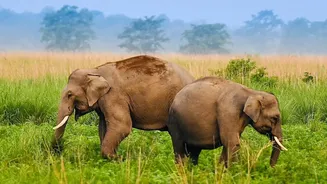
When the gates reopen, usually around October, tourists are greeted with breathtakingly green landscapes and full waterholes. The air is fresh, the dust has settled, and the jungle feels alive. This post-monsoon reopening fuels a surge in safari bookings, with travellers eager to be the first to witness the renewed wilderness. However, this vibrant scenery also presents a challenge: the dense, tall grass and thick foliage can make spotting animals, especially elusive ones like tigers and leopards, more difficult than in the drier months.
Nature's Unwritten Rules
The fundamental truth of any safari is that wildlife is wild. These are not actors in a curated performance. A tiger's movements are dictated by territory, hunger, mating instincts, and the need to avoid threats, not by the schedule of a tourist jeep. Most tiger reserves allocate only a small percentage of their total area, often 15-20%, as tourism zones. The vast majority of the park is an undisturbed core habitat where animals live without human interference. A sighting depends entirely on an animal choosing to be in that small, accessible fraction of its territory at the exact moment your vehicle passes by. Setting expectations is crucial; the ideal ratio for tiger sightings is often considered to be one for every three or four safaris.
Reading the Signs of the Forest
Focusing solely on a single species can cause you to miss the real magic of the jungle. A great safari experience is less about the final destination (a tiger sighting) and more about the journey of tracking. This is where a skilled naturalist becomes invaluable. They act as interpreters of the forest, translating its subtle language for you. They can spot fresh pugmarks in the dirt, identify the frantic alarm call of a sambar deer or the nervous chatter of monkeys, and explain what these signs mean. Following these clues, understanding the tension in the air, and participating in the 'hunt' is a thrilling experience in itself. A safari focused on tracking turns you from a passive spectator into an active participant in the forest's daily drama.
Season, Time, and a Bit of Luck
While luck is always a factor, you can slightly improve your odds by understanding animal behaviour. Safaris are scheduled for the early morning and late afternoon for a reason. During these cooler parts of the day, predators are most active. In the harsh midday sun, most animals seek shade and rest, making them harder to find. The seasons also play a huge role. While the post-monsoon period is beautiful, the hot, dry summer months (March to June) can offer better sightings. As water sources dwindle, animals are forced to congregate around the remaining waterholes, making their locations more predictable. However, this comes with a trade-off: the heat can be extreme, with temperatures often soaring above 40 degrees Celsius.
Beyond the Big Cats
India's national parks are incredibly diverse ecosystems, and fixating only on tigers means missing out. These forests are home to majestic gaur (Indian bison), packs of wild dogs (dholes), sloth bears, various species of deer, and hundreds of bird species. A safari can be an opportunity to marvel at a crested serpent eagle perched on a branch, laugh at the antics of langur monkeys, or simply absorb the profound peace of the wilderness. When you broaden your definition of a 'successful' safari, you open yourself up to a much richer and more rewarding experience. Every rustle in the leaves and every bird call becomes a point of interest, not just a prelude to the main event.