






A Guest Star from the Past
The story begins not with a modern telescope, but with ancient records. In 1181 AD, astronomers in China and Japan noted a new 'guest star' that appeared in the constellation Cassiopeia and remained visible for six months. For centuries, the debris from
this explosion remained unidentified. Recently, researchers have linked that historical event to a nebula now called Pa 30. Based on its expansion rate and the historical timeline, Pa 30 is the prime suspect for the remnant of that stellar explosion, making it just over 840 years old—a mere baby in cosmic terms.
An Unusual Kind of Explosion
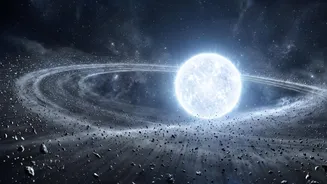
Scientists believe Pa 30 wasn't created by a typical supernova. Evidence points to it being a rare 'Type Iax' supernova, a sort of failed or partial stellar detonation. Unlike more cataclysmic blasts that obliterate their source, a Type Iax explosion is less powerful and can leave something behind. In the heart of Pa 30, astronomers have found what they call a 'zombie star'—the surviving, super-hot core of the star that exploded. This remnant is peculiar, with an extremely high temperature and stellar winds moving at a staggering 16,000 kilometres per second. Pa 30 is currently the only known remnant of a Type Iax supernova in our entire galaxy, making it a uniquely valuable object for study.
A Cosmic String of Pearls
While the object's history is fascinating, its structure is what has recently captivated the astronomical community. New, highly detailed images from the Gemini North telescope in Hawai'i have revealed Pa 30's intricate beauty. What previously looked like faint streaks now appears as complex chains of glowing gas knots, described as resembling 'pearls on a string'. These delicate filaments are the ejecta from the 1181 explosion, expanding out into space. Being relatively close to us at 7,500 light-years away, Pa 30 allows astronomers to study the immediate aftermath of a supernova with a level of detail that is rarely possible.
A Galactic Gold Factory?
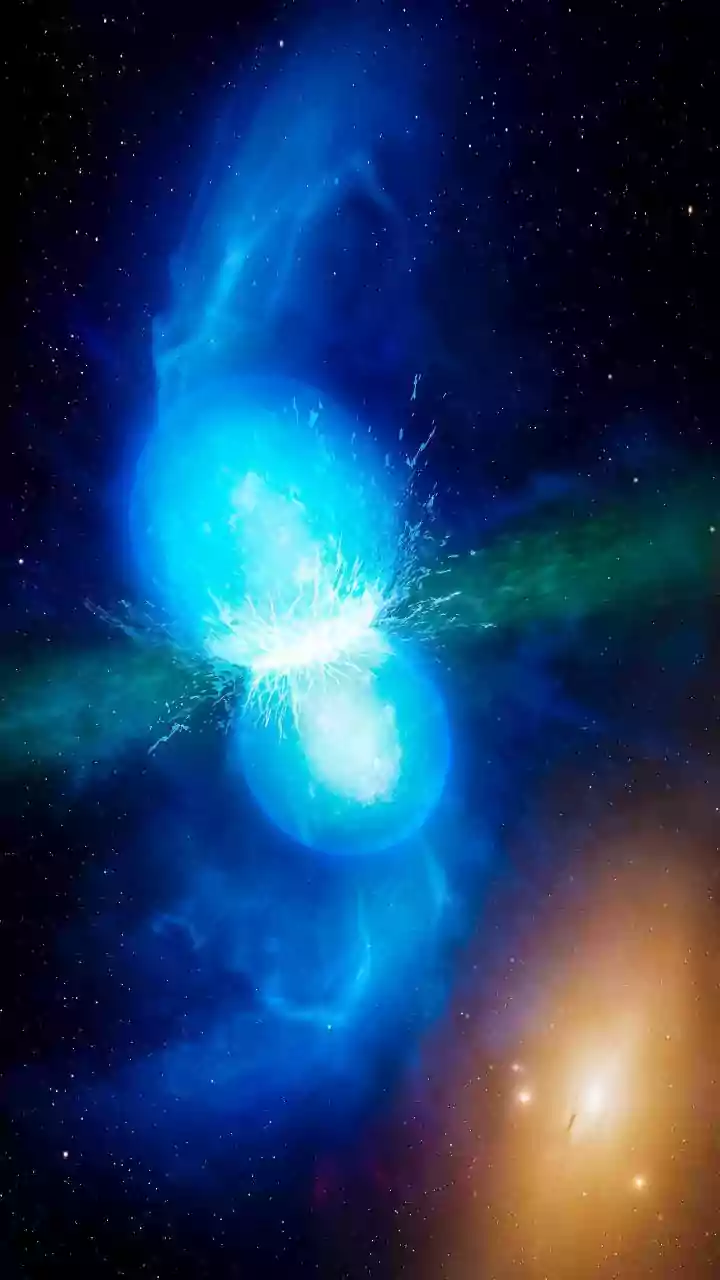
The significance of such objects goes beyond just understanding stellar life cycles. A recent, not-yet-peer-reviewed study from a team of Chinese and US researchers proposes a tantalising theory. They suggest the 1181 event might not have been a Type Iax supernova, but an even rarer collision between two neutron stars. Such a violent merger would be powerful enough to forge the universe's heaviest elements, like gold, platinum, and uranium, spewing them into the cosmos. According to this theory, the glowing cloud is the still-hot wreckage from this cosmic 'gold factory'. While this remains a hypothesis pending further proof, it highlights the exciting questions that Pa 30 is forcing scientists to ask.
The Path to Confirmation
As the headline suggests, much of this is pending final scientific confirmation. While the link between Pa 30 and the 1181 supernova is considered almost certain, science is a process of continuous verification. Whether it was a rare Type Iax supernova or a neutron star collision is still a matter of active debate and research. Astronomers will continue to point powerful instruments, from Gemini to the Hubble Space Telescope, at this remnant to analyse its light, composition, and the motion of its central star. Each new piece of data helps refine the models and brings us closer to a complete picture of what exactly happened in our cosmic neighbourhood all those centuries ago.