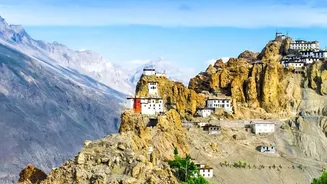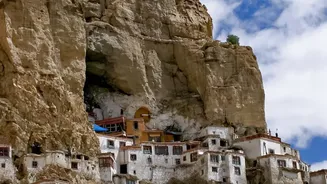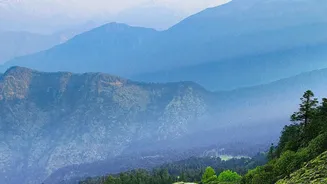





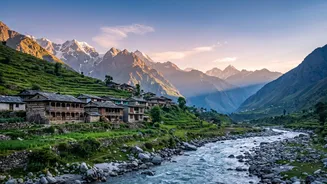
A Village on the Edge of Legend
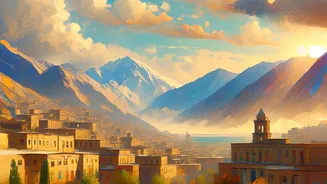
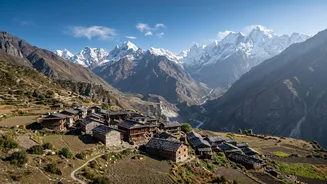
Located just a few kilometres from the sacred town of Badrinath in Uttarakhand, Mana sits at an altitude of over 10,000 feet on the banks of the Saraswati River. For decades, a sign here famously declared it the 'Last Indian Village' before the border
with Tibet, just 26 kilometres away. But a recent and deliberate rebranding has recast it as the 'First Indian Village'. This is more than just a change in semantics; it is part of a broader government strategy, the 'Vibrant Villages Programme,' aimed at developing border areas, boosting tourism, and reinforcing their cultural and strategic importance. This new focus is transforming Mana from a remote outpost into a must-visit destination that offers a unique blend of spirituality, adventure, and national pride.
Where the Mahabharata Breathes
Mana's allure is deeply intertwined with Hindu mythology, particularly the epic Mahabharata. Local belief holds that this very village was a stop for the Pandavas on their final journey to heaven. The village is dotted with sites that seem to bring these ancient stories to life. The most significant are the Vyas Gufa and Ganesh Gufa, a pair of caves where it is believed the sage Ved Vyas dictated the entire Mahabharata to Lord Ganesha, who wrote it down. Another marvel is the Bheem Pul, a natural bridge formed by a massive rock laid over the roaring Saraswati River. Legend says the mighty Pandava brother, Bheema, placed it there to help his wife Draupadi cross the turbulent waters. These sites make a walk through Mana feel like a journey through living history.
The Culture of a Frontier Community
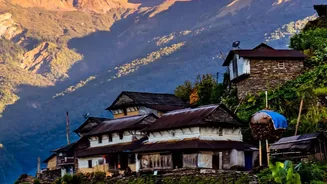
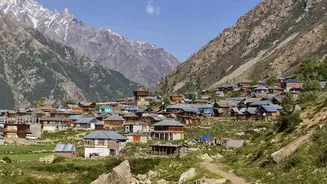
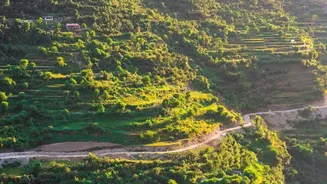
The village is home to the Bhotiya community, a group of Indo-Mongolian descent with a rich cultural heritage. Traditionally semi-nomadic, many residents still move to lower altitudes during the harsh winter months when heavy snowfall makes the village inaccessible. For generations, their livelihood has been linked to agriculture—growing potatoes and kidney beans—and intricate weaving. Visitors can find beautifully handcrafted woollen shawls, caps, and carpets made by local artisans. The stone-paved lanes and traditionally carved wooden homes offer a glimpse into a way of life that is both resilient and deeply connected to the formidable landscape. The warmth of the local people adds to the village's charm, offering an authentic cultural immersion for those who make the journey.
A Gateway to High-Altitude Adventure
Beyond its mythological and cultural significance, Mana is a paradise for trekkers and nature lovers. It serves as the starting point for several breathtaking treks. One of the most popular is the trail to Vasudhara Falls, a stunning cascade tumbling from a great height, located about six kilometres from the village. The trek itself offers panoramic views of the surrounding Himalayan peaks and lush valleys. For the more adventurous, longer treks to places like Satopanth Lake and Swargarohini glacier—the legendary 'stairway to heaven'—also begin here. Its proximity to Badrinath Temple, one of the Char Dham pilgrimage sites, means many devotees make the short trip to Mana to complete their spiritual journey, combining faith with the thrill of the high mountains.
A New Era for Himalayan Tourism
The 'Vibrant Villages Programme' is a game-changer for Mana and other border settlements. This central government initiative aims to halt out-migration from these strategic areas by creating robust infrastructure and sustainable livelihood opportunities, with tourism being a key focus. For Mana, this has translated into better road connectivity, improved facilities for visitors, and a concerted effort to promote its unique attractions. By framing it as India's 'first village,' the program invites tourists to see it not as an end point, but as a beginning—the first stop in exploring India's rich frontier heritage. This push is expected to boost the local economy and ensure that the village's development is both sustainable and respectful of its ancient legacy.