

Sensing the Poles' Hidden Heat
The achievement comes from NASA's PREFIRE mission, which stands for Polar Radiant Energy in the Far-InfraRed Experiment. Using a pair of shoebox-sized satellites, known as CubeSats, the mission isn't measuring surface temperature in the way a thermometer
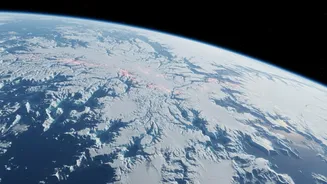
does. Instead, it’s measuring how much heat Earth’s coldest regions radiate away into space. Specifically, it focuses on far-infrared energy, a type of invisible light that carries a huge amount of heat. In fact, nearly 60 percent of all the energy Earth loses to space is in this far-infrared range. Before PREFIRE, which began its science operations in July 2024, this crucial part of the planet's energy budget was not being comprehensively measured at the poles.
Two Years and Two Full Seasons
Completing two years of observation is a major milestone because it gives scientists a baseline of two complete seasonal cycles at both the Arctic and the Antarctic. Since the poles have opposite seasons, the twin satellites have now watched the Arctic warm through two summers and cool through two winters, while simultaneously observing the Antarctic do the reverse. This continuous, year-round dataset is vital for distinguishing between normal, seasonal fluctuations and a persistent, underlying climate trend. A single year of data can be misleading, but two years allows researchers to start building a more robust picture of how the polar energy systems behave and change over time, moving beyond a simple snapshot to see the rhythm of the planet’s heating and cooling engine.
A Tale of Two Different Poles
The PREFIRE data has already highlighted the stark differences between the planet's two poles. The animations released by NASA show the Arctic pulsing with colour, as summer temperatures become mild enough to thaw both sea ice and tundra. In contrast, much of Antarctica remains a deep, frozen blue even during its warmest summer months, staying well below freezing. This is a function of geography: the Arctic is a frozen ocean surrounded by land, while Antarctica is a massive, high-altitude continent surrounded by ocean. These differences mean they respond to and influence the global climate in unique ways. Understanding their distinct energy patterns is essential for accurate climate modeling.
Sharpening Our Climate Crystal Ball
The ultimate goal of the PREFIRE mission is not just to observe, but to improve. The detailed measurements of far-infrared heat loss will be fed into climate and weather models. Scientists believe this will help refine predictions on everything from the stability of the Greenland and Antarctic ice sheets to the future of Arctic shipping routes. Tristan L’Ecuyer, the mission's principal investigator, noted that the energy PREFIRE observes influences weather systems and river flows, making the data crucial for communities living in the Arctic and for understanding global climate dynamics. By filling this long-standing gap in our observations, PREFIRE aims to make our projections of future warming, sea-level rise, and ice loss more reliable.
Why Polar Changes Affect Everyone
What happens in the desolate, icy landscapes of the poles does not stay there. The polar regions act as the world's refrigerators, with their white ice and snow reflecting the sun's heat back into space. As the Arctic warms faster than the rest of the planet, this cooling effect diminishes. This can destabilize the polar jet stream, a high-altitude river of air, leading to more extreme and unpredictable weather in the mid-latitudes, including intense heatwaves and severe cold snaps. Furthermore, melting ice from the massive ice sheets in Greenland and Antarctica is a primary driver of global sea-level rise, threatening coastal communities thousands of miles away. Data from other NASA missions shows Antarctica alone has shed an average of 135 gigatons of ice per year since 2002.