







What Are 'Minor Crops' and Why Are They Vanishing?
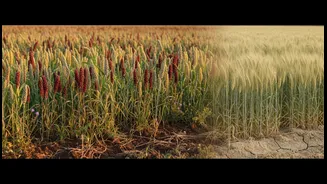
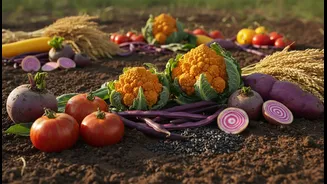
Minor crops, also known as 'orphan' or 'neglected' crops, are plant species that were once staples in local diets but have been pushed to the margins by modern agriculture. Think of indigenous varieties of millets, legumes like horse gram, and vegetables
like jackfruit and yams that were traditionally cultivated across India. These plants are not commercially traded on a global scale and have been largely ignored by researchers, policymakers, and large-scale farming operations. The primary reason for their decline is the global shift towards a handful of high-yielding commodity crops. Today, just three staples—rice, wheat, and maize—supply more than half of all calories consumed by humanity. This widespread monoculture, driven by the demand for uniformity and high output, has squeezed out thousands of traditional varieties that were perfectly adapted to local environments. Adding to their decline is a cultural shift, where these crops are sometimes stigmatized as 'food for the poor', leading younger generations to lose the traditional knowledge required to cultivate and prepare them.
How Our Plates Are Becoming Less Diverse
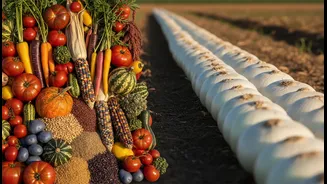
The consolidation of our food supply has a direct impact on our nutrition. As global diets become more homogeneous, they rely on a smaller basket of energy-dense foods that are often lower in essential nutrients. This trend contributes to a phenomenon known as 'hidden hunger', where people consume enough calories but lack vital micronutrients like iron, zinc, and vitamins. Many minor crops are nutritional powerhouses, outperforming major staples in protein, fibre, and mineral content. For example, pearl millet, sorghum, and other minor millets contain significantly more calcium, iron, and zinc than rice or wheat. By letting these crops disappear, we are effectively removing some of the most nutrient-dense foods from our plates. This narrowing of the food base not only impacts individual health but also weakens the resilience of our entire food system. An over-reliance on a few crops makes populations everywhere more vulnerable to price shocks and supply chain disruptions.
The Hidden Cost to Scientific Innovation
Perhaps the most significant long-term consequence of losing minor crops is the impact on research and innovation. These neglected species represent a vast, living library of genetic diversity. Having adapted over centuries to grow in challenging conditions, they possess invaluable traits that scientists need to breed the crops of the future. Many minor crops are naturally resilient to drought, high salinity, pests, and diseases, and can thrive on marginal lands with minimal water or fertilizer. As climate change brings more unpredictable and extreme weather, these are precisely the traits needed to ensure our food supply remains stable. When a minor crop goes extinct, we don't just lose a food source; we lose a unique genetic blueprint that could have held the solution to a future agricultural crisis. The disappearance of these crops narrows the pool of options available to researchers, limiting their ability to answer critical questions about how to feed a growing population on a warming planet.
A Race to Save Our Agricultural Heritage
Fortunately, a growing movement of scientists, farmers, and policymakers recognizes the urgent need to conserve and revive these forgotten foods. They are now increasingly seen not as 'orphan' crops but as 'opportunity crops'—strategic assets for building a more resilient and nutritious food future. Efforts are underway on two main fronts. The first involves ex-situ conservation, where seeds are collected and stored in secure gene banks for future study. The second, and equally important, is in-situ conservation, which encourages farmers to continue growing these crops on their land, allowing the plants to continue evolving and adapting. In India, there is a renewed push to promote crops like millets and indigenous legumes, highlighting their benefits for both health and environmental sustainability. By creating new markets and value chains for these crops, experts hope to provide farmers with the economic incentive to preserve this vital agricultural biodiversity.