





Naina Devi Temple: A Mythological Epicentre
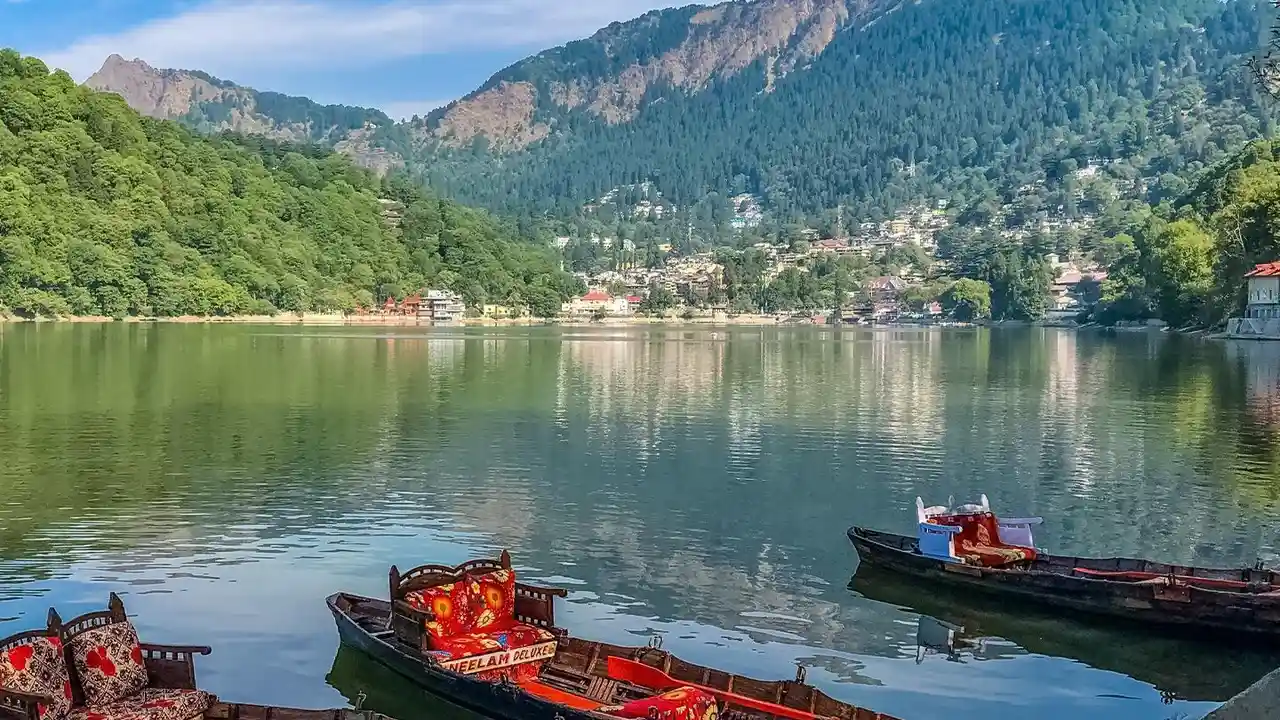
Perched on the northern shore of Naini Lake, the Naina Devi Temple is more than a place of worship; it’s the town’s mythological foundation. Legend holds that this is one of the 51 Shakti Peeths, sacred sites where parts of Goddess Sati's body fell. It
is believed her eyes (nain) landed here, giving the town and the lake their names. The original temple, first mentioned in the 15th century and established in 1842, was destroyed in the catastrophic landslide of 1880. The current structure was built in 1883, a testament to resilience and enduring faith. Visitors who look past the beautiful setting will find a powerful story of creation, destruction, and rebirth, where the Goddess is worshipped in the symbolic form of her eyes.
St. John in the Wilderness: A Gothic Memorial
Nestled in a quiet forest of deodar trees, this church is one of Nainital's oldest and most atmospheric buildings. Founded in 1844, its name came from the Bishop of Calcutta, who fell ill and had to camp in an unfinished house in the 'wilderness' while laying the church's foundation. This neo-Gothic structure is a time capsule of the Raj era, but its most somber story lies within. Inside, a brass plaque memorialises the 151 Indian and British lives lost in the 1880 landslide that reshaped Nainital. The church itself survived the disaster, serving as a silent witness. Visiting today is an act of stepping into that history, far removed from the bustle of the Mall Road.
The Flats: Born from Disaster
The large, level ground at the northern end of the lake, known as 'The Flats,' is the social and sporting heart of Nainital. It hosts everything from cricket matches to cultural festivals. But this vibrant public space has a tragic origin. This entire area was formed by the debris from the massive 1880 landslide that buried the Naina Devi Temple and the popular Assembly Rooms. The rubble from the collapsed hillside covered this part of the lake, and the ground was later levelled to create the recreational area we see today. Every stroll across The Flats is a walk over a landscape completely altered by one of the most significant events in the town’s history.
Raj Bhavan: A Slice of Scottish Grandeur
Modelled on Buckingham Palace with a Scottish castle's aesthetic, the Raj Bhavan is an architectural marvel. Construction on this grand Gothic building began in 1897 and it served as the summer residence of British governors. Spread over 205 acres, it contains 113 rooms, extensive gardens, and one of India's oldest golf courses, established in 1926. Post-independence, Sarojini Naidu became the first Governor of Uttar Pradesh to reside here. While visitors are drawn to its stunning European architecture, the estate also tells a story of colonial power, intricate craftsmanship using local materials, and the transition of a British Government House into a symbol of Indian governance.
Gurney House: In the Footsteps of Jim Corbett
This charming 19th-century cottage on Ayarpatta hill was the home of the legendary hunter-turned-conservationist, Jim Corbett, and his sister Maggie. They lived here until they left for Kenya in 1947. The house itself has a story of resilience; it was built in 1881 using materials salvaged from the family's previous home on Alma Hill, which was damaged in the 1880 landslide. Now a private residence, Gurney House is preserved as a museum, with many of Corbett's original belongings. A visit here, often possible by appointment, offers an intimate glimpse into the life of the man whose legacy is deeply intertwined with the Kumaon hills, far beyond just his famous tiger stories.
Tiffin Top: A Memorial to Love
While known for its panoramic views, Tiffin Top has a more personal and poignant story. Its formal name is Dorothy's Seat, named in memory of Dorothy Kellet, an English artist. After she passed away, her husband, an army officer, built a stone bench at her favourite spot as a memorial. The name 'Tiffin Top' came from the British-era tradition of locals and officials packing a tiffin lunch to enjoy a picnic on the scenic hilltop. Though the original stone seat was tragically destroyed in a 2023 landslide, the spot remains a tribute to a personal story of love and loss, offering a deeper meaning to the trek than just the beautiful scenery.
The Boat House Club: A Colonial Social Hub
Situated elegantly on the lake, The Boat House Club feels like a relic from another time. Established in the early 20th century, it was the exclusive social hub for the British elite. It is also one of the highest altitude yacht clubs in the world and manages the unique inland sailing on Naini Lake. The original yacht club was dissolved after independence in 1947, but sailing enthusiasts bought the boats and revived it. While today it is primarily a members' club, temporary access often allows visitors to experience its vintage charm. It stands as a symbol of the town’s colonial social life, where strict dress codes and afternoon sailing were the norms.