

The Anatomy of a Delicate Roll
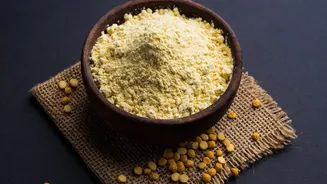
At its heart, Suralichi Vadi is a savoury snack made from gram flour (besan) and yogurt or buttermilk. The name itself offers a clue: 'Surali' means 'roll' and 'Vadi' means 'piece' or 'slice' in Marathi. It's also known by other names like Patuli. The batter,
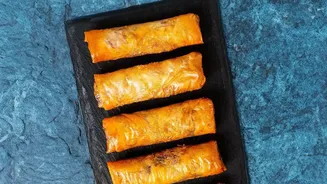
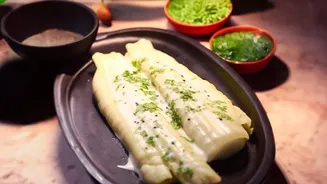
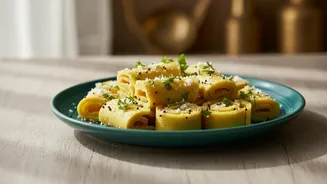
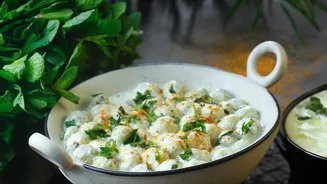
a smooth mixture of besan, soured yogurt, water, and spices like turmeric, ginger-green chilli paste, and asafoetida, is cooked to a precise consistency. This cooked paste is then spread into a paper-thin layer on a flat surface while still hot. Once it cools slightly, it’s cut into strips and carefully rolled into bite-sized, melt-in-the-mouth cylinders. The final flourish is a tempering (tadka) of mustard seeds, sometimes with curry leaves and sesame seeds, spooned over the rolls, which are then garnished with fresh grated coconut and chopped coriander.
A Masterclass in Texture and Technique
What defines Suralichi Vadi and makes it a beloved, if slightly intimidating, dish to prepare is the technique. The process is often seen as a test of a cook's patience and skill. The key lies in achieving the perfect batter consistency—not too thick, not too thin—and cooking it without forming any lumps, which requires continuous stirring. Spreading the hot mixture quickly and evenly before it sets is the next crucial step. If the layer is too thick, the rolls will be clumsy; if it’s too thin, they might break. This delicate balance is what gives the vadi its signature silky, tender texture that dissolves effortlessly in the mouth. While the traditional stovetop method is laborious, some modern home cooks have adapted the recipe for pressure cookers or even microwaves to make the process more approachable.
A Tale of Two States
Food lovers will quickly note the striking resemblance between Maharashtra's Suralichi Vadi and Gujarat's Khandvi. Indeed, they are essentially two names for the same dish, celebrated in both neighbouring states. Both are made from besan and yogurt, feature a rolled shape, and are garnished similarly. Some subtle regional variations might exist, with some Maharashtrian recipes including a savory filling of coconut, cilantro, and green chilies rolled inside the besan sheet, while many Gujarati versions are left plain before the tempering is added on top. Ultimately, both names refer to the same delightful, gluten-free snack that showcases the culinary ingenuity common to western India.
More Than Just a Breakfast Dish
While the headline identifies Suralichi Vadi as a breakfast food, its role in Maharashtrian households is wonderfully flexible. It is certainly enjoyed as a light and healthy breakfast, often served with tea. However, it is just as commonly served as a 'farsan' (savory snack) in the evening or as an elegant appetizer for guests. Because it can be served at room temperature, it's a popular item for potlucks, family gatherings, and festive meals, often appearing alongside other traditional dishes. Its delicate appearance and complex flavour make it a special-occasion treat, transforming humble gram flour into something truly sophisticated and celebratory.