



The Rumours and The Reality
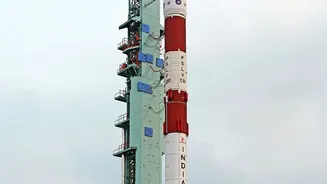
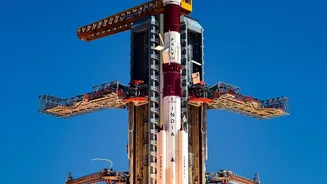
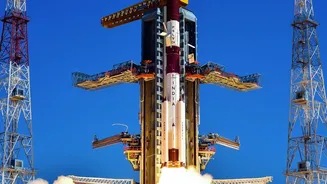
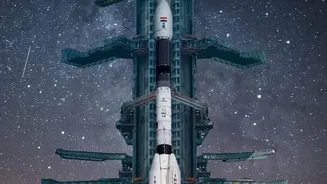
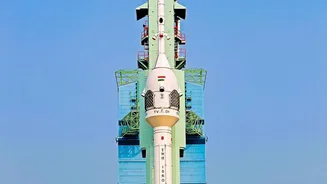
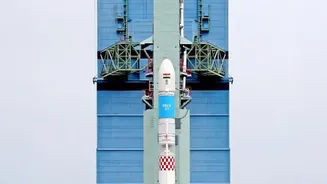
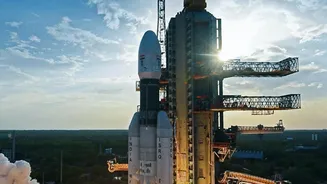
Multiple media sources, citing insiders, have suggested that ISRO is targeting a launch for the NVS-03 satellite sometime between October 15 and 20, 2026. Preparations at the Satish Dhawan Space Centre in Sriharikota appear to be well underway, with the launch campaign
reportedly starting on September 14 and the stacking of the GSLV-Mk2 rocket's first stage already completed. The satellite itself is also said to be at the spaceport, awaiting integration. However, despite this flurry of activity and detailed reporting, ISRO has not made a formal announcement. This isn't unusual for the space agency, which prizes precision and protocol. Official confirmation typically comes only after all internal reviews are complete and a definitive launch date is locked in. Until then, the reported dates remain targets, not certainties.
Why NVS-03 is a Critical Mission
The upcoming launch is far more than a routine mission; it's a crucial step to restore and enhance India's indigenous navigation capabilities. The Navigation with Indian Constellation (NavIC) system, India's answer to GPS, is currently operating below its full strength. A navigation system requires a minimum of four satellites to provide accurate three-dimensional positioning. Due to the aging of earlier satellites and technical issues, the NavIC constellation is currently down to just three operational satellites available for positioning services. This means that NavIC's standalone positioning service is inactive. The successful launch of NVS-03 would bring that number back to the crucial quartet, potentially reactivating the system for both civilian and strategic users.
Strategic Importance for a Self-Reliant India
The need for a robust, sovereign navigation system was starkly highlighted during the 1999 Kargil conflict, when India experienced the risks of relying on foreign-operated systems like GPS, which can be restricted or denied during geopolitical crises. NavIC provides India with strategic autonomy, offering two distinct services: a standard positioning service for all users and a secure, encrypted service for military and defence purposes. An operational NavIC ensures that India's armed forces have uncompromised access to precise positioning, navigation, and timing (PNT) data for troop movements, missile guidance, and naval operations, independent of any foreign control. The NVS-03 mission is also a chance for ISRO to demonstrate corrective measures after the NVS-02 satellite failed to reach its intended orbit in January 2025.
Meet the Next-Generation Satellite
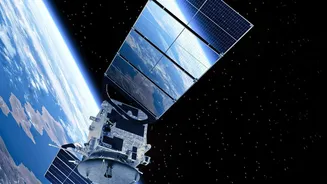
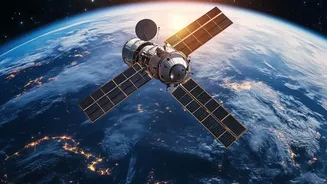
NVS-03 is a second-generation satellite designed for longer life and better performance. One of its most significant upgrades is the inclusion of an indigenously developed Rubidium atomic clock. These clocks are the heart of any navigation satellite, providing hyper-accurate timekeeping essential for calculating position. Past failures of imported atomic clocks had hampered the NavIC constellation, making this domestic technology a major step forward in reliability and self-sufficiency. Furthermore, NVS-03 will transmit signals in the L1 frequency band, which is widely used by civilian devices like smartphones and fitness trackers. This compatibility will make it easier for NavIC to be integrated into consumer products, expanding its use across the country for everything from vehicle tracking to disaster management.