





Mehrangarh Fort: The Citadel of the Sun
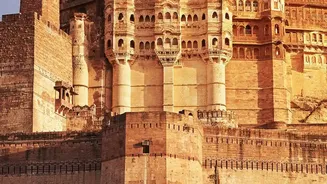
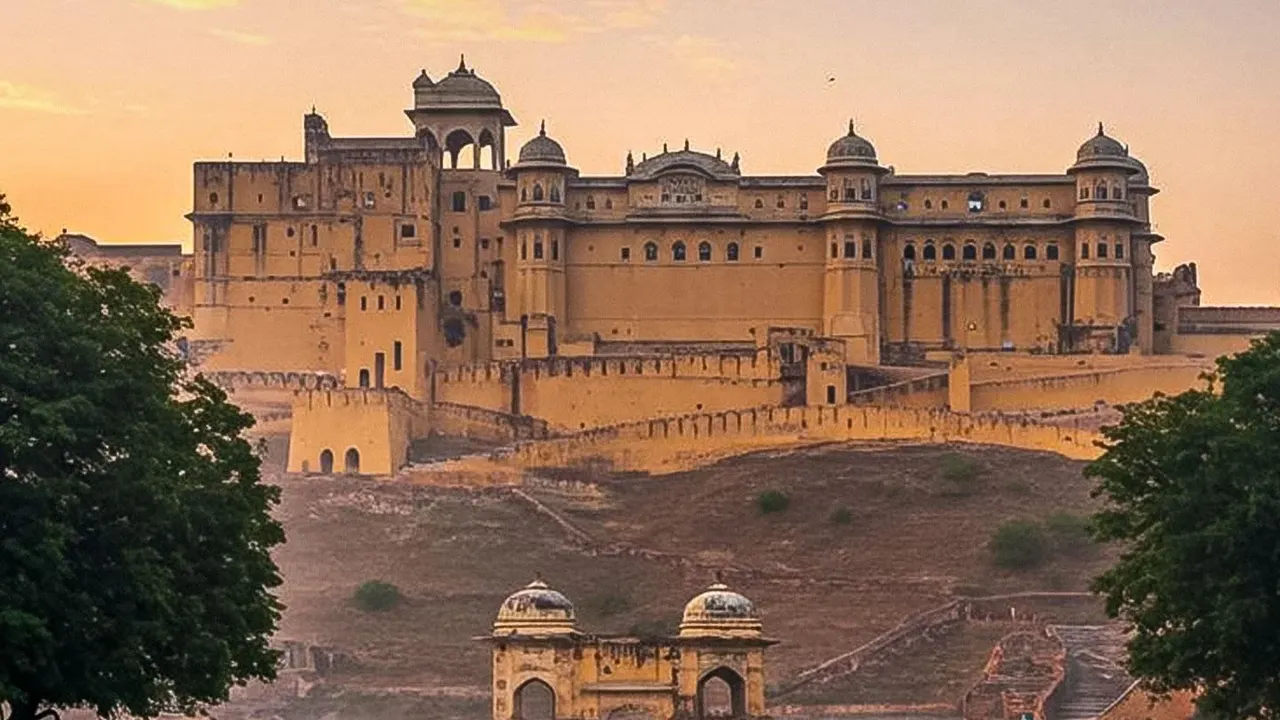
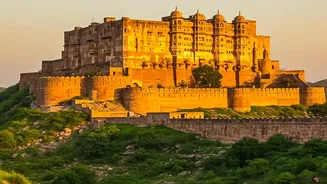
Perched on a 400-foot cliff overlooking the blue city of Jodhpur, Mehrangarh is a staggering example of Rajput might and aestheticism. Founded in 1459 by Rao Jodha, its massive walls, which seem to grow organically from the rock, enclose a world of intricate
palaces. Inside, structures like the Moti Mahal (Pearl Palace) and the Phool Mahal (Flower Palace) showcase delicate sandstone carvings (jalis), opulent courtyards, and stunning stained-glass windows, reflecting a blend of Rajput and Mughal influences that evolved over centuries.
Golkonda Fort: The Shepherd's Hill of Secrets
Originally a mud fort under the Kakatiya dynasty, Golkonda, near Hyderabad, was transformed into a formidable granite fortress by the Qutb Shahi kings. Its fame comes not just from the legendary diamonds traded here, but from its revolutionary military architecture and acoustic wonders. A hand-clap at the entrance can be heard at the highest point of the fort nearly a kilometre away, a feature designed as an ingenious warning system. With its colossal gates studded with iron spikes to deter war elephants and its advanced water supply system, Golkonda is a masterclass in medieval engineering.
Chittorgarh Fort: A Saga of Resistance
The largest fort in India, Chittorgarh is less a single structure and more a sprawling fortified city on a hilltop in Rajasthan. A UNESCO World Heritage Site, it symbolises Rajput valour and sacrifice. The fort's history is marked by legendary sieges and the bravery of its defenders. Architecturally, it is a complex of palaces, temples, memorials, and victory towers, built and rebuilt from the 7th century onwards. The Vijay Stambh (Tower of Victory) is a particularly stunning example of Rajput artistry, its nine stories covered in intricate sculptures of Hindu deities.
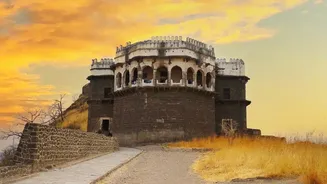
Daulatabad Fort: The Hill of Gods
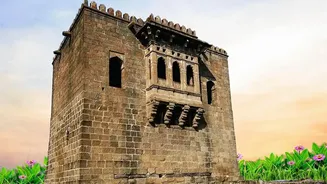
Originally known as Devagiri, this fortress in Maharashtra is a marvel of military design. Built on a 200-meter-high conical hill, the 12th-century fort was considered virtually impregnable. Its defences are a work of genius, featuring a series of moats, three layers of fortifications, and a single, narrow, winding entrance path designed to confuse and trap invaders. The most fascinating feature is the Andheri, a dark, spiralling underground passage that was the only way to the citadel, complete with false doors and traps. Its design shows a focus on pure, unadulterated defensibility.
Agra Fort: The Mughal Powerhouse
A close neighbour to the Taj Mahal, Agra Fort is a monumental testament to the power and artistry of the Mughal Empire. Rebuilt from an older fortress by Emperor Akbar in 1565 with striking red sandstone, it served as the main residence of Mughal rulers for generations. Emperor Shah Jahan later added delicate white marble palaces and mosques, creating a stunning contrast within the robust walls. The fort showcases a fusion of Persian and Indian architectural styles, seen in the grand halls of public and private audience (Diwan-i-Aam and Diwan-i-Khas) and the exquisite marble inlay work.
Gingee Fort: The Troy of the East
Located in Tamil Nadu, Gingee Fort is one of the most formidable fortifications in Southern India, so impressive that it was called the "Troy of the East" by the British. Its origins trace back to the 9th century with the Cholas, but it was expanded by subsequent dynasties, including the Vijayanagara Empire and the Marathas. The complex is spread across three hills, connected by massive walls, creating a vast triangular defensive network. It includes temples, granaries, and the Kalyana Mahal, a unique multi-storied structure that showcases the distinctive Dravidian and Indo-Islamic architectural styles of the region.
Murud-Janjira: The Unconquerable Marine Fort
Rising from an oval-shaped rock in the Arabian Sea off the coast of Maharashtra, Murud-Janjira is a testament to incredible maritime engineering. Originally a wooden structure built by fishermen in the 15th century, it was reconstructed in stone by the Siddis of Abyssinian origin. Its most remarkable feat is that it remained unconquered despite repeated attacks by the Portuguese, British, and Marathas. The fort's 40-foot-high walls, 26 bastions still armed with cannons, and a cleverly concealed main gate made it a bastion of naval power on the western coast.