

A New Look at Lunar Life
A study published in August 2026 has provided the most detailed look yet at the potential for Earth's tiniest inhabitants to withstand a trip to the Moon. Led by NASA scientists, the research didn't physically send microbes to the lunar surface. Instead,
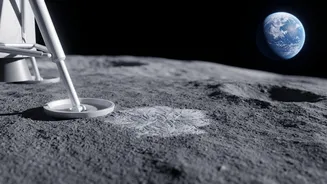
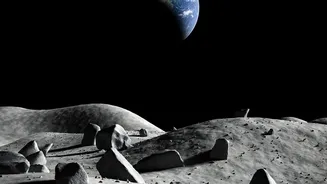
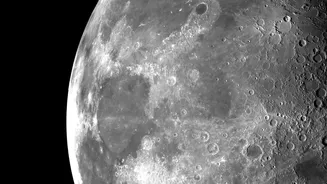
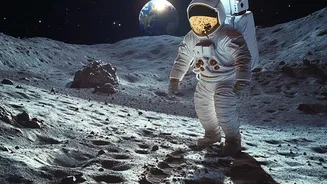
it used sophisticated computer models, combining data from NASA's Lunar Reconnaissance Orbiter with known survival limits of several common microbes. The team focused on the Moon's South Pole, a region of intense interest for future missions like Artemis due to its unique lighting and potential for ice. The question was simple: If microbes hitch a ride on a lander or an astronaut's boot, could they survive? The answer, it turns out, is a qualified yes.
Survival Is Not the Same as Growth
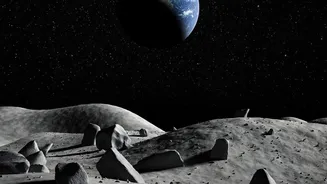
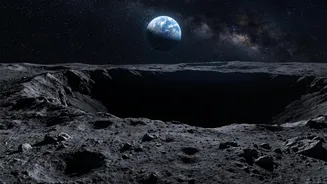
The core finding of the study is the critical difference between staying alive and actively thriving. The simulations showed that in certain permanently shadowed craters and crevices near the lunar poles, some microbes could survive. These spots offer protection from the most lethal aspects of the lunar surface: intense, unfiltered ultraviolet (UV) radiation and extreme temperature swings. However, every source discussing the study emphasizes that this is survival in a dormant, inactive state, sometimes called cryptobiosis. The microbes are not growing, reproducing, or forming colonies. They are essentially in a state of suspended animation, waiting for conditions that may never come.
What Prevents Growth?
The primary barrier to microbial growth on the Moon is the profound lack of key ingredients necessary for life as we know it. The most significant missing piece is stable, liquid water. While ice may exist in shadowed craters, the Moon lacks the atmospheric pressure and moderate temperatures needed to keep water in a liquid state on the surface. Without liquid water, metabolic processes required for growth and reproduction cannot occur. So, while a tough microbe might survive being frozen in a dark crater, it has no path to actually building a life for itself. The environment is simply too barren to support an active, growing population.
The Toughest of the Tough
The study examined five types of microbes known for their resilience in spaceflight environments, including bacteria and fungi. The undisputed champion of survival was a fungus called Aspergillus niger, a common black mould often found in damp places on Earth, like bathrooms. It has also been sampled inside the International Space Station (ISS) and has proven it can survive on the station's exterior. Its hardiness comes from a high resistance to UV radiation, which was identified as the main threat in the cold, polar regions. In the simulations, Aspergillus niger could survive in more lunar areas and for longer than the other microbes tested, demonstrating its remarkable durability.
Implications for Planetary Protection
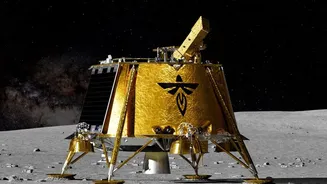
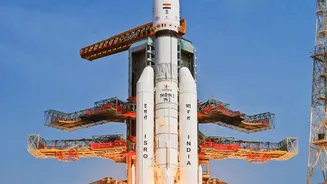
This research has significant implications for a field known as planetary protection. As nations like India, the U.S., and China ramp up their lunar ambitions, the risk of contaminating the Moon with Earth life becomes a serious concern. This isn't about creating a lunar ecosystem of Earth germs, which the study shows is not possible. The worry is about contaminating the scientific record. Scientists want to study the Moon's pristine chemistry to understand its history and the history of the solar system. If we introduce our own microbes, it could become difficult to tell if a future discovery of organic molecules is genuinely lunar or just contamination from a past mission.
Informing Future Missions
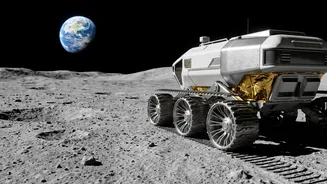
Understanding that microbes can survive, even if they can't grow, will shape how future lunar missions are planned. Scientists now have a clearer map of where contamination is most likely to persist, particularly in the shadowed polar craters targeted for exploration. This knowledge will influence everything from sterilization procedures for rovers and landers to the protocols astronauts will follow when collecting samples. The Moon's south pole can now be seen as a unique natural laboratory for testing the absolute limits of microbial survival in an environment that is impossible to perfectly replicate on Earth. This will help refine our search for life on other, more promising worlds, like Mars or the moons of Jupiter and Saturn.