







The Old Story: A Cold, Dead World
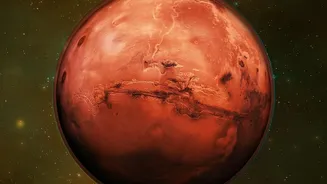
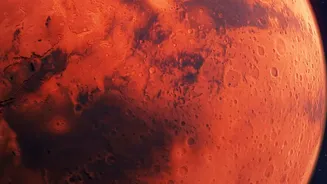
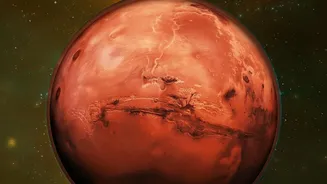
The prevailing image of Mars has long been one of geological stillness. Smaller than Earth, scientists reasoned it must have cooled much faster, leaving it with a solid, inactive crust for billions of years. Its towering volcanoes, like the gargantuan
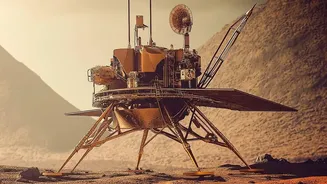
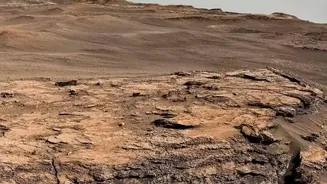
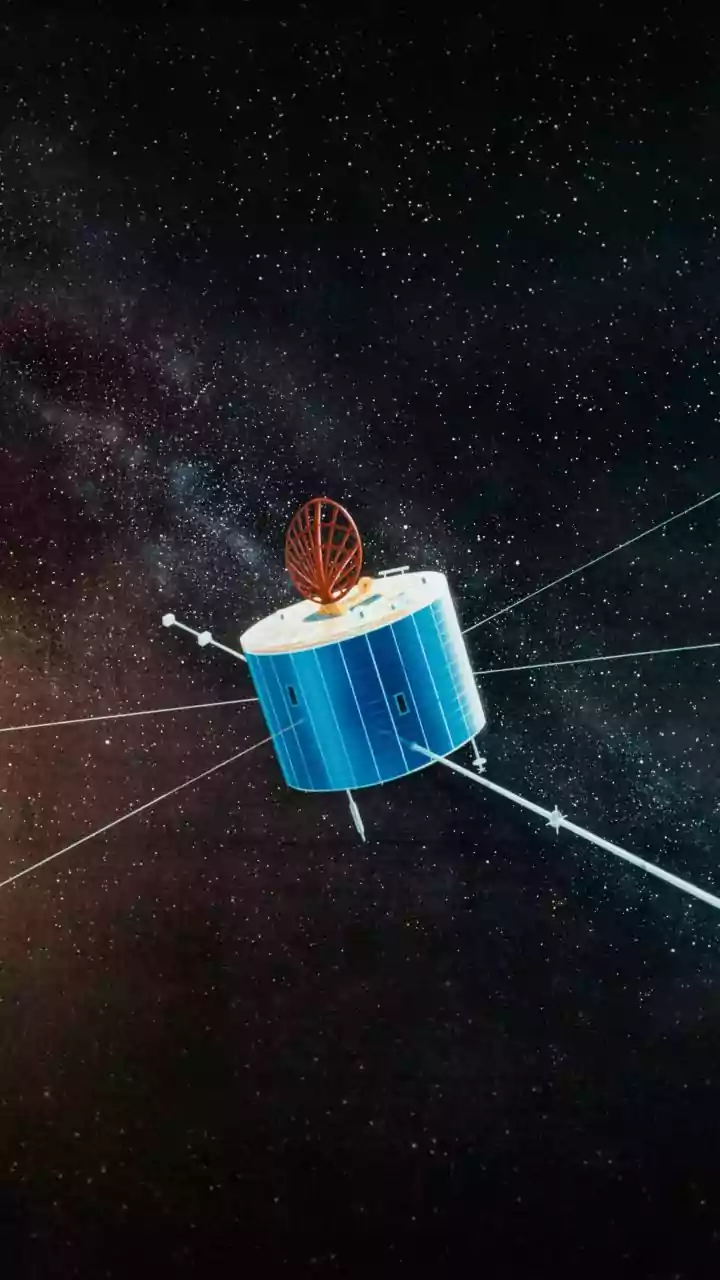
Olympus Mons, were seen as monuments to a distant, fiery past. This narrative was so entrenched that when NASA planned the InSight lander mission, its primary goal was to listen for the faint, lingering rumbles of a dying planet. The mission, which deployed a sensitive seismometer on a flat plain called Elysium Planitia in 2018, was designed to take the planet's pulse and confirm how quiet it had become. For years, the story held: Mars was, for the most part, a dormant world.
A Rumble That Rewrote the Rules
While the InSight lander has since retired, scientists are still meticulously analyzing the four years of invaluable data it collected. A recent re-examination of these seismic readings has uncovered something extraordinary. Instead of just isolated 'marsquakes' from a cooling crust, the data points to a far more dynamic process at play deep beneath the surface. Analysis reveals evidence of a massive mantle plume—a huge upwelling of hot, buoyant rock, similar to what fuels volcanic hotspots like Hawaii on Earth—located beneath Elysium Planitia. This plume, estimated to be a staggering 4,000 kilometres wide, is actively pushing up on the crust from below, challenging the very notion of a static Martian interior.
Listening to the Planet's Heartbeat
The seismic waves recorded by InSight, as they traveled through the planet, carried the secrets of its inner structure. Scientists found that these waves behaved in a way that could only be explained by a significant source of heat and activity. The presence of the mantle plume explains a host of mysterious features in the Elysium Planitia region, including significant surface uplift and a network of fractures known as Cerberus Fossae, which is the source of most of the marsquakes InSight detected. This wasn't just the cracking of a cooling planet; it was evidence of active geology, driven by a powerful internal engine that scientists had not expected to find. The plume is thought to be hundreds of degrees hotter than its surroundings, acting like a giant blowtorch searing the crust from below.
A More Complex and Earth-Like Interior
This discovery doesn't just suggest a single hotspot. More recent analyses from June and July 2026, also using InSight's seismic data, suggest that Mars's crust is far more complex than previously believed. The data reveals signs of vast, interconnected magma systems that once existed below the surface, similar to processes on Earth that build continents, but occurring on Mars without the aid of plate tectonics. These findings indicate that molten rock once accumulated and spread through the crust, creating different layers of rock in a process far more dynamic than the simple, isolated volcanoes once imagined. Mars, it seems, was capable of creating a complex, chemically diverse crust all on its own, a major shift in our understanding of how rocky planets evolve.
Why This Changes Everything
The revelation of a volcanically active interior has profound implications. For one, it rewrites the timeline of Martian geology, suggesting that volcanic activity may have occurred as recently as 50,000 years ago—a geological blink of an eye. It suggests Mars might still be volcanically alive today. An active interior also means a source of heat. This heat could have interacted with subsurface water or ice, creating hydrothermal environments that are considered key potential habitats for microbial life. The discovery forces us to reconsider not only Mars's history but also its potential for present-day activity. It makes the Red Planet a far more dynamic and compelling target for future exploration, transforming it from a planetary fossil into a living, breathing world.