



The Problem with Sitting
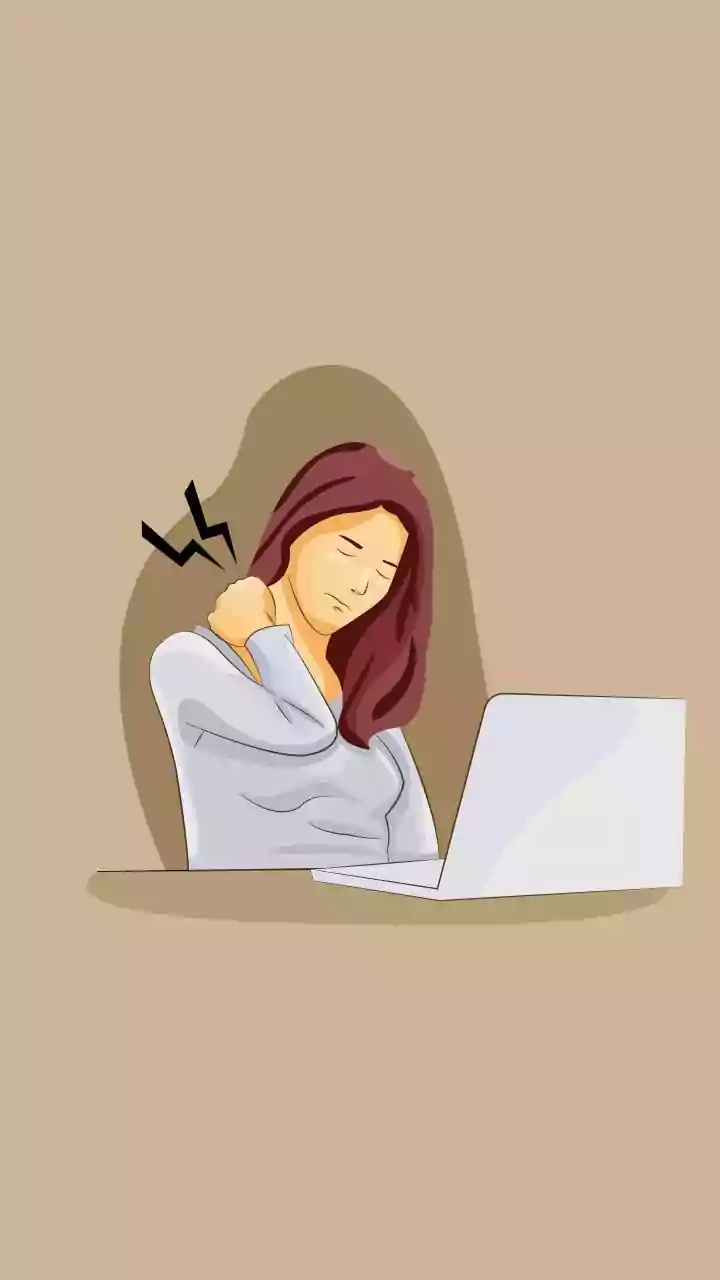
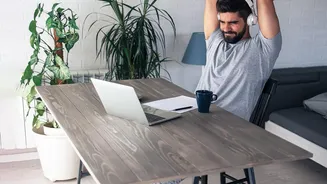
Our bodies are designed for movement, but modern work often locks us into a static seated position for hours. This can take a serious toll. When you sit for extended periods, your hip flexors shorten and tighten, your glute muscles can weaken, and your shoulders
tend to round forward. This posture imbalance puts strain on the muscles in your lower back, neck, and shoulders, leading to aches, stiffness, and long-term discomfort. The goal is to counteract these effects with targeted movements that restore mobility and release tension.
1. Seated Cat-Cow
This classic yoga movement is excellent for improving spinal flexibility and relieving tension. Sit on the edge of your chair with your feet flat on the floor and hands on your knees. On an inhale, arch your back, push your chest forward, and look up toward the ceiling; this is the 'Cow' pose. As you exhale, round your spine, tuck your chin to your chest, and gently pull your belly button inward; this is the 'Cat' pose. Flow between these two positions for 6 to 8 repetitions, matching your breath to the movement. This simple exercise warms up the spine and can ease lower back pain.
2. Seated Spinal Twist
A gentle twist can feel like wringing out the tension from your spine. Sit tall with both feet on the floor. Inhale to lengthen your spine. As you exhale, gently twist your upper body to the right, placing your left hand on your right knee and your right hand on the back or arm of the chair for support. Hold the stretch for 20-30 seconds, breathing deeply, but avoid forcing the movement. Return to the center and repeat on the left side. This movement helps increase spinal rotation and can relieve tightness in the back and shoulders.
3. Seated Figure-Four Stretch
Tight hips are a primary contributor to lower back pain, and this stretch directly targets them. Sit upright with both feet on the floor. Cross your right ankle over your left knee, keeping your right foot flexed to protect the knee joint. You may already feel a stretch in your right glute and hip. To deepen it, maintain a straight back and gently hinge forward from your hips until you feel a comfortable stretch. Hold for 20-30 seconds, breathing into the sensation, before switching to the other side.
4. Chest Opener Stretch
To counteract the forward slump of 'desk posture', it's crucial to open up the chest muscles. While sitting or standing, interlace your fingers behind your back. Straighten your arms and gently squeeze your shoulder blades together, lifting your chest toward the sky. This creates a stretch across the front of your shoulders and chest, helping to improve posture. Hold for about 20 to 30 seconds while breathing normally. If interlacing your fingers is difficult, simply hold a towel or scarf between your hands.
5. Neck and Shoulder Release
Tension often accumulates in the neck and upper shoulders from staring at a screen. To release it, sit tall and gently drop your right ear toward your right shoulder, feeling a stretch along the left side of your neck. Hold for 20-30 seconds without pulling or forcing it. Slowly return to center and repeat on the other side. Follow this with gentle neck rolls, dropping your chin to your chest and slowly rolling your head from one shoulder to the other to release tension in the back of the neck.