



Reading a Galaxy's Fossil Record
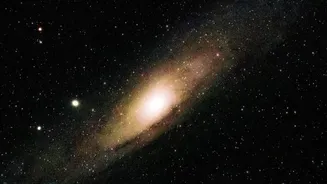
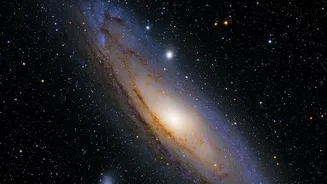
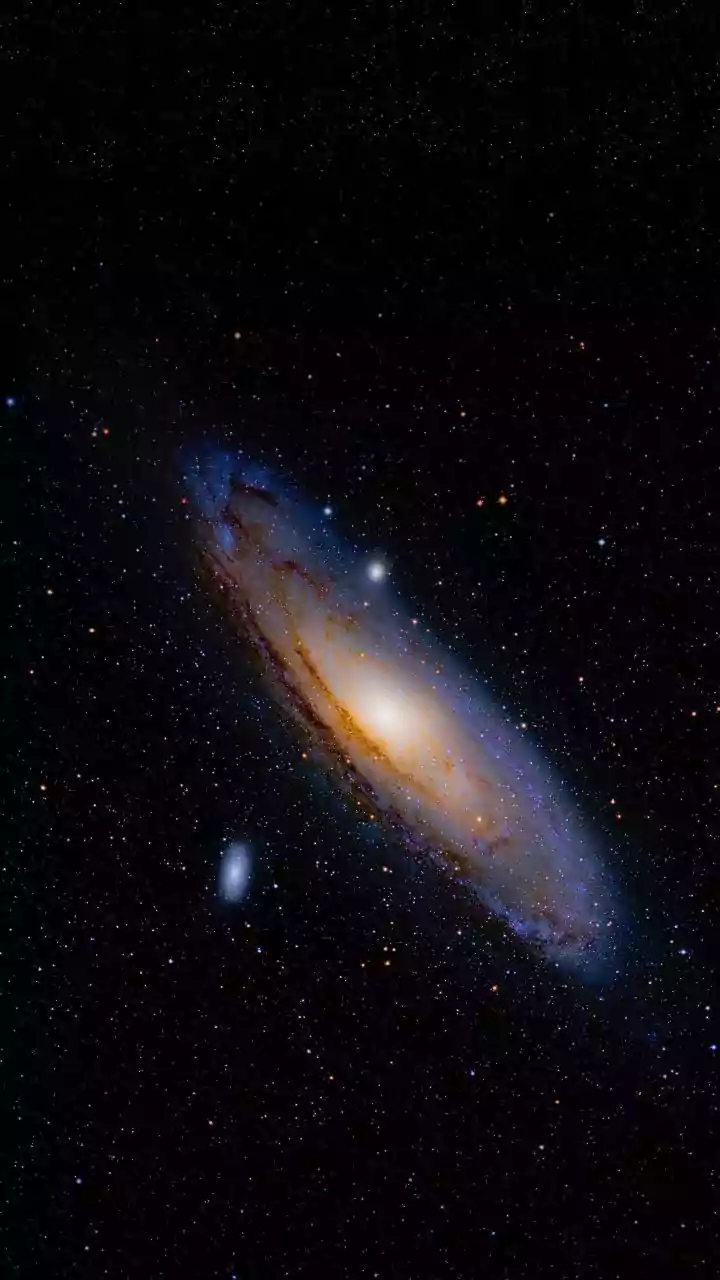
At 2.5 million light-years away, the Andromeda galaxy (M31) is our closest major galactic neighbour. Its sheer size and relative proximity make it a perfect natural laboratory for understanding how large spiral galaxies like our own Milky Way evolve.
A recent study published in The Astrophysical Journal harnessed the power of NASA's Hubble Space Telescope to conduct a massive stellar census. By combining data from two extensive surveys—the Panchromatic Hubble Andromeda Treasury (PHAT) and its southern counterpart (PHAST)—astronomers meticulously mapped two-thirds of Andromeda's disk, measuring the properties of around 200 million individual stars. As astronomer Ben Williams from the University of Washington noted, these stars act as a "fossil record" of the galaxy's history, and only Hubble has the sharp resolution to read it in such detail across a vast area.
A Slow but Steady Decline
The comprehensive data revealed a clear and compelling story: Andromeda's era of vigorous star birth is winding down. Scientists already knew the galaxy experienced a major burst of star formation about two billion years ago, likely from a collision with another, smaller galaxy. However, the new analysis shows that for the last 500 million years, the star-making engine has been steadily slowing. Five hundred million years ago, Andromeda was creating stars at a rate of about one solar mass (the mass of our Sun) per year—a rate similar to the current output of our Milky Way. But by 40 million years ago, that rate had been cut in half. Today, it has plummeted to just one-fifth of a solar mass per year. This slowdown marks a significant shift from the galaxy's more turbulent youth to a quieter, more settled phase of its life.
The Fading Starry Ring
To understand this decline, the research team didn't just look at the galaxy as a whole. They divided the vast Hubble images into thousands of smaller, 300-light-year-wide squares and analysed the history of each region. They found the slowdown wasn't uniform. Much of the recent star-birthing activity was concentrated in a massive ring located about 32,000 light-years from the galaxy's centre. It is the fading activity within this specific ring that is driving much of the galaxy's overall decline. Rather than a sudden shortage of the gas and dust needed to form stars, the process appears to be a natural winding down after the intense burst of activity billions of years ago. Lead author Tobin Wainer likened it to taking a breather after running a marathon.
A Likely Suspect?
While the slowdown appears to be a natural phase, astronomers are also investigating external influences. One prime suspect for affecting at least part of Andromeda is its small, compact satellite galaxy, M32. The team found that the region of Andromeda's disk closest to M32 showed a more pronounced decrease in star formation beginning around 60 million years ago. While researchers cannot definitively say M32 is the cause, its proximity makes it a person of interest in this cosmic investigation. Tobin Wainer stated that while they can't explicitly prove the connection, M32 is "definitely the most likely suspect" for the localised dip in star creation. This potential interaction adds another layer of complexity to Andromeda's already fascinating history.