



Churros, Spain
A sweet treat with a debated history, churros are long, ridged sticks of fried choux pastry dough. One popular theory suggests Portuguese merchants brought the idea back from China, adapting a salty fried dough called 'youtiao' into a sweet version. Another
story credits Spanish shepherds, who fried the dough over open fires as an easy, portable snack. The name 'churro' might even come from the Churra sheep, whose horns resemble the pastry's shape. Traditionally dusted with sugar and cinnamon, churros are famously served with a thick hot chocolate for dipping. In Mexico, they're often filled with caramel or fruit preserves.
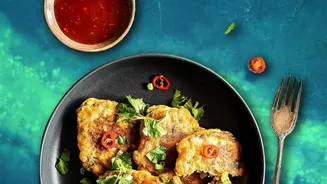
Tempura, Japan
Tempura is a testament to Japanese culinary finesse, featuring seafood and vegetables coated in an exceptionally light and crispy batter. Unlike heavier fried foods, tempura's magic lies in its delicate, non-greasy texture. The secret is the batter, made from flour, egg, and ice-cold water, which is mixed minimally to prevent gluten from forming. This technique was introduced to Japan in the 1600s by Portuguese missionaries. Today, popular items for tempura include prawns, squid, pumpkin, and eggplant, served hot with a tentsuyu dipping sauce made from dashi, mirin, and soy sauce.
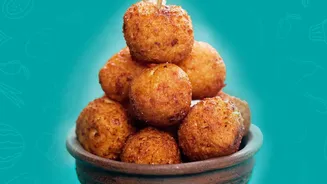
Arancini, Italy
Hailing from Sicily, arancini are delicious balls of rice, stuffed, coated in breadcrumbs, and deep-fried to a golden hue. Their name means 'little oranges,' a nod to their shape and colour. These flavour-packed snacks are believed to have originated in the 10th century during Arab rule in Sicily. Common fillings include a rich ragù (meat sauce) with peas and cheese, or a simpler 'al burro' version with ham and mozzarella. In eastern Sicily, they are often shaped into a cone, inspired by the nearby volcano, Mount Etna.
Beignets, USA
A signature sweet of New Orleans, a beignet is a square of deep-fried choux pastry, lavishly dusted with powdered sugar. These pillowy doughnuts without a hole were brought to Louisiana in the 18th century by French-Acadian colonists. The iconic Café du Monde, established in 1862, popularised them as the perfect accompaniment to a café au lait. Crispy on the outside and wonderfully light and airy on the inside, beignets are a beloved comfort food and were named the official state doughnut of Louisiana in 1986.
Scotch Egg, United Kingdom
A classic British picnic and pub snack, the Scotch egg is a hard or soft-boiled egg wrapped in seasoned sausage meat, coated in breadcrumbs, and deep-fried. Despite the name, its origins are widely believed to be English, not Scottish. The London department store Fortnum & Mason claims to have invented them in 1738 as a convenient, portable snack for wealthy travellers. Another theory links them to the Indian dish Nargisi Kofta. Served hot or cold, it's a hearty, savoury, and unmistakably British treat.
Coxinha, Brazil
Coxinha, meaning 'little thigh,' is one of Brazil's most beloved street foods. This savoury snack is made from a soft dough filled with shredded, seasoned chicken, which is then moulded into a teardrop shape resembling a chicken drumstick, breaded, and fried. One popular legend claims the coxinha was invented for a picky young prince who would only eat chicken thighs. When the kitchen ran out, a clever chef created the first coxinha to mimic his favourite food, and a national dish was born.
Chimichanga, Mexico/USA
Essentially a deep-fried burrito, the chimichanga is a staple of Tex-Mex cuisine. Its origin is hotly debated, with stories placing its creation in either Sonora, Mexico, or Arizona, USA. The most popular tale attributes it to an accident in Tucson, Arizona, in the 1920s, when a burrito was accidentally dropped into a deep fryer. The name is said to be a Spanish nonsense word, roughly translating to 'thingamajig'. The crispy tortilla gives way to a filling of meat, beans, and cheese, often topped with salsa and guacamole.
Katsu, Japan
Katsu is a crispy fried cutlet coated in flaky Japanese panko breadcrumbs. While similar in concept to a German schnitzel, katsu has become a cornerstone of Japanese 'yoshoku' (Western-style) cuisine since its invention in the late 1800s. The most common varieties are tonkatsu (pork) and chicken katsu. The use of panko, which is lighter and flakier than standard breadcrumbs, results in an incredibly crunchy crust that keeps the meat inside juicy and tender. Katsu is often served with shredded cabbage, rice, and a sweet and savoury katsu sauce, or as part of a Japanese curry dish.
Fritto Misto, Italy
Translating to 'mixed fry,' Fritto Misto is exactly that—a glorious assortment of bite-sized foods, lightly battered and fried. A speciality of coastal Italian towns, it often features the catch of the day, such as calamari, shrimp, and small fish, alongside seasonal vegetables like zucchini and bell peppers. The key is a very light batter, sometimes just a dusting of flour, and quick frying to ensure everything is crispy on the outside while remaining tender inside. It's served hot with just a sprinkle of salt and a wedge of lemon.
Luqaimat, Middle East
These sweet dumplings, whose name translates to 'little bites,' are a popular dessert across the Middle East, especially during Ramadan. Luqaimat are small, yeasted balls of dough that are deep-fried until golden and crispy, with a light, fluffy interior. They are then immediately soaked in a fragrant sugar syrup, often flavoured with rosewater or orange blossom, or drizzled with date syrup. Variations exist across the region, with some recipes including additions like cream cheese or nuts for a richer filling.