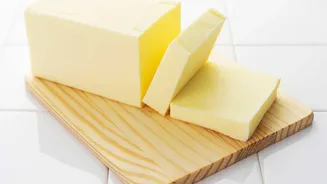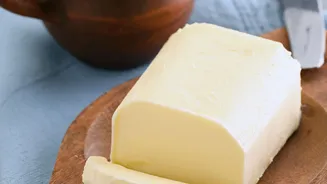


What Exactly is Homemade White Butter?
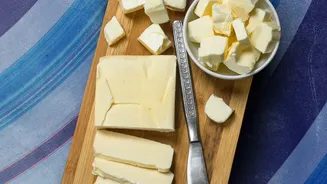
At its core, homemade white butter, or safed makkhan, is a simple, natural product. It's made by churning the layer of cream (malai) that forms on top of milk until the fat globules separate from the liquid, which is buttermilk. Unlike most commercially
produced yellow butters, homemade white butter is typically unsalted and free from artificial colours and preservatives. This minimal processing is its primary appeal. The colour difference often comes down to the cow's diet; milk from grass-fed cows is richer in beta-carotene, leading to a more yellow butter, while grain-fed cows produce paler cream.
The Nutritional Reality Check
Gram for gram, both white and yellow butter are high in calories and fat, consisting of about 80% fat. Most of this is saturated fat. However, homemade white butter is also a source of essential fat-soluble vitamins, including Vitamin A, D, E, and K. These vitamins are crucial for vision, immunity, skin health, and bone strength. Some sources suggest white butter is slightly lower in calories and saturated fat than its processed yellow counterpart, but the primary difference lies not in the core macros, but in what's added—or rather, what isn't. Homemade makkhan has no added salt or trans fats that can be present in some commercial varieties.
Claim: It Aids in Weight Loss
This is one of the most common yet misleading claims. No single food can cause weight loss, especially one as calorie-dense as butter. However, some proponents argue that white butter contains lecithin, a substance that may aid in fat metabolism. A more practical explanation is that healthy fats contribute to a feeling of fullness, or satiety, which can help prevent overeating. While it's not a weight-loss food, incorporating a small amount of a natural fat like white butter into a balanced diet can be more satisfying and sustainable than a strictly low-fat regimen. Portion control remains crucial.
Claim: It Gives You Glowing Skin
There is a kernel of truth here. White butter contains Vitamin E and Vitamin A, both of which are antioxidants known to support skin health. Vitamin E helps protect skin cells from damage, while Vitamin A is essential for skin repair and maintenance. The healthy fats in butter also help your body absorb these fat-soluble vitamins from other foods you eat. However, relying on butter alone for good skin is misguided. A varied diet rich in fruits, vegetables, and sufficient hydration is far more effective for achieving a healthy glow. Think of the butter as a small, supporting player, not the star of the show.
Claim: It Strengthens Bones and Joints
This claim is often linked to white butter's Vitamin D content, which is essential for calcium absorption and bone health. Some traditional beliefs also mention a 'Wulzen factor', a supposed anti-stiffness substance found in raw butter, though this is not supported by mainstream science. While butter does contain some Vitamin D and calcium, the amounts are relatively small. It can contribute to your daily intake, but it's not a substitute for primary sources like dairy products, leafy greens, and adequate sun exposure for bone health.
The Real Advantage: Purity and Taste
So, if it's not a miracle food, why does white butter matter? Its true value lies in its purity. When you make it at home, you control the ingredients completely. It is free from the preservatives, emulsifiers, and excess salt found in many commercial butters. For those with lactose sensitivities, white butter may also be easier to digest as the churning process separates out most of the milk solids and lactose into the buttermilk. Ultimately, its fresh, mild flavour is a significant draw, allowing the taste of the food it accompanies, like a simple roti or dal, to shine through.