




Beyond the Selfie Point
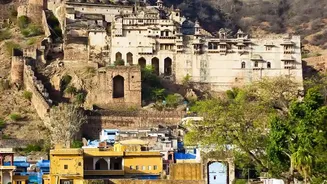
We’ve all done it: arrived at a majestic fort like Mehrangarh or Chittorgarh, battled the crowds for the perfect wide-angle shot, and ticked it off our list. But this fast-food approach to travel leaves us with a gallery of photos but only a vague memory
of the place itself. A slow, architecture-focused visit offers a richer alternative. It’s about trading the checklist for curiosity and looking beyond the grand vistas to find the stories embedded in the walls. It means noticing the way sunlight filters through a stone lattice, tracing the path of a centuries-old water channel, or understanding why a gateway is bent at a sharp angle. This approach doesn't require an architecture degree, only a willingness to look closer and ask: why was it made this way?
The Language of Stone and Strategy
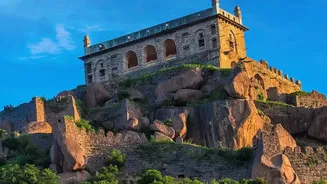
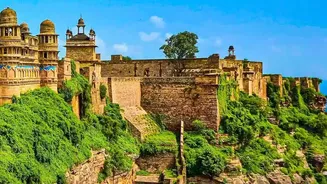
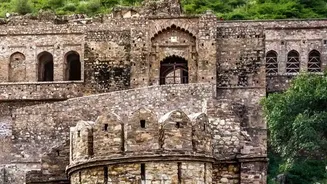
Start by observing the defensive features, which often reveal the fort’s primary purpose. At Golconda Fort in Hyderabad, the imposing gates are studded with iron spikes, a direct countermeasure against war elephants used as battering rams. Many gates feature a bent entrance, a clever design to slow down charging invaders and funnel them into killing zones overlooked by defenders on the ramparts above. At Mehrangarh in Jodhpur, the seven massive gates you must pass through were designed to be a formidable obstacle course for any attacking army. Noticing these details transforms you from a simple tourist into a tactical observer, seeing the fort not just as a palace but as a masterclass in medieval military engineering.
Follow the Water
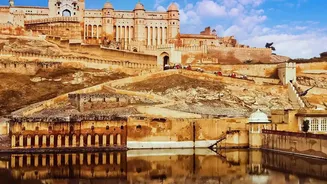
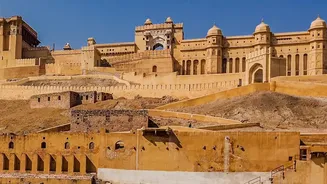
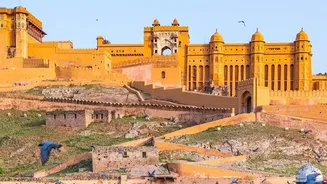
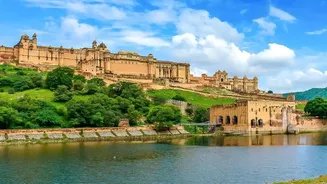
In an arid landscape, water was life, and the ingenuity of water management systems in Rajasthani forts is nothing short of breathtaking. At Amer Fort near Jaipur, an elaborate system lifted water from Maota Lake at the base all the way up to the palace. It involved a series of tanks and Persian wheels, a complex relay that supplied the fort’s many gardens and residential quarters. Similarly, Chittorgarh Fort, a sprawling UNESCO World Heritage site, once contained over 80 water bodies, including the famous Gaumukh Reservoir, ensuring it could withstand long sieges. By tracing these water channels and stepwells, you gain a profound appreciation for the foresight and engineering prowess that made life possible atop these formidable hills.
A Symphony of Styles
Many of India's forts are not the product of a single vision but were built and expanded over centuries by different rulers. This has resulted in a fascinating fusion of architectural styles. As the Mughals and Rajputs formed political and matrimonial alliances, their building traditions began to blend. In Amer Fort, you can clearly see the synthesis of Rajput and Mughal styles, with grand courtyards and halls like the Diwan-e-Am echoing Mughal palaces. Look for the delicate, latticed stone screens known as 'jaalis'. These are not merely decorative; they were a practical solution, allowing royal women to observe court proceedings without being seen while also providing ventilation and cooling the interiors. You can find exquisite examples in the palaces of Mehrangarh Fort. Paying attention to these hybrid designs reveals a complex history of conflict, alliance, and cultural exchange.
How to Plan Your Slow Visit
To truly embrace this approach, give yourself more time than you think you need. Instead of trying to see three forts in a day, dedicate a full morning or afternoon to just one. Hire a knowledgeable local guide who is passionate about history and architecture, not just photo spots. Before you go, read a little about the fort's most famous ruler or a key battle it witnessed. This context will bring the silent stones to life. Focus on a single element during your visit—perhaps the water systems, the defensive gates, or the style of the private palaces. This focused observation will reveal details you would have otherwise missed, making your experience far more memorable and meaningful.