






An Unlikely Bet on the Final Frontier
In 2018, two former scientists from the Indian Space Research Organisation (ISRO), Pawan Kumar Chandana and Naga Bharath Daka, took a leap of faith. They resigned from their stable government jobs to start a rocket company, Skyroot Aerospace, at a time
when India's space sector was almost entirely a government-run affair. The idea of a private company building and launching orbital rockets was seen by many as unrealistic. The founders struggled to attract capital from institutional investors, who were wary of the high risks and long, uncertain timelines of a hardware-intensive space venture. It was in this environment that Mukesh Bansal, the celebrated founder of Myntra and Cult.fit, received a cold message on LinkedIn. Instead of dismissing it, he saw an opportunity others overlooked.
The First Cheque: A Vote of Confidence
Bansal became Skyroot’s first and, for a time, only angel investor, writing a cheque for around ₹10-12 crore. This was in 2018, a full two years before the Indian government formally liberalised the space sector for private participation and four years before Skyroot's first-ever rocket launch. As co-founder Pawan Kumar Chandana later noted, there was no clear space policy and immense technological risk. Bansal's investment was more than just capital; it was a powerful vote of confidence in the founders' vision. He was moved by their passion and willingness to take risks in a sector that was a far cry from the consumer internet businesses most investors favoured. This early backing was crucial, even helping the startup retain its team during the financial crunch of the COVID-19 pandemic.
A Vision Validated: From 'Prarambh' to Orbit
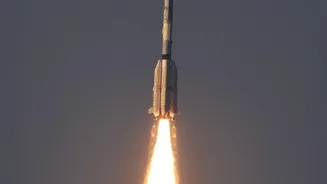
Bansal's foresight was spectacularly validated. On November 18, 2022, Skyroot successfully launched Vikram-S, India's first-ever privately developed rocket, on a suborbital flight named 'Prarambh' (The Beginning). This historic achievement proved that a private Indian entity could indeed build and launch a rocket, setting the stage for bigger ambitions. The momentum continued, and on July 18, 2026, the company launched Vikram-1, its first orbital-class vehicle, successfully placing payloads into orbit. This milestone made India only the third country, after the US and China, to have a private company with orbital launch capability. For early investors like Bansal, it was the culmination of a years-long bet on Indian engineering and entrepreneurial spirit.
The Staggering Financial Return
The bet on Skyroot has paid off handsomely for Bansal. His initial investment of approximately ₹12 crore has mushroomed in value. According to data from Tracxn, his current holding in the company, which became India's first spacetech unicorn in 2026, is valued at over ₹600 crore. Factoring in partial exits where he sold some shares, the total value of his investment has soared to over ₹700 crore, representing a staggering return of nearly 60 times his original capital. This phenomenal success story has sent a powerful signal to the venture capital community: patient, high-risk capital invested in deep-tech and frontier technologies in India can generate massive financial rewards, alongside building strategic national assets.
Fueling India's Private Space Ambitions
Bansal's involvement with Skyroot goes beyond a simple investment; it's a foundational story for India's burgeoning private space economy. The sector, valued at $8.4 billion in 2022, is projected to grow to $44 billion by 2033. Since the government opened the doors to private players in 2020, over 400 spacetech startups have emerged. The success of Skyroot, enabled by early believers like Bansal, has created a blueprint for both entrepreneurs and investors. It has demonstrated that India can compete on the global stage, not just as a low-cost supplier to ISRO, but as a hub for end-to-end space technology innovation. A thriving private launch market allows ISRO to focus on larger strategic missions, while startups fill the need for frequent, on-demand satellite launches.