






A Landmark Launch for Indian Space
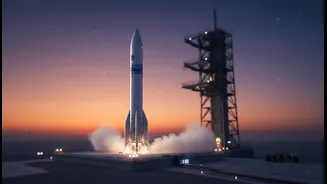
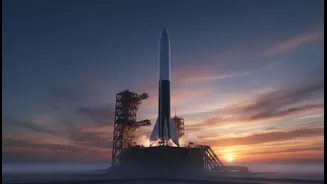
Indian space-tech firm Agnikul Cosmos recently made history with the launch of its ambitious Mission-02. Lifting off from the company's private launchpad, the Agnibaan rocket soared into the sky, carrying not just customer satellites but the dreams of a new
era in India's commercial spaceflight journey. While a successful launch is always a cause for celebration, the true significance of Mission-02 lay in two secondary objectives that are set to redefine the economics of space access. The mission was designed to be India's first private attempt at recovering an orbital-class rocket stage, while simultaneously turning the rocket's final stage into a long-term platform for other companies to use in orbit.
The Billion-Dollar Bounce: Mastering Rocket Recovery
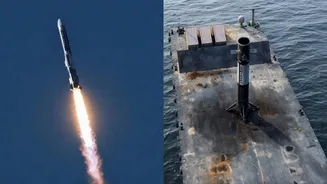
For decades, rockets have been single-use behemoths, with their most expensive parts discarded as debris after a few minutes of flight. Mission-02 challenged this wasteful paradigm. After separating from the upper stage, the Agnibaan rocket's first-stage booster executed a controlled descent, targeting a safe splashdown in the ocean for recovery. This manoeuvre is a crucial first step towards full reusability, a technology pioneered by companies like SpaceX that has drastically slashed the cost of reaching orbit. By proving its ability to recover and eventually reuse its rockets, Agnikul is positioning itself to offer launch services at a fraction of current costs, a move that could attract a wave of new customers and unlock unprecedented access to space for smaller companies and researchers. The goal is to fundamentally reshape global launch economics.
A 'Hotel' in Orbit: The Rise of Hosted Platforms
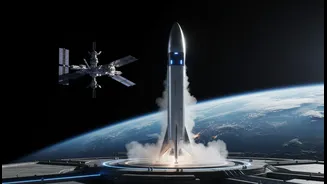
The mission's second masterstroke occurred after the main payload was deployed. Instead of becoming another piece of space junk, the rocket's upper stage converted itself into a functional, orbiting platform. Think of it as a co-working space or a data-hosting service in orbit. Agnikul has patented this convertible architecture, which allows the same hardware that delivers a satellite to then serve as an in-orbit asset for an extended period. This innovative approach, sometimes called orbital hosting, allows other companies to run experiments, test technologies, or operate sensors without needing to launch their own dedicated satellites. It's a game-changer for startups and researchers who can now 'rent' space and power on an existing platform, dramatically lowering the barrier to entry for in-space operations.
A Dual-Pronged Strategy for Space Dominance
The true brilliance of Mission-02 lies in how these two achievements—recovery and hosting—work together. Rocket reusability drives down the cost of getting to orbit, making launch services more affordable and frequent. This, in turn, makes the business case for orbital hosting platforms much stronger. As launch costs fall, more customers can afford to place their technology on these orbiting 'hotels'. This creates a powerful, self-reinforcing business model: cheaper launches enable more in-space services, which in turn generate more demand for cheap launches. By pursuing both tracks simultaneously, Agnikul isn't just building a rocket; it's building an entire space ecosystem. This strategy is also being pursued by other startups like Skyroot Aerospace, whose Vikram-1 vehicle also features an upper stage designed to support payloads after the main deployment.