



The Allure of the Simple Test
The desire for pure, unadulterated honey is understandable. It’s a natural sweetener prized for its health benefits and unique flavours. Viral videos promising a simple, instant way to spot a 'fake' are incredibly appealing. They offer a sense of control
and an easy solution to a complex problem. Unfortunately, most of these popular home tests are based on misunderstandings of honey's physical properties and are scientifically unreliable. A sophisticated adulterated honey can easily pass, while a perfectly pure, natural honey might fail.
Myth: The Water Test
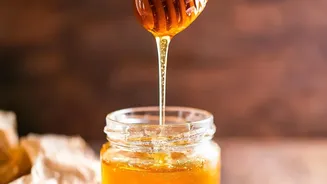
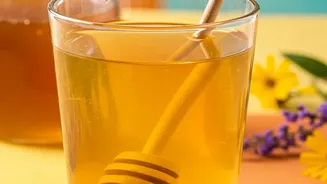
One of the most common hacks involves dropping a spoonful of honey into a glass of water. The theory is that pure honey, being dense, will sink to the bottom as a solid lump, while adulterated honey will dissolve. The reality is that this test only measures viscosity and density. While pure honey is typically dense, its thickness can vary greatly depending on its floral source, temperature, and moisture content. Some adulterants, like high-fructose corn syrup, are also dense and will sink just like real honey, making this test inconclusive.
Myth: The Flame Test
Another popular spectacle is the flame test, where a cotton swab or matchstick dipped in honey is set on fire. The claim is that pure honey is flammable and will burn, while fake honey with excess moisture will not. This test is not only a fire hazard but also deeply flawed. A honey's ability to burn is primarily related to its moisture content, not its purity. Pure honey naturally contains about 17-20% water. A genuine honey from a humid season might have higher moisture and fail to light, while a cleverly formulated syrup with low moisture could pass with flying colours.
Myth: The Thumb and Blot Tests
Other physical tests, like placing a drop on your thumb to see if it holds its shape or putting it on blotting paper to see if it’s absorbed, are equally unreliable. These tests are, again, just crude measures of viscosity. The thickness of honey changes with temperature; cold honey is thick and will hold its shape, while warm honey is runny. These properties say nothing about whether the honey has been mixed with rice syrup, corn syrup, or other C3 plant-based sugars designed to evade simple detection.
The Reality: Sophisticated Adulteration Needs Sophisticated Testing
Modern honey adulteration has become a science. Producers can use syrups from rice, beet, and corn that are chemically similar to honey and are designed to fool basic tests. This is why food safety authorities like the FSSAI (Food Safety and Standards Authority of India) rely on advanced laboratory methods. Techniques like Nuclear Magnetic Resonance (NMR) profiling and Stable Carbon Isotope Ratio Analysis (SCIRA) are used to analyze the honey's molecular fingerprint, identify foreign sugars, and verify its origin. These are the only truly reliable ways to confirm purity.
Your Best Strategy: Become an Informed Consumer
Since you can't run an NMR test in your kitchen, the most powerful tool you have is knowledge. Instead of relying on viral hacks, focus on what you can control. First, read the label carefully. Look for the FSSAI license number and details about its origin. Vague labels like 'a blend of honeys from multiple countries' can be a red flag. Secondly, be wary of prices that seem too good to be true. Producing genuine honey is resource-intensive, and an unusually low price may suggest adulteration. Finally, buy from trusted sources. Reputable brands, certified producers with marks like Agmark, or local beekeepers you know are often your safest bet.