






The Freedom of Lighter Luggage
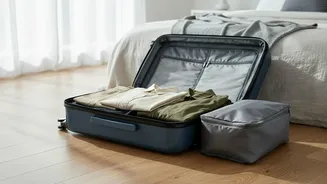
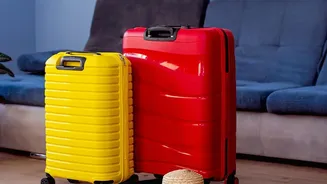
The most immediate benefit of a smaller wardrobe is the physical freedom it provides. Navigating crowded train stations, bustling city streets, and hotel lobbies becomes significantly less stressful when you're not wrestling with a heavy, cumbersome bag.
This newfound mobility allows for more spontaneity. You can hop on and off public transport with ease, and the thought of changing hotels or even cities feels less like a logistical nightmare and more like an exciting opportunity. Beyond the physical ease, travelling light saves money by avoiding checked baggage fees and eliminates the anxiety of lost luggage. It’s a simple change that streamlines the entire travel process, leaving you with more energy to focus on the experience itself.
Cure Decision Fatigue Before It Starts
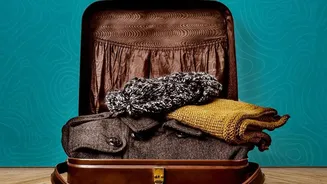
One of the hidden costs of overpacking is decision fatigue—the mental exhaustion that comes from making too many choices. Staring into a suitcase crammed with options every morning can be surprisingly draining. A smaller, curated wardrobe eliminates this. When every item is chosen to work with every other item, getting dressed takes minutes, not a major chunk of your precious vacation time. This minimalist approach is more than just a packing strategy; it's a mindset shift. By intentionally limiting your choices, you free up mental space and energy to be more present and mindful, focusing on the sights, sounds, and moments of your journey rather than your belongings.
Embrace the Capsule Wardrobe Concept
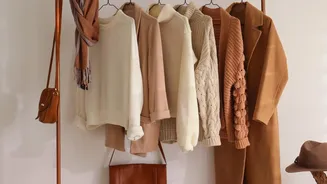
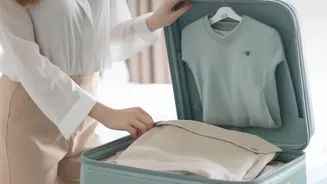
The key to a successful small travel wardrobe is the 'capsule' method: a compact collection of versatile, high-quality pieces that can be mixed and matched to create numerous outfits. The goal isn't to bring a different outfit for every single day, but to pack smart, essential items that can be layered and adapted for various situations and weather conditions. A well-planned travel capsule should easily fit into a single carry-on bag while still offering a wide variety of stylish looks. This approach forces you to focus on quality over quantity and be more intentional about what you bring. Instead of packing for every unlikely scenario, you pack with the confidence that you have what you need to adapt.
How to Build Your Travel Capsule
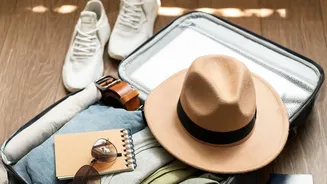
Start by choosing a simple color palette. Pick two or three neutral base colors like black, navy, grey, or beige, and then add one or two accent colors that complement them. This ensures everything you pack works together seamlessly. Next, focus on versatile core items. A typical foundation includes a few basic tops (like t-shirts and a long-sleeve shirt), a pair of well-fitting jeans or trousers, and a versatile dress or skirt. For outerwear, a lightweight jacket or a classic cardigan can be layered to handle changing temperatures. The most important rule is that every top should match every bottom, and your shoes should work with nearly every outfit combination.
Fabric, Function, and Footwear
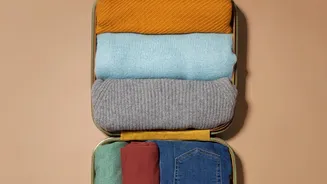
The right fabrics can make or break a minimalist wardrobe. Prioritize materials that are wrinkle-resistant, quick-drying, and comfortable. Knits, merino wool, and certain performance blends travel much better than linen or 100% cotton, which tend to crease easily. When it comes to packing, rolling your clothes instead of folding them can save a surprising amount of space and help prevent deep-set wrinkles. Shoes are often the bulkiest items, so limit yourself to a maximum of three pairs: comfortable walking shoes are non-negotiable, along with perhaps a pair of sandals or flats and a smarter option if your itinerary requires it.