




A Tale of Two Lunar Samples
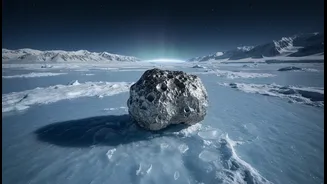
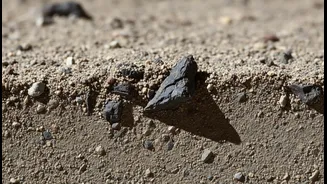
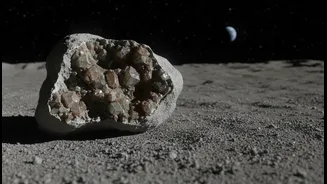
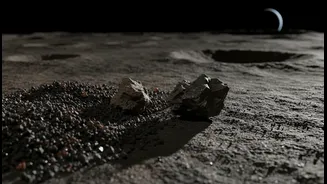
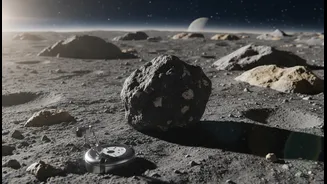
On one hand, we have ALHA 81005, a small, 31-gram rock with a big story. Discovered in the Allan Hills of Antarctica during the 1981-1982 expedition, it holds the distinction of being the very first meteorite found on Earth to be definitively identified
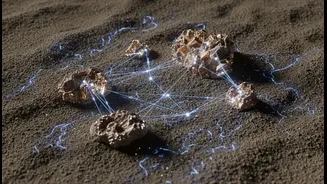
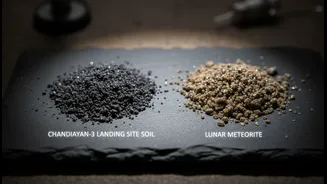
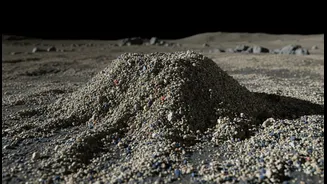
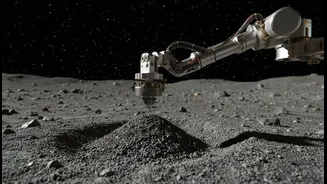
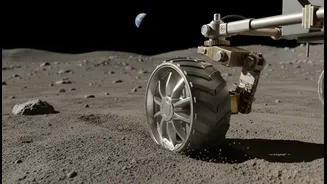
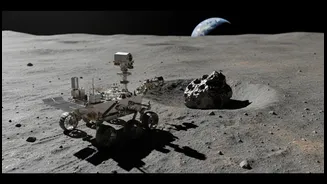
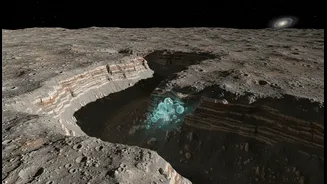
as originating from the Moon. For decades, it has been a priceless piece of the lunar puzzle, studied in labs to understand the Moon's geology. On the other hand, we have the soil at Shiv Shakti point, the historic site near the Moon's South Pole where India's Chandrayaan-3 mission successfully landed in August 2023. The Pragyan rover, a national hero on six wheels, used its advanced Alpha Particle X-ray Spectrometer (APXS) instrument to analyse the chemical makeup of the lunar surface right there, in its original place. One sample arrived on Earth by cosmic chance; the other was analysed in-situ through brilliant engineering. Now, scientists have found they are telling the same story.
The Unique Chemical Fingerprint
The connection isn't just a casual similarity; it's a specific and rare geochemical signature. In a landmark study, scientists from the Physical Research Laboratory (PRL) in Ahmedabad found that the soil at Shiv Shakti and the meteorite ALHA 81005 are chemical twins in several key ways. Both samples are notably rich in iron and magnesium but have lower levels of aluminium compared to what is typically found in the lunar highlands, the Moon's bright, cratered crust. The composition is so distinct that it occupies a rare middle ground between two major types of lunar rock: the ancient 'ferroan anorthosites' (FAN) that formed the Moon's primordial crust and the later 'Mg-suite' rocks that came from subsequent volcanic activity. This shared fingerprint, featuring elevated magnesium and specific mineral ratios, makes both the landing site and the meteorite special.
Unearthing Deeper Lunar Secrets
This discovery does more than just link two samples; it provides profound insights into the Moon's violent past. Scientists believe the unique composition at Shiv Shakti indicates that the soil is not just surface material. Instead, it appears to be a mixture containing rocks and minerals that were excavated from deep within the Moon's crust. The most likely culprit for this cosmic digging is the colossal impact that formed the South Pole-Aitken (SPA) basin, one of the largest and oldest impact craters in the solar system, located near the Chandrayaan-3 landing site. This ancient event, happening billions of years ago, would have been powerful enough to blast material from the Moon's mantle and deeper crust, scattering it across the surface. The Pragyan rover, it seems, landed right on top of this ancient, deep-seated material.
A Triumph for Indian Science
It's crucial to understand what this link does and doesn't mean. ISRO and PRL scientists clarify that this finding does not suggest the ALHA 81005 meteorite was specifically ejected from the Shiv Shakti point itself. Rather, it implies that both the meteorite's origin point and the Chandrayaan-3 landing site represent a similar, and rare, type of magnesium-rich crust. For the first time, an in-situ measurement from a robotic mission on the Moon has been directly correlated with a physical sample in our possession on Earth. This is a monumental achievement for the Chandrayaan-3 mission, validating its data and enhancing its scientific value immensely. It transforms our understanding of lunar meteorites, giving them a geological context that was previously only theoretical. It showcases India's capability not just to reach the Moon, but to conduct pioneering science that fundamentally reshapes our knowledge of our celestial neighbour.