
More Than Just Water: Sacred Landscapes
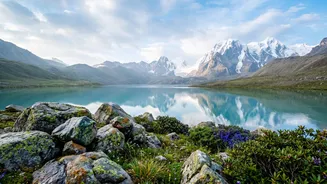
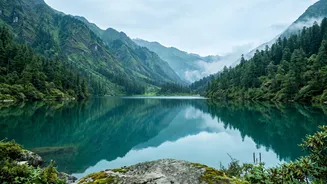
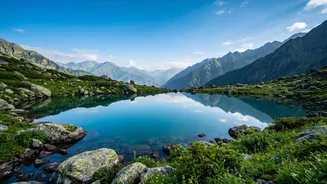
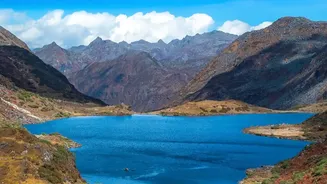
In many parts of Northeast India, particularly in states like Sikkim and Arunachal Pradesh, lakes are not merely tourist spots; they are sacred sites. For centuries, local communities, predominantly Buddhist, have revered these water bodies as abodes
of deities and places of immense spiritual power. Gurudongmar Lake in North Sikkim, for instance, is considered holy by Buddhists, Sikhs, and Hindus. Legends say that Guru Padmasambhava blessed a portion of the lake, ensuring it never freezes completely, even in the harshest winters, to provide water for the people. Similarly, Khecheopalri Lake in West Sikkim is known as a 'wish-fulfilling' lake, and the serene Tsomgo Lake is steeped in folklore, with monks once studying its colours to predict the future. This deep-rooted reverence is the foundation of many conservation rules. Disrespecting these sites, such as by entering the water, is seen not just as an infraction but as a profound cultural and religious offense.
The Cardinal Rule: Permits and Access
Many of the most famous high-altitude lakes, including Gurudongmar, Tsomgo, and those in parts of Arunachal Pradesh, are located in protected or sensitive border areas. This means access is strictly controlled, and visitors must obtain specific permits. For Indian citizens, this often involves a Protected Area Permit (PAP) or an Inner Line Permit (ILP), which are typically arranged by registered local tour operators a day or more in advance. Foreign nationals face tighter restrictions and are often barred from visiting certain lakes like Gurudongmar and Nathula altogether. It is crucial to carry your original government-issued photo ID and several photocopies, as they will be checked at multiple army and police posts along the route. Attempting to visit without the correct paperwork is not possible, so planning ahead with an authorized operator is non-negotiable.
Hands Off: Behaviour at the Lakefront
Once you arrive, the rules are guided by respect. A recent incident at Gongkar La Lake in Arunachal Pradesh, where a tourist entered the sacred water, prompted police to issue strict warnings about fines and legal action for violators. The advisory explicitly prohibits swimming, bathing, washing, or even dipping hands in the water. This 'no contact' rule is common for most sacred lakes. Visitors are also asked to maintain a quiet, respectful atmosphere—avoid playing loud music and walk clockwise around stupas or other religious structures where customary. Throwing offerings like coins or food into the water is also forbidden, as it pollutes the pristine environment. Essentially, the guiding principle is to admire the beauty from a distance and leave the site completely undisturbed.
The Fight Against Plastic
The fragile alpine ecosystems are extremely vulnerable to pollution. Sikkim has been a pioneer in environmental policy, banning disposable plastic bags in 1998 and later restricting single-use plastic water bottles and Styrofoam products. Many tourist areas, including popular towns like Lachen which serves as a base for Gurudongmar, have declared themselves plastic-free zones. As a traveller, this means you are expected to participate. Carry a reusable water bottle, refuse plastic bags from vendors, and pack out everything you pack in. Do not leave any wrappers, bottles, or other trash behind. Designated dustbins may be available, but the best practice in these remote areas is to carry your waste back to your hotel in a larger town for proper disposal.
Community-Led Conservation in Action
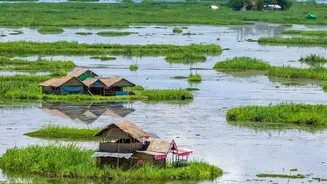
Conservation in the Northeast is not just a government mandate; it is often driven by the communities themselves. In Manipur, local voluntary organizations have been instrumental in the protection and preservation of Loktak Lake, the largest freshwater lake in the region and a designated Ramsar site. These groups organize patrols, spread awareness, and work to protect the unique 'phumdis' (floating islands) and the endangered Sangai deer that live there. Similarly, across Assam and Nagaland, tribal communities have established their own conservation reserves and enacted local rules to protect biodiversity. When you follow the rules, you are not just obeying a sign; you are respecting a system of community-based conservation that has protected these lands for generations.