








From Back Office to Front Line
Not long ago, multinational companies set up what were then called 'captive centers' in India with one primary goal: cost arbitrage. These centers handled backend processes, IT support, and routine operational tasks, allowing parent companies to leverage
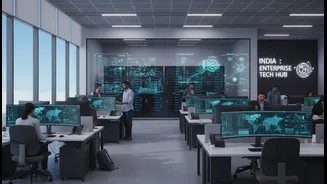
India's lower labor costs. While efficiency was a key benefit, the scope of work was often limited to execution rather than strategy. That model is now a relic. The modern GCC is a fully-owned, integrated extension of the global enterprise, taking on mission-critical functions that define a company's future. The conversation has moved beyond saving money to creating value, with Indian centers now responsible for enterprise-wide transformation, product development, and global strategy.
What’s Driving the Transformation?
Several factors are fueling this significant shift. Firstly, India's talent pool has matured far beyond basic IT skills. The country now possesses a deep reservoir of professionals with expertise in high-demand fields like artificial intelligence, data science, cybersecurity, and product engineering. This allows companies to build teams capable of complex, innovative work. Secondly, global enterprises are under immense pressure to accelerate digital transformation. Instead of outsourcing this critical function, they are using their Indian GCCs to lead the charge, ensuring alignment with corporate goals and retaining control over intellectual property. Finally, the ecosystem itself has become a powerful magnet. With supportive government policies, world-class digital infrastructure, and a thriving startup culture to collaborate with, India offers a uniquely fertile ground for innovation.
The New Face of Indian GCCs
The work being done in today's GCCs looks vastly different from a decade ago. These are no longer just support centers; they are innovation engines. For example, many GCCs now own the entire lifecycle of global products, from initial research and development to market launch. They are establishing dedicated Centers of Excellence (CoEs) for AI and machine learning, building predictive models, and automating complex business processes. Engineering, Research & Development (ER&D) has become one of the fastest-growing functions within Indian GCCs. Companies in sectors like banking, financial services, healthcare, and manufacturing are placing their most advanced R&D and digital mandates in the hands of their Indian teams, developing solutions that serve customers worldwide.
A New Era for Talent and Leadership
This evolution is creating a profound impact on the job market. The demand is no longer for process operators but for data scientists, AI architects, product managers, and domain strategists. Recognizing this, companies are investing heavily in upskilling and reskilling programs. As a result, GCCs are becoming an attractive career destination for top STEM graduates, offering challenging roles and opportunities to work on cutting-edge technology. Furthermore, leadership roles that were once exclusively based at global headquarters are now migrating to India. Indian executives are increasingly responsible for global decision-making, shaping enterprise strategy, and leading worldwide teams, cementing India's role not just as a talent hub, but as a global leadership pipeline.