


A New Tool for an Old Question
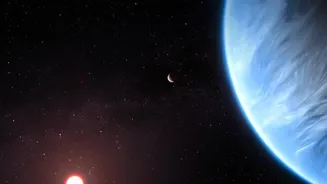
For as long as we have looked at the stars, we have wondered if we are alone. Today, that question is more scientific than philosophical. Astronomers have confirmed the existence of thousands of exoplanets — planets orbiting stars other than our Sun.
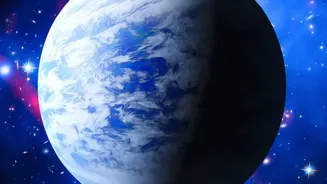
But finding them is one thing; understanding them is another. The next great challenge is to figure out what these worlds are actually like. Are they barren rocks, scorching gas giants, or something more familiar? The key, scientists believe, is to study their atmospheres. The composition of a planet's air can tell us about its climate, its geology, and most tantalizingly, whether it might have the right conditions for life.
The Pandora Mission
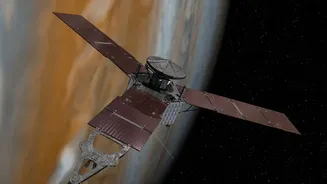
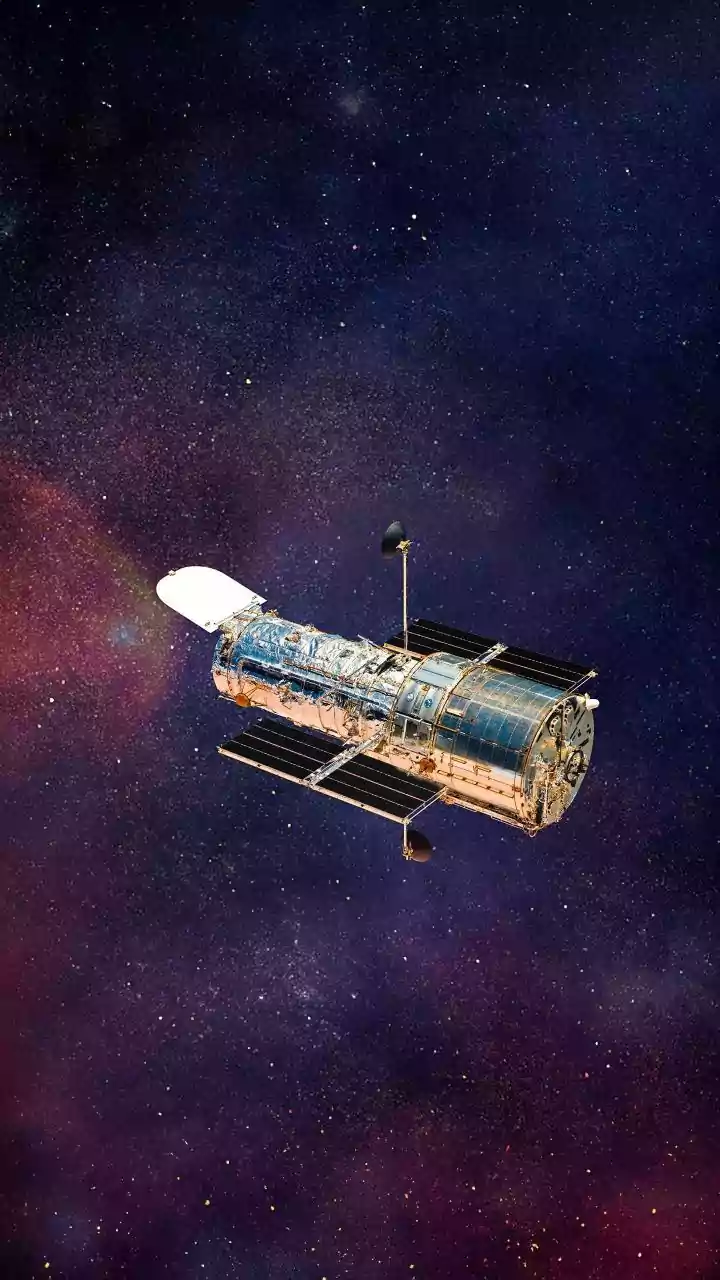
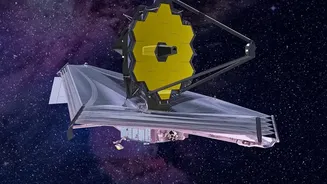
The headline-making James Webb Space Telescope (JWST) is a master at atmospheric studies, but it is in high demand. To complement its work, NASA has launched a nimble and focused new mission called Pandora. Launched in early 2026, this small satellite is the first from the agency's Astrophysics Pioneers program, designed for smaller, more targeted science projects. Pandora's primary goal is to spend a year studying the atmospheres of at least 20 known exoplanets to determine their makeup. It will specifically look for the presence of clouds, hazes, and water. A key part of its job is to help scientists solve a vexing problem: separating the light signature of a planet's atmosphere from the 'noise' of its host star. By getting a clearer signal, Pandora lays the groundwork for bigger telescopes like Webb to perform more detailed follow-up studies.
Decoding a Planet's Fingerprint
So how does a satellite hundreds of millions of miles away read the air of a distant planet? It uses a technique called transit spectroscopy. The process is brilliantly simple in concept. Scientists wait for a planet to pass in front of its star from our perspective — an event called a transit. As the planet crosses, a tiny fraction of the starlight filters through the planet's atmospheric layer. It’s like looking at a lightbulb through a glass of juice; the color of the light changes depending on what’s in the juice. The satellite's instruments, called spectrographs, capture this filtered starlight and spread it out into a rainbow-like spectrum. Different gases in the atmosphere absorb light at specific wavelengths, leaving behind a unique pattern of dark lines, like a chemical fingerprint. By analyzing these fingerprints, astronomers can identify molecules like water vapor, carbon dioxide, and methane.
A Carefully Chosen Shortlist
Pandora will not be looking at just any planets. The mission will observe at least 20 exoplanets, with each target being observed ten times over the course of its primary mission. Each observation will be a long, 24-hour stare to ensure it captures a full transit event. Pandora is unique because it will observe the planets and their stars simultaneously in both visible and infrared light for extended periods. This long-duration stare is something that larger, more over-scheduled observatories like JWST can't regularly do. This allows Pandora to build up a very clear and stable picture of both the planet's atmosphere and the star's activity, which is crucial for getting the data right. The mission will study a variety of planets, from massive gas giants to smaller rocky worlds, providing a broad survey of different atmospheric types.
The Search for Biosignatures
The ultimate prize in studying exoplanet atmospheres is the discovery of a biosignature — a gas or combination of gases that strongly suggests the presence of life. On Earth, for example, the high concentration of oxygen is a direct result of biological processes like photosynthesis. Without life constantly replenishing it, oxygen would quickly react with other elements and disappear. Scientists aren't just looking for oxygen; other potential biosignatures include methane in combination with carbon dioxide, nitrous oxide, and even gases like dimethyl sulfide, which on Earth is produced by marine life. The discovery of such a gas would not be definitive proof of aliens, as non-biological processes can sometimes mimic these signatures. However, finding a planet with an atmosphere in a state of chemical imbalance would be the most compelling reason yet to take a much, much closer look.