







Why 'Gentle' Matters in the Morning
A 'gentle' breakfast is one that is easy on your digestive system. After a night of fasting, your stomach can be sensitive. Highly processed foods, refined sugars, and excessive fats can cause discomfort, bloating, and the dreaded mid-morning energy crash.
Whole foods, on the other hand, are typically easier to digest. They provide nutrients in their natural state, often rich in fibre, which supports a healthy gut microbiome. Starting with gentle foods like cooked grains, fruits, and lean proteins helps wake up your metabolism without causing stress to your system, setting a calm and stable tone for the rest of the day.
The Formula for a Satisfying Meal
A truly satisfying breakfast goes beyond just feeling full; it provides sustained energy and prevents cravings. The key is to balance three main components: protein, fibre, and healthy fats. Protein is crucial for satiety, helping you feel full for longer and supporting muscle health. Fibre, found abundantly in whole grains, fruits, and vegetables, slows digestion and helps stabilize blood sugar levels. Healthy fats, from sources like avocados, nuts, and seeds, are essential for brain function and nutrient absorption. A meal that combines these three elements will keep you energised and focused, preventing the need to reach for a snack an hour later.
Power-Packed Porridges and Bowls
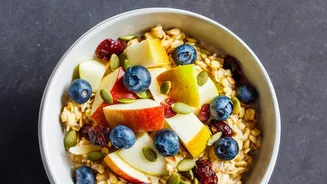
One of the easiest ways to build a gentle, whole-food breakfast is with a warm bowl of porridge. Oats are a fantastic source of soluble fibre, which is great for digestive health. For variety, consider other whole grains like ragi (finger millet), quinoa, or dalia (cracked wheat). Cook your chosen grain with water or milk and avoid pre-packaged, sugary options. The magic happens with the toppings. Add a scoop of nuts or seeds for protein and healthy fats, fresh fruit like berries or banana for fibre and vitamins, and a sprinkle of cinnamon for flavour and its potential blood-sugar-regulating properties.
Simple Savoury Starts
If you prefer a savoury breakfast, there are plenty of gentle and satisfying options. Eggs are a complete protein source and can be prepared in minutes. A simple scramble with spinach and tomatoes provides a nutrient-dense start. For a classic Indian option, moong dal chilla (a savoury pancake made from lentils) is packed with plant-based protein and fibre. Another great choice is poha (flattened rice), cooked with vegetables and a handful of peanuts for added crunch and protein. These savoury meals provide a wonderful balance of macronutrients without relying on processed meats or excessive oil.
Quick and Easy Yoghurt and Smoothies
For mornings when you have no time to cook, a yoghurt bowl or a smoothie can be a perfect solution. Start with plain, unsweetened yoghurt (or Greek yoghurt for a higher protein content) as your base. This provides probiotics, which are beneficial for gut health. Top it with fresh fruit, a tablespoon of chia or flax seeds for fibre and omega-3s, and a small handful of nuts. Similarly, a smoothie can be a complete meal if built correctly. Blend a combination of fruit (like a banana), a handful of spinach, a source of protein (like yoghurt or a clean protein powder), and a healthy fat (like a spoonful of almond butter) with a liquid like water or milk.
Putting It All Together: Sample Combinations
Thinking in terms of combinations can make breakfast building effortless. The goal is to mix and match from the core groups of whole foods. Try a bowl of ragi porridge topped with sliced almonds and chopped apple. Another option is two scrambled eggs served with a slice of whole-grain toast and half an avocado. If you're in a rush, a smoothie made with banana, spinach, plain yoghurt, and a spoonful of flax seeds works well. Even leftovers can be repurposed; a small bowl of leftover dal with a whole-wheat roti can be a surprisingly balanced and filling start to your day.