



The artificial intelligence boom is reshaping our world, but this digital revolution has a colossal and often invisible cost: an insatiable appetite for electricity. This has sparked a renewed, urgent conversation about a powerful, controversial energy
source.
The Unprecedented Energy Thirst of AI
Behind every AI-generated image, translated sentence, or complex calculation is a data center, and these facilities are incredibly power-hungry. In 2024, global data centers consumed an estimated 415 terawatt-hours (TWh) of electricity, roughly 1.5% of the world's total. Projections show this demand accelerating dramatically. Some base case scenarios predict global data center electricity use could more than double to around 945 TWh by 2030. This surge is primarily driven by the specialized, high-performance servers required for AI, which consume far more energy than conventional ones. By some estimates, the increased power demand from data centers between 2023 and 2030 will be equivalent to adding another top-ten power-consuming country to the world. This creates a monumental challenge for electricity grids already struggling to transition to cleaner energy sources.
Why Nuclear Power is in the Conversation
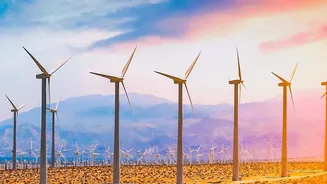
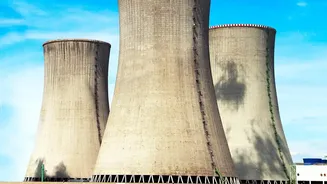
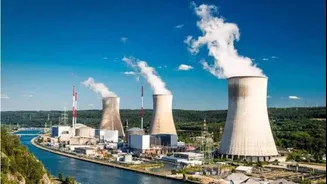
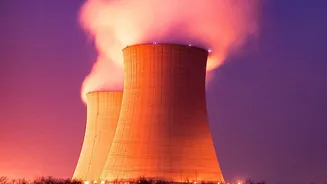
To meet this massive, 24/7 demand, tech giants are looking for a power source that is both carbon-free and exceptionally reliable. While solar and wind are crucial renewable sources, their intermittent nature—dependent on weather—makes them unable to single-handedly guarantee the constant power data centers require. This is where nuclear energy enters the picture. Nuclear power plants provide a consistent, high-capacity 'baseload' power that operates over 93% of the time, making them an ideal match for the non-stop operational needs of AI infrastructure. Furthermore, nuclear power produces zero carbon emissions during operation, aligning with the sustainability goals of many large tech corporations. As a result, companies like Microsoft and Amazon are already making deals to power their data centers with nuclear energy.
The IAEA's Global Nuclear Outlook
The International Atomic Energy Agency (IAEA), the world's central forum for nuclear cooperation, reflects this renewed interest in its projections. Recent IAEA reports show that global nuclear power capacity could more than triple by 2060 in its high-case scenario. This outlook is driven by countries increasingly looking to nuclear power to ensure energy security and meet rising electricity demand. According to the World Nuclear Association's 2026 outlook, nuclear generation reached a new record in 2025, supplying about 9% of the world's electricity. The IAEA notes that many countries are now considering, launching, or expanding their nuclear programs, with a significant focus on developments in Small Modular Reactors (SMRs). These SMRs, which are smaller and can be built in factories, are seen as a particularly good fit for powering industrial sites or large data center campuses.
Hurdles on the Path to a Nuclear-Powered AI
Despite the clear alignment of needs and capabilities, a future of nuclear-powered data centers faces significant obstacles. The first major challenge is time. Building new nuclear reactors is a lengthy process, often taking a decade or more due to stringent regulatory approvals and complex construction, which doesn't match the rapid pace of data center deployment. Second, the upfront capital costs for new nuclear plants are enormous, especially for the first-of-a-kind advanced reactor designs. Other hurdles include securing a stable supply chain for nuclear fuel and managing the long term storage of spent fuel, a persistent public and political concern. Overcoming these issues requires immense investment, streamlined regulations, and a shift in public perception.