



A Global Nod for a Timeless City
As it approaches its 300th birthday in 2027, Jaipur has received a major international accolade. National Geographic's coveted 'Best of the World' list specifically highlights the Pink City for its enduring cultural heritage. This isn't just about majestic
forts and palaces; the recognition celebrates the soul of the city, which is found in its bustling bazaars and the workshops of artisans who practice age-old techniques. For centuries, Jaipur has been a thriving hub for crafts, a status established by its founder, Maharaja Sawai Jai Singh II, who invited skilled artisans from across India to settle here in 1727. This legacy continues today, making Jaipur a city where history is not just displayed in museums but is actively being woven, carved, and sold every day.
The Living Heartbeat: Jaipur's Bazaars
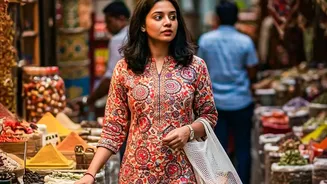
To understand Jaipur's essence, one must walk through its markets. These are not mere shopping districts but vibrant, chaotic, and enchanting ecosystems where specific crafts have their own dedicated lanes, a tradition that dates back to the city's founding. Johari Bazaar is the glittering heart of India’s gem trade, where you can find everything from precious gemstones to exquisite Kundan and Meenakari jewellery. A short walk away, Bapu Bazaar is a kaleidoscope of textiles, famous for its block-printed fabrics, colourful Bandhani sarees, and traditional leather 'Mojari' footwear. For those seeking handcrafted treasures for the home, Tripolia Bazaar offers lac bangles and metalwork, while Chandpole and Kishanpole Bazaars are treasure troves of marble carvings and wooden sculptures.
The Enduring Magic of Blue Pottery
One of the city's most iconic crafts is Blue Pottery, instantly recognizable by its vivid cobalt blue dye. This Turko-Persian art form journeyed to India in the 14th century and found a permanent home in Jaipur, where it was refined under royal patronage. What makes it unique is that it doesn’t use clay. Instead, the dough is a mixture of quartz powder, glass, and other materials, which is then hand-painted with delicate motifs of birds, flowers, and geometric patterns before being glazed and fired. Once used for tiles in palaces, today it is crafted into a wide array of decorative items that carry the city’s artistic signature.
Threads of Tradition: A Textile Paradise
Jaipur's textile heritage is world-renowned, with techniques passed down through generations. The most famous are its resist-dyeing and block-printing traditions. Bandhani, a meticulous tie-dye method, involves an artisan plucking and tying thousands of tiny knots on a fabric before dyeing it to create intricate patterns. A single saree can have up to 15,000 knots and take months to complete. Its cousin, Leheriya, uses a similar process to create wave-like diagonal stripes, a pattern traditionally worn to celebrate the monsoon. Equally famous are the block-printed fabrics from nearby villages like Sanganer and Bagru, known for their delicate floral motifs and use of natural dyes.
The Gem Capital of India
Jaipur’s reputation as the gem capital of India is centuries old. Maharaja Sawai Jai Singh II invited jewelers to the city, laying the foundation for a global hub for gemstone cutting, polishing, and trading. Jaipur's artisans are masters at handling everything from emeralds and rubies to semi-precious stones, which are often imported raw from around the world and transformed into dazzling jewels. The city is particularly famous for traditional jewellery styles like Kundan (setting gems in gold foil) and Meenakari (enamelling). This industry is a cornerstone of Jaipur's economy, employing countless families and exporting its brilliant creations worldwide.