




A Summit in Motion
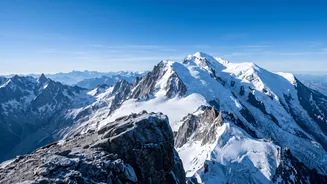
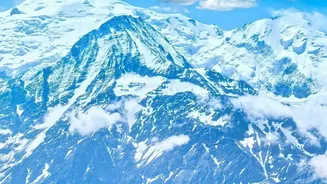
Every two years or so, a team of surveyors makes the arduous climb to the top of Mont Blanc to precisely measure its height. The latest expedition, announced on October 14, 2026, clocked the summit at 4,807.47 metres. That’s almost two metres higher than
the measurement taken in 2023, which was 4,805.59 metres. However, it’s still lower than the peak height of 4,810.90 metres recorded in 2007. This isn't a case of the mountain itself growing or shrinking. The rock summit of Mont Blanc is stable at about 4,792 metres. The variation comes from the thick, shifting cap of snow and ice that sits on top, which can change in depth by several metres from one measurement to the next.
The Dance of Snow and Wind
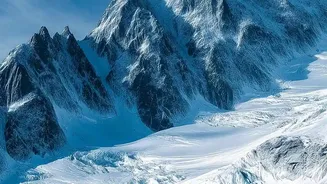
So what causes this icy crown to change its size? The answer lies in a delicate dance between two powerful weather forces: precipitation and wind. The primary way the summit gains height is through snowfall. More snow during winter and summer seasons can, in theory, lead to a thicker ice cap and a taller mountain. But it’s not that simple. The real sculptor of Mont Blanc's summit is the wind. At such extreme altitudes, fierce winds constantly scour the peak, blowing away freshly fallen snow. A year with heavy snowfall might not result in a higher summit if it's also a particularly windy year. Conversely, a period of lower winds might allow more snow to accumulate, even with average precipitation.
How Is It Measured?
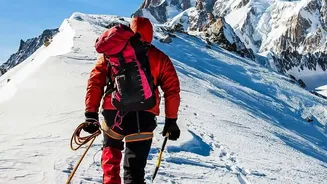
Determining the exact height of this shifting summit is a high-tech affair. Surveyors carry nearly 30 kilograms of equipment to the peak. For hours, they use satellite positioning instruments, like high-precision GPS, to record signals and pinpoint the top of the snowpack to within a centimetre. For the first time, recent expeditions have also used drones to capture thousands of images, creating a complete 3D model of the summit's snow and ice. To see what lies beneath, they use ground-penetrating radar to measure the thickness of the ice and locate the rock summit below. This biennial effort, which began in 2001, provides a crucial long-term dataset for scientists.
What About Climate Change?
It’s natural to wonder if these changes are a direct result of climate change. While glaciers across the Alps are retreating at an alarming rate, experts caution against linking these specific year-to-year summit fluctuations directly to global warming. The temperatures at Mont Blanc's summit are so cold—often described as polar—that significant melting is rare. According to glaciologists, the changes in the summit's height are more indicative of short-term weather patterns, particularly the balance of wind and precipitation. However, the long-term data gathered since 2001 is invaluable for scientists to monitor the mountain and eventually draw conclusions about how climate change might be affecting even these highest, coldest environments.