




The Nutritional Powerhouse in a Shell
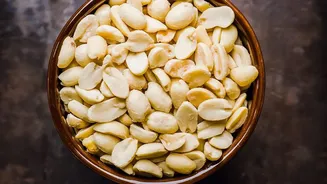
Before we dive into the water debate, it’s important to appreciate just how nutritious peanuts are. Often mistaken for nuts, they are technically legumes, related to beans and lentils. A single serving is packed with plant-based protein, heart-healthy
monounsaturated and polyunsaturated fats, and a significant amount of dietary fibre. They are also a great source of essential vitamins and minerals, including vitamin E, magnesium, folate, and copper, which support everything from heart health to brain function. The combination of protein, fat, and fibre makes peanuts incredibly satisfying, helping to keep you full and manage weight effectively.
The Myth of Diluted Digestion
A persistent myth suggests that drinking water with meals dilutes stomach acid, making it harder for your body to digest food. While it's true that a large glass of water can temporarily and very briefly change the stomach's pH, our bodies are incredibly resilient and adaptive. The stomach responds to the volume and composition of what we consume by producing more acid as needed to maintain the optimal environment for digestion. The idea that a few sips of water can halt this powerful biological process is simply not supported by science. Digestion is a complex process that unfolds over hours, and your stomach is well-equipped to handle both food and fluid together.
How Water Actually Aids Digestion
Far from hindering digestion, water is essential to it. It helps break down larger pieces of food, allowing them to travel smoothly through your digestive tract. It's particularly crucial for the function of dietary fibre. There are two types of fibre, and water helps with both. It dissolves soluble fibre into a gel-like substance that helps you feel full, and it's absorbed by insoluble fibre, which adds bulk to stool. This process is key to preventing constipation and promoting regular bowel movements, which is a cornerstone of digestive comfort. Your stomach also naturally secretes water as part of its digestive juices to help enzymes do their work.
Peanuts and Water: A Perfect Pair for Comfort
This brings us back to peanuts and water. Peanuts are a good source of dietary fibre, containing roughly 2.4 grams per one-ounce serving. When you eat peanuts and drink water, you're creating a perfect partnership for your digestive system. The water works with the peanut fibre, helping it to bulk up and move efficiently through your intestines, which can lead to that feeling of 'digestive comfort'. This synergy not only aids regularity but also enhances feelings of fullness, which can prevent overeating. Some cultural beliefs suggest avoiding water after peanuts due to their 'heating' nature or oil content, but these ideas lack scientific proof and overlook the fundamental benefits of hydration for digestion.
Getting the Balance Right
While drinking water with peanuts is beneficial, moderation and mindfulness are still key. A healthy portion of peanuts is about a handful (around 30 grams). Opt for raw, roasted, or boiled peanuts without excessive salt or sugar to maximize their health benefits. Soaking peanuts overnight before eating them may even make them easier to digest and improve nutrient absorption for some people. Ultimately, listening to your body is most important. If you feel thirsty while eating peanuts, which are naturally quite dry, have a drink of water. Your body is giving you a clear signal. There is no scientific reason to avoid this pairing; in fact, the evidence points to it being a simple, healthy, and satisfying choice for a snack.