

A Celestial Lion's Roar
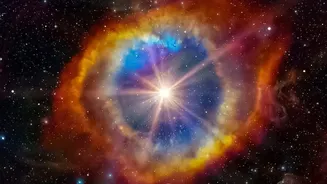
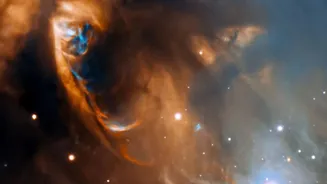
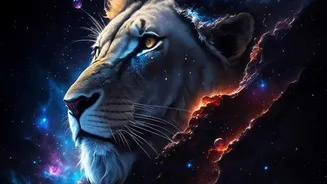
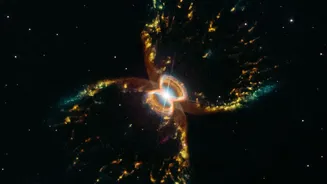
The subject of this breathtaking cosmic portrait is NGC 2392, a cloud of gas and dust popularly known as the Lion Nebula. Located thousands of light-years away, this celestial object is classified by astronomers as a planetary nebula. Despite the name,
it has nothing to do with planets. Instead, it is the beautiful, glowing shroud of a star that has reached the end of its life. For thousands of years, the star has been shedding its outer layers, which have expanded into space to form intricate structures. At the center of it all lies the remnant of the star itself: a small, incredibly hot and dense core called a white dwarf. This stellar relic, appearing like the 'nose' of the lion, is the engine driving the entire spectacle.
The Final Act of a Sun-Like Star
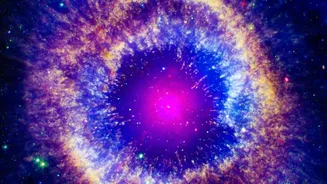
Not all stars go out with the bang of a supernova. That explosive fate is reserved for the true giants of the cosmos. Most stars in the universe, including our own Sun, have a much more gradual and elegant end. As they exhaust the hydrogen fuel in their core after billions of years, they become unstable, swell into red giants, and begin to cast off their outer layers. This ejected material, rich with elements forged inside the star, drifts outward. What’s left behind is the exposed, superheated core—the white dwarf. Its intense ultraviolet radiation then illuminates the expanding clouds of gas, causing them to glow. This entire structure is what we observe as a planetary nebula, a fleeting but glorious snapshot of a star's transition into retirement.
Sculpting with Light and Wind
The 'sculpting' seen in the Lion Nebula is a dynamic and violent process. The central white dwarf is unleashing powerful stellar winds and scorching radiation in all directions. This outflow carves out a vast bubble of superheated, ionized gas around the star, forming the cavernous shape that resembles a lion's face. As this bubble expands, it ploughs into the surrounding material, destroying some of the dust in its path. But not all of it. The nebula's magnificent 'mane' is composed of denser filaments and clumps of dust and gas that have managed to survive the onslaught. These resilient clumps not only glow brightly but also create 'shadows', shielding the material lying behind them from the star’s harsh radiation. The result is a complex, multi-layered structure of shells, rings, and tendrils.
What Webb's Infrared Eyes Reveal
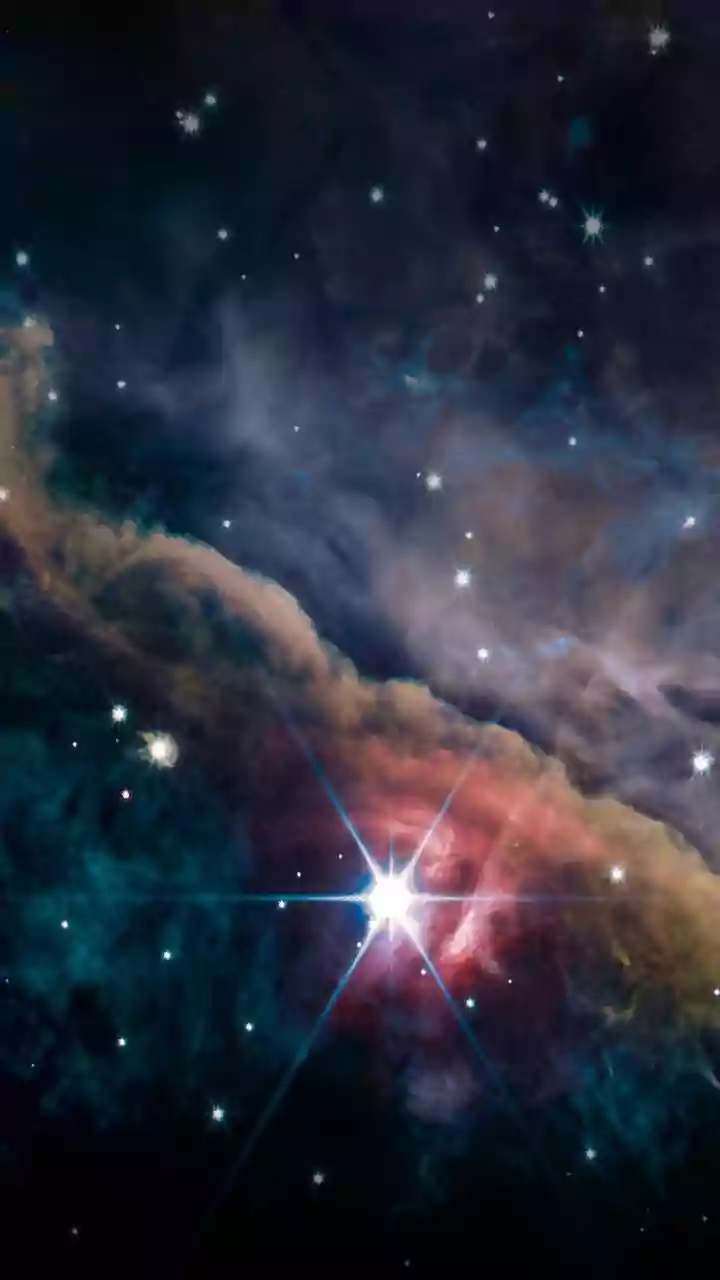
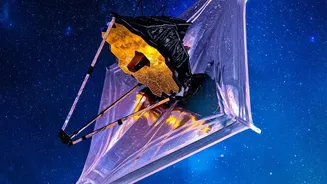
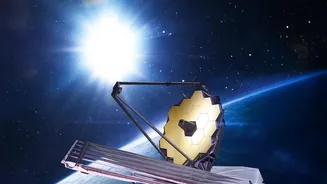
While the Hubble Space Telescope has imaged the Lion Nebula before, Webb’s view in infrared light peels back new layers of understanding. Webb’s powerful instruments, NIRCam and MIRI, are exceptionally sensitive to the faint heat signals emitted by dust and gas. This allows scientists to see the wispy, comet-like structures of the mane with unprecedented clarity and trace the distribution of different molecules. Details that were hazy or hidden in visible light, such as the dense, surviving dust clumps, now stand out sharply. By studying these structures, astronomers can better understand the delicate interplay between the dying star and the material it sheds, offering clues to the complex physics that shapes these beautiful cosmic objects across the galaxy.